[unedited comment / author(s) unknown, 2024]
‘USE‑AS‑IS | Reinhardt’
In ‘USE‑AS‑IS | Reinhardt’ (June 2020), Patten reflects on Reinhardt’s doctrine of “Art-as-Art”, quoting Reinhardt:
“There is just one artist-as-artist in the artist… There is just one thing to be said, one thing not to be said.”
Patten explores Reinhardt’s pursuit of the unchanging and timeless in painting—describing it as the “one and rational mind,” an emptiness that transcends time:
“…the changeless ‘human content,’ the timeless ‘supreme principle,’ the ageless ‘universal formula’ of art, nothing else.”
Patten situates Reinhardt alongside two other painters (Braque and Léger) who work more in the territory of space, while Reinhardt “fucks with time”—highlighting his focus on the temporal aspects of presence and duration. His comparisons to Braque and Léger highlight his unique thesis: Reinhardt doesn’t depict, he does art-as-art. The work blends textual analysis, interpretive notes, and contextual reflections, rooted in both Reinhardt’s unpublished manuscripts and philosophical underpinnings.
‘[Oneness]’ – Notes on Unpublished/Undated Texts
On his ‘Oneness’ project, Patten transcribes and comments on Reinhardt’s unpublished writings, which read like spiritual or mystical poetic notes, articulating ideas such as:
“Shadow of the spiritual… Movement beyond itself toward its idea… A principle of its own… remains unchanged in essence… Secondlessness… Mystical ascent… Encountering nothingness…”
These notes show Reinhardt wrestling with concepts of non‑duality, void, transcendence of form, the ineffable, and pure abstraction—almost akin to a Zen or Neo-Platonic vocabulary.
Patten’s careful curation gives us a window into Reinhardt as a philosopher‑painter, pushing abstraction to its metaphysical edge.
Patten reflects on Reinhardt’s pursuit of radical minimalism and conceptual rigour—his conception of the artist not merely as painter, but artist-as-artist, striving for a singleness of purpose: “Only blankness, complete awareness… vacant and spiritual, empty and marvellous.”
He frames Reinhardt alongside Braque and Léger as foundational:
• Braque → touch and particulars
• Léger → scale and the universal
• Reinhardt → the timeless, changeless core of art.
Core Quotation
“Reinhardt / ‘Only blankness, complete awareness, disinterestedness; the “artist‑as‑artist” only, of one and rational mind… the changeless “human content,” the timeless “supreme principle,” the ageless “universal formula” of art, nothing else.’”
This encapsulates Patten’s reading: Reinhardt isn’t simply painting monochromes—he’s conjuring a dimension of timeless universality.
Why Patten’s Work Matters
By connecting Reinhardt’s practice with mystical/philosophical traditions (void, non-duality, oneness), Patten enriches Reinhardt’s minimalist austerity with existential gravitas. He brings to light unpublished writings by Reinhardt, adding depth to our understanding of the artist’s intellectual project, and he isolates core principles—“the one,” “timelessness,” “void”—that are essential to Reinhardt’s black paintings and conceptual stance.
Why This Matters
Patten’s work is not a traditional academic essay—it’s a visual and conceptual mapping, weaving quotes, archival images, and interpretive notes. His approach emphasizes:
• Reinhardt’s art as an approach toward absolute artistic essence
• A minimalist, almost ascetic resolve to strip art down to its universal formula
• The alignment of a visual strategy (monochrome symmetry) with a philosophical one (disinterestedness).
In Summary
David Patten acts as both editor and interpreter of Reinhardt’s most enigmatic period, foregrounding:
• The strict formalism Reinhardt insisted on (“one thing to be said, nothing else”).
• A deeply spiritual and metaphysical dimension: art as purification, negation, oneness.
• A reading of Reinhardt not just as minimalist, but as a seeker of the absolute—the void, the timeless, the ineffable.
If you’re interested, Patten’s text also links to several PDF curator‑style essays (e.g., ‘Monotonous & Ugly Spaces’, ‘Prophetic Voices’, ‘Repetition’, etc.), which further detail his conversations with Reinhardt’s archived writings.

https://www.moma.org/calendar/exhibitions/338?#installation-images
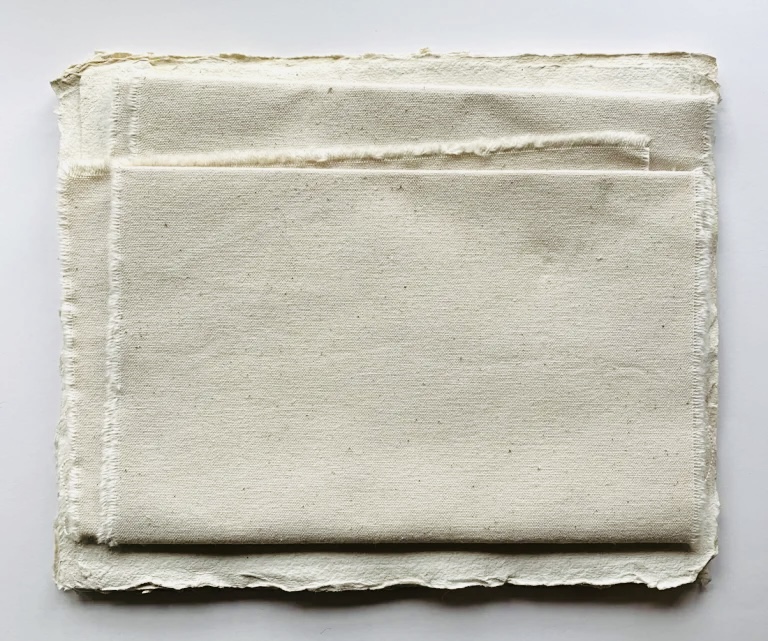
1992-1994 ‘Paper & Canvas’
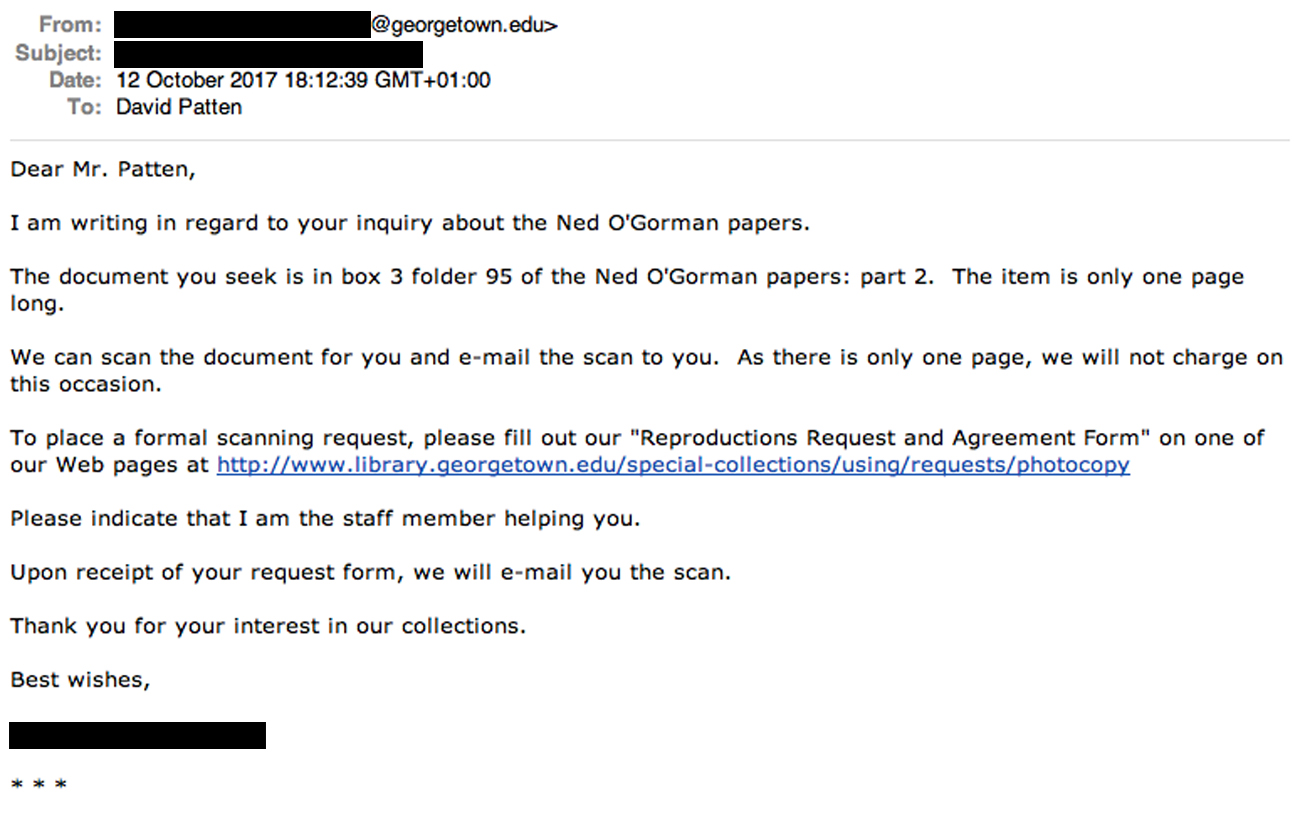
Discovered text 2017 (extract):

[Sunday, 19 January 2014]
There is just one artist always,
There is just one artist-as-artist in the artist, just one artist in the artist-as-artist.
[. . .]
There is just one thing to be said, one thing not to be said.
– Ad Reinhardt: ‘There is just one painting (Art-as-Art Dogma, Part XII)’, Artforum, March 1966

[Saturday, 27 June 2020]
Think I am realising that (for me) there have only ever been three painters, and that these three painters established the territory I wanted to work in:
Braque / touch and the ‘particular’ (‘didactic’, as de Francia said).
Leger / scale and the ‘general’ or ‘universal’ (‘classical’, as de Francia said).
Reinhardt / “Only blankness, complete awareness, distinterestedness; the “artist-as-artist” only, of one and rational mind, “vacant and spiritual, empty and marvelous,” in symmetries and regularities only; the changeless “human content,” the timeless “supreme principle,” the ageless “universal formula” of art, nothing else.” (as Reinhardt did say in ‘Timeless in Asia’, Art News, January 1960).
Yes, particularly that last bit:
1. the changeless “human content”
2. the timeless “supreme principle”
3. the ageless “universal formula” of art, nothing else.
So, yes…
Reinhardt / the changeless / the timeless / the ageless.
or
Reinhardt / “human content” / “supreme principle” / “universal formula” of art, nothing else. In short, Reinhardt fucks with time while the other two “farm space” (to quote Gampopa).


David Patten: Notes on Ad Reinhardt’s unpublished and undated texts
Links:
AD REINHARDT: [ONENESS] 2013/2014
AD REINHARDT: [ONE] 2014
AD REINHARDT: [IMAGELESS ICONS] 2014
AD REINHARDT: HA HA Reinhardt | Working Notes 21.11.2024
AD REINHARDT: ABSTRACT ASKS… | Working Notes 02.12.2024


PDF: Reinhardt | Monotonous & Ugly Spaces
PDF: Ad Reinhardt | 27.06.2020 (RESTRICTED TEXT)
PDF: Georgetown University Library Special Collections (RESTRICTED TEXT)
PDF: Ad Reinhardt | Repetition 2015
PDF: Ad Reinhardt | Prophetic Voices 2016
PDF: Ad Reinhardt | WORLD? v7 Summary Refs 2017
PDF: Ad Reinhardt | To Be Part Of Things… 2020
“Ad Reinhardt’s Chronology (Ad Reinhardt—Paintings by Lucy R. Lippard) is somber substitute for a loss of confidence in wisdom – it is a register of laughter without motive, as well as being a history of non-sense. Behind the “facts” of his life run the ludicrous events of hazard and destruction. A series of fixed incidents in the dumps of time. “1936 Civil War in Spain.” “1961 Bay of Pigs fiasco.” “1964 China explodes atomic bomb.” Along with the inchoate, calamitous remains of those dead headlines, runs a dry humor that breaks into hilarious personal memories. Everything in this Chronology is transparent and intangible, and moves from semblance to semblance, in order to disclose the final nullity. “1966 One hundred twenty paintings at Jewish Museum.” Reinhardt’s Chronology follows a chain of non-happenings – its order appears to be born of a doleful tedium that originates in the unfathomable ground of farce. This dualistic history records itself on the tautologies of the private and the public. Here is a negative knowledge that enshrouds itself in the remote regions of that intricate language – the joke.”
– Robert Smithson: ‘Collected Writings’, 1996, p81
[23.09.2022]
New York City, Day #6 | Spring Street & Broadway West 8th Street


Judd writes, “In Reinhardt’s paintings, just back from the plane of the canvas, there is a flat plane and this seems in turn indefinitely deep.”
Judd installed another painting by Reinhardt, Abstract Painting, Red, 1952, on the second floor of 101 Spring Street.
Judd met Reinhardt for the first time in the early 1960s, when Judd was living at 53 East 19th Street. “I used to meet—just in the same building, going to get the Sunday New York Times on a Saturday night, it probably happened three or four times, you’d run into Ad Reinhardt, who usually didn’t want to talk either, but he always wanted to talk in the cold, for a half an hour, on the street corner. I never went to his house, but he lived nearby, somewhat.”
Ad Reinhardt (1913-1967): Abstract Painting, Red, 1952, oil on canvas, 160 × 109.2 cm

According to Reinhardt’s self-referential “Five Stages of Reinhardt’s Timeless Stylistic Art-Historical Cycle,” this painting may fall in the fourth stage, which the artist described as “early-classical hieratical red, blue, black monochrome square-cross-beam form symmetries of the fifties.”
https://juddfoundation.org/…/abstract-painting-red-1952/
“In 1966 one hundred and twenty paintings by Reinhardt were shown at the Jewish Museum for longer than usual. These probably will never be assembled again and if assembled will not be the same, since almost all have been damaged and extensively restored. In 1966 these paintings should have been hung and never moved again. Reinhardt died the next year.”
– Donald Judd: ‘On Installation’, 1982
https://www.artnews.com/…/donald-judd-moma…/amp

“An artist who dedicates his life to art, burdens his art with his life, and his life with his art.”
– Ad Reinhardt
[04.10.2024]
Richmond & Washington DC Day #12 | Virginia Museum of Fine Arts
Ad Reinhardt: Red Painting, 1952, oil on canvas, Gift of Sydney and Frances Lewis (85.434), 152.4 × 208.28 cm

Sydney and Frances Lewis “…bartered with their company’s products for art, giving artists refrigerators, hair dryers, and lawn mowers, and also allowed the artist’s works to decorate Best Company offices and showrooms.”
[VMFA Gallery label] Red Painting is one of the first in which Reinhardt made geometry and color the focus, eliminating all traces of brushwork. Emotion and narrative are referenced through chromatic intersections of hue and value. Reinhardt’s spare, nearly monochromatic works paved the way for both the color field painters later in the decade and the minimalists of the 1960s.
“There is no such thing as a good painting about something.”
– Ad Reinhardt
18.06.2025

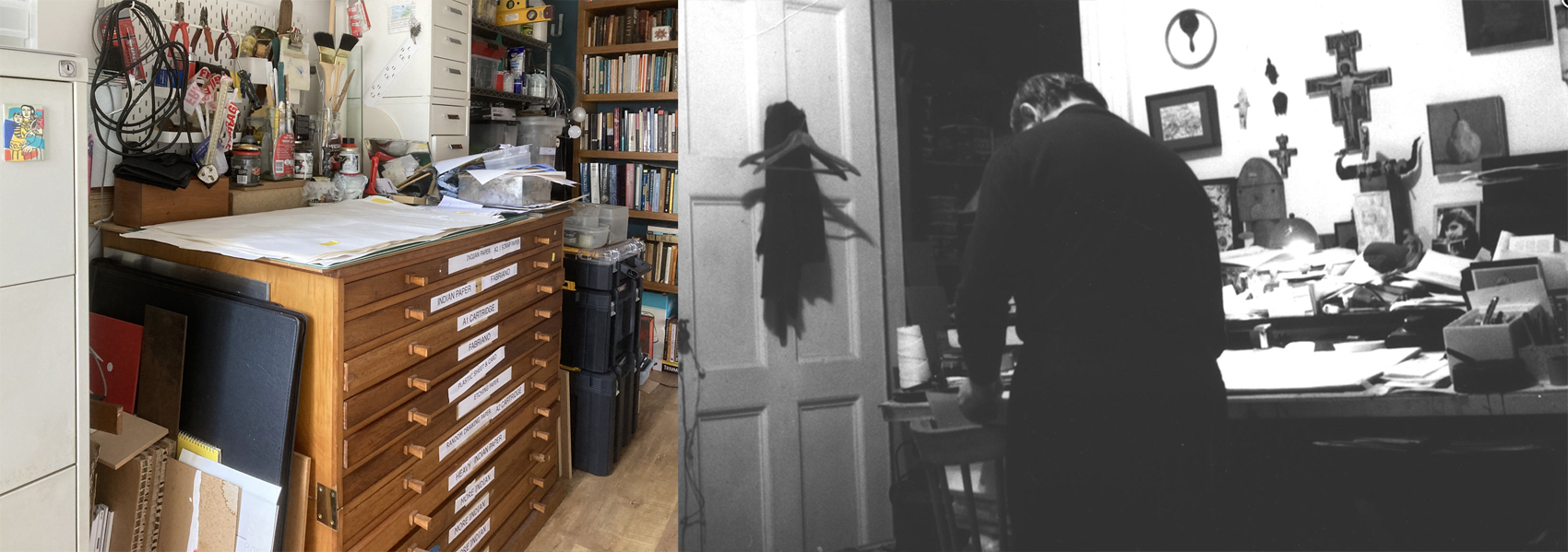
 David Patten