[place holder | 25.01.2025]
“…we merge in an iridescent chaos.”
– Cézanne
“…to think non-knowledge when it unravels the nets of knowledge…beyond knowledge itself…to think the element of non-knowledge that dazzles us whenever we pose our gaze to an art image.”
– Georges Didi-Huberman: ‘Devant l’image’, 1990
Abstract
‘Glittering Materiality’ functions as both meditation and critique: an inquiry into how matter, light, and making converge to manifest value—not through rigid representation, but through sensitivity to form’s shimmer, its hidden glow, and its capacity to transfigure everyday materials into realms of profound contemplation.
The following interplay between Herbert V. Guenther’s ‘The Levels of Understanding in Buddhism‘ (1958), which explores the perception of objects not through conceptual interpretation but as inner luminosities—“glow from within… luminosity rather than clarity”—and Sophie Taeuber-Arp’s 1918 ‘Untitled’ ‘needle-painting’ points to towards a “glittering” aesthetic: one where material presence and perceptual shimmer coalesce in refracted meaning.
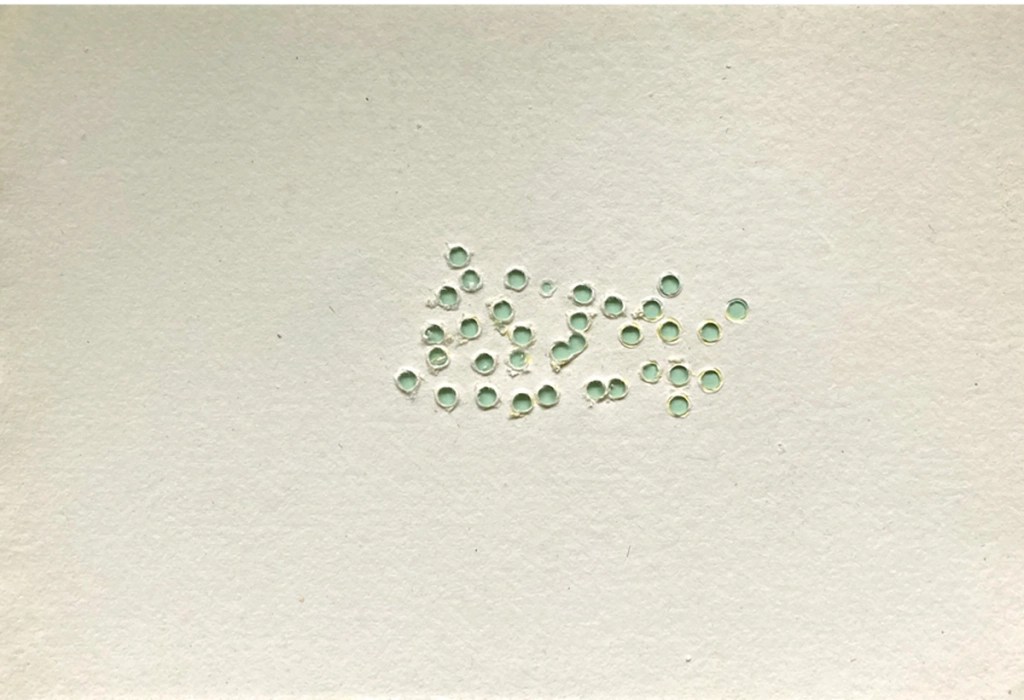
23.01.2025 drilled holes in paper (after Picasso: Still Life (Wineglass and Newspaper)-(Primary-Title)-(47.10.83)’, ca. 1913-14, oil and sand on canvas, The T. Catesby Jones Collection, Virginia Museum of Fine Arts (seen 3 October 2024)

Neolithic Temple Fragment with Drilled Holes, Tarxien Complex, National Museum of Archaeology, Valletta, Malta [seen 18.04.2023]
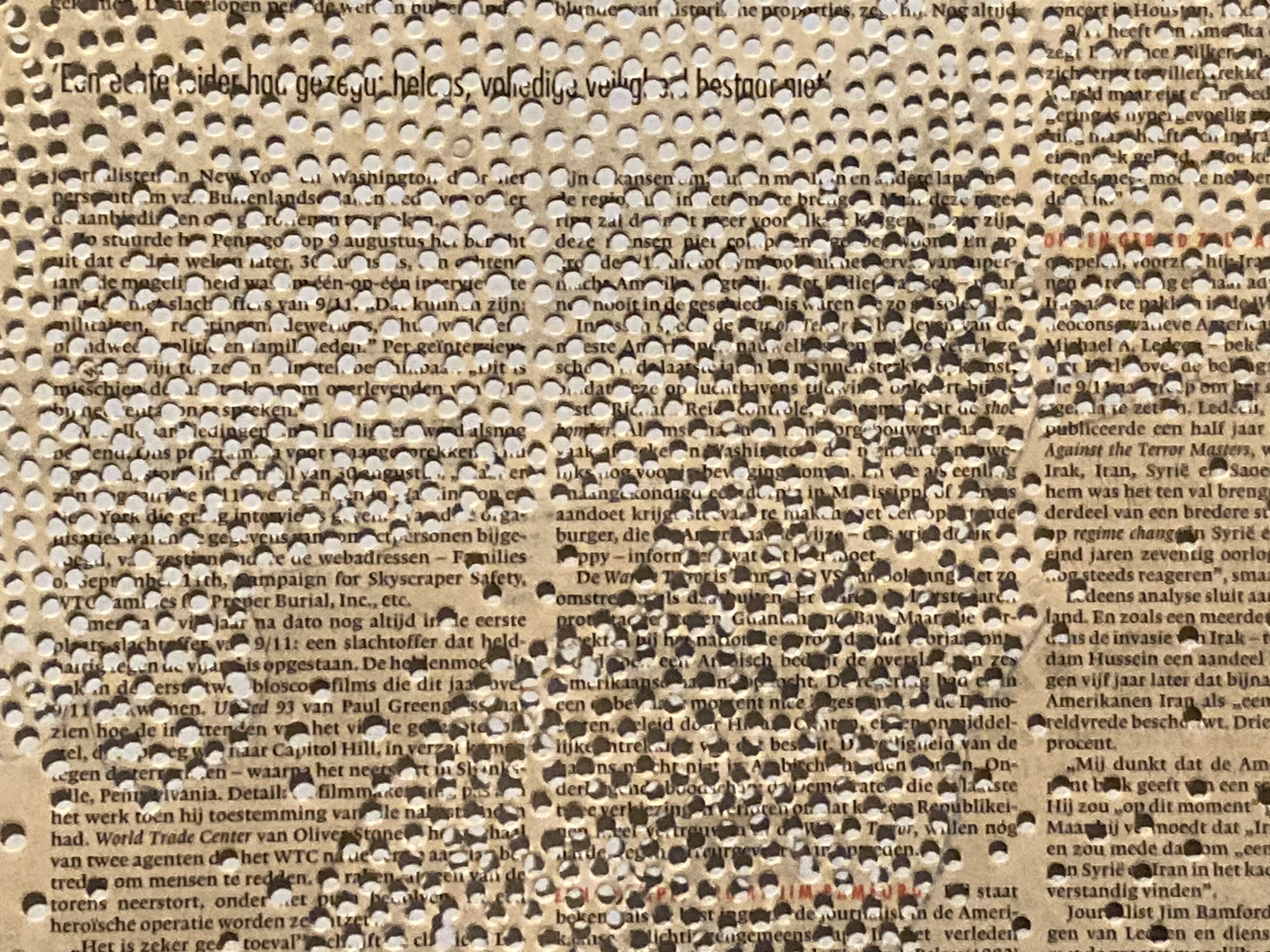
Kees de Goede: ‘Astraal Drawings’, Rijksmuseum, Amsterdam [seen 16.08.2024]

Georges Braque: ‘Bouteille de rhum (Bottle of Rum)’ (Spring 1914), oil on canvas, 18 1/8 x 21 5/8 in. (46 x 55 cm), Leonard A. Lauder Cubist Collection; The Met (New York)
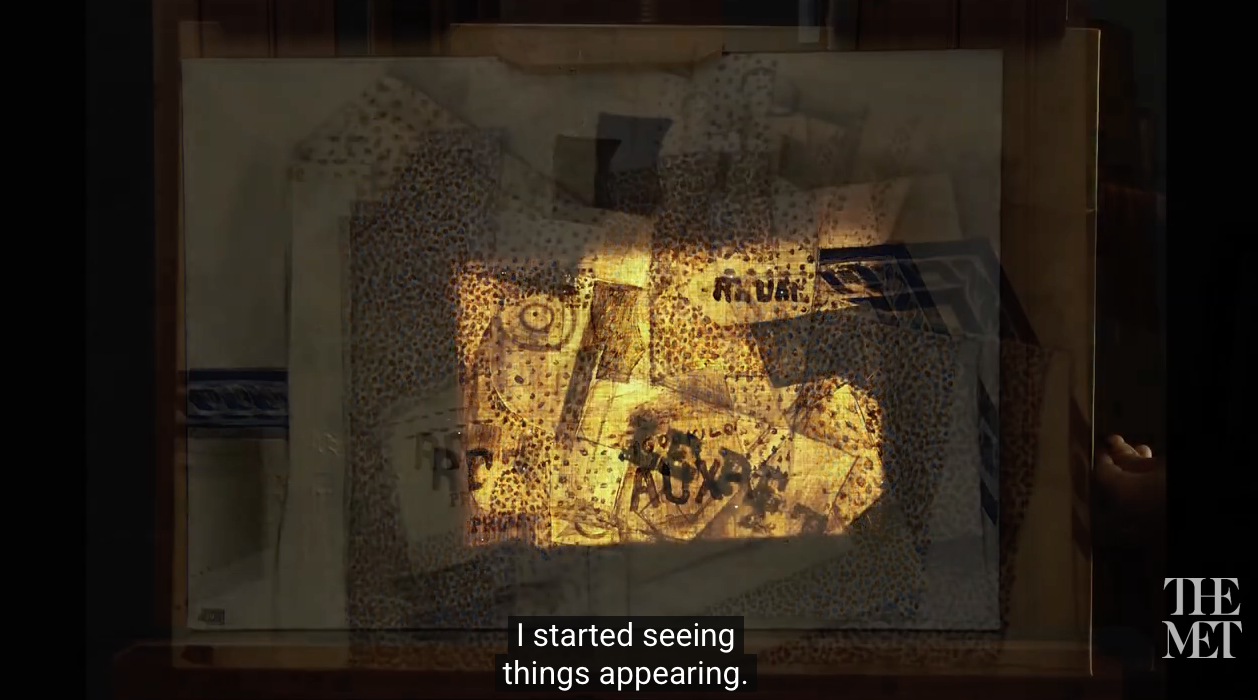
The Met: Focus on Modern Art: Georges Braque’s ‘Bottle of Rum’, 1914

[2006]
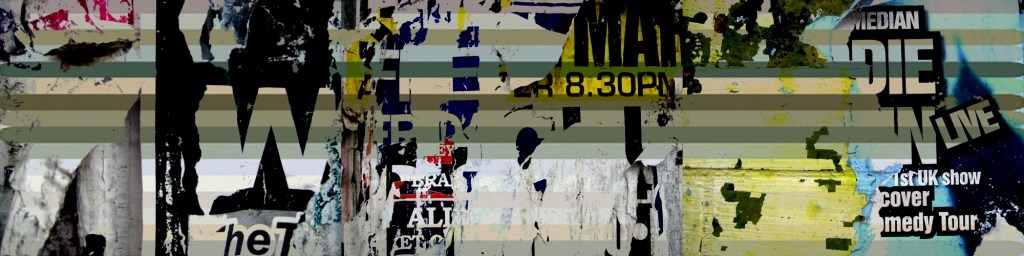
05.01.2011 Pearl Shell Button Colours + 13.02.2011 Site#2
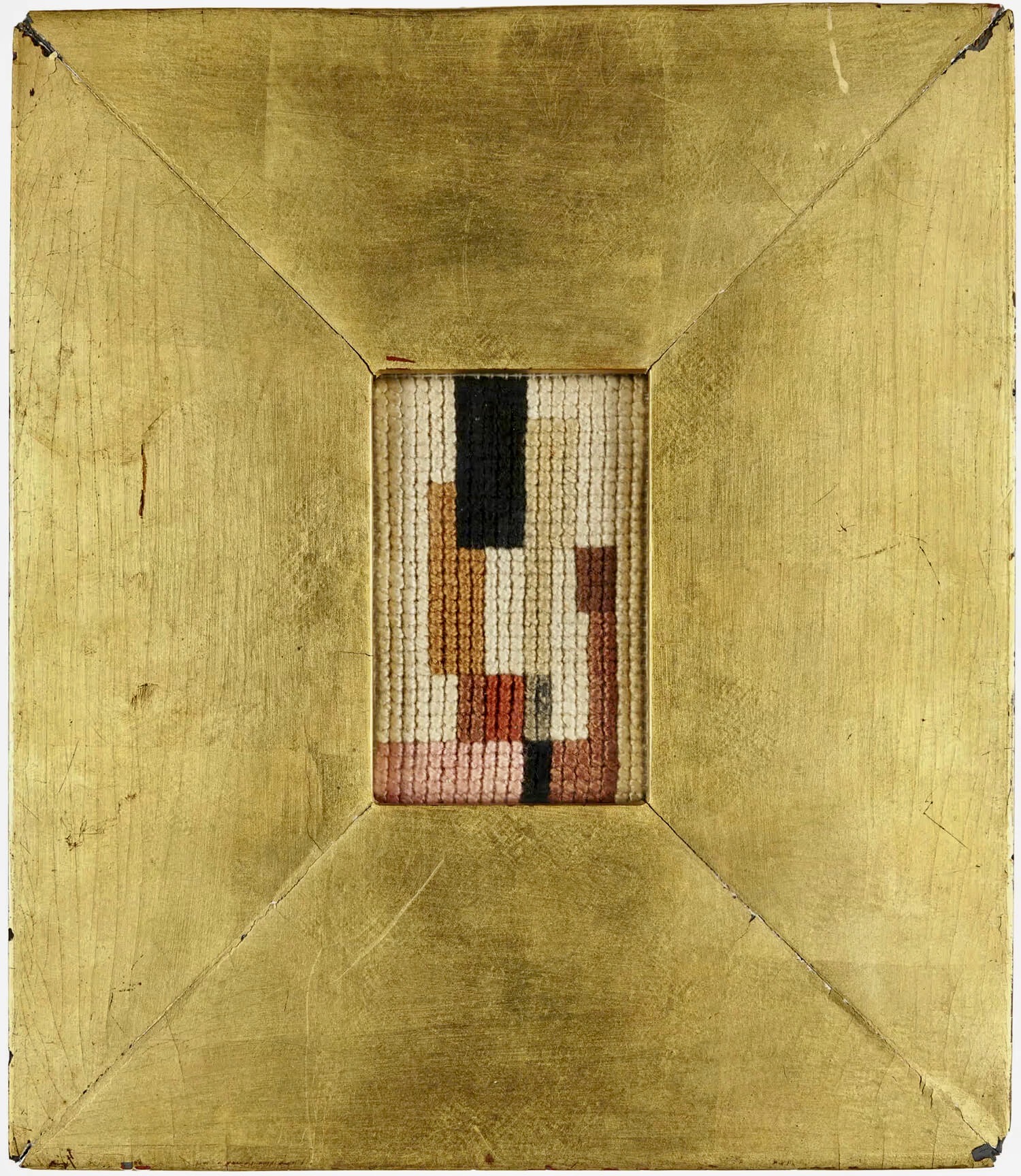
Sophie Taeuber-Arp: ‘Untitled’, c. 1918, MoMA New York / seen 21.09.2022
“…when the object of contemplation is perceived in what approximates pure sensation and, devoid of all interpretative concepts and beliefs about its ontological nature, is viewed and felt as something divine in its own right. The character of light is not something attributed to it but something inherent in it. It is as if the object begins to glow from within and stands out sharply, with luminosity rather than clarity; where everything seen is felt, felt much more strongly than in any normal state of consciousness; and where the solidity of the outer world is lost and the belief in its absolute reality gives way to a mere vision of a phantom-like tableau (sgyu.ma.lta.bu, Skt. mayopama).”
– Herbert V. Guenther: ‘The Levels of Understanding in Buddhism’, 1958
“Only when we go into ourselves and attempt to be entirely true to ourselves will we succeed in making things of value…”
– Sophie Taeuber-Arp, 1922
MoMA, Floor 3, 3 East
The Robert B. Menschel Galleries
Taeuber-Arp made this “needle-painting” when she was working as an applied arts teacher and participating in the Zurich Dada movement, which sought to challenge traditional values in art, often with humor and playfulness. One of her smallest embroideries, this abstract textile might have originally functioned as a study for a larger tapestry or pillow cover. However, by placing the textile within an oversized gilded frame, she wittily transformed it into a “fine” art object not unlike a religious image or icon.
– Gallery label from 2022
Cotton on canvas in historical frame, 4 3/8 x 3 1/4″ (11.1 x 8.3 cm) | 34 x 21 stitches, approx.
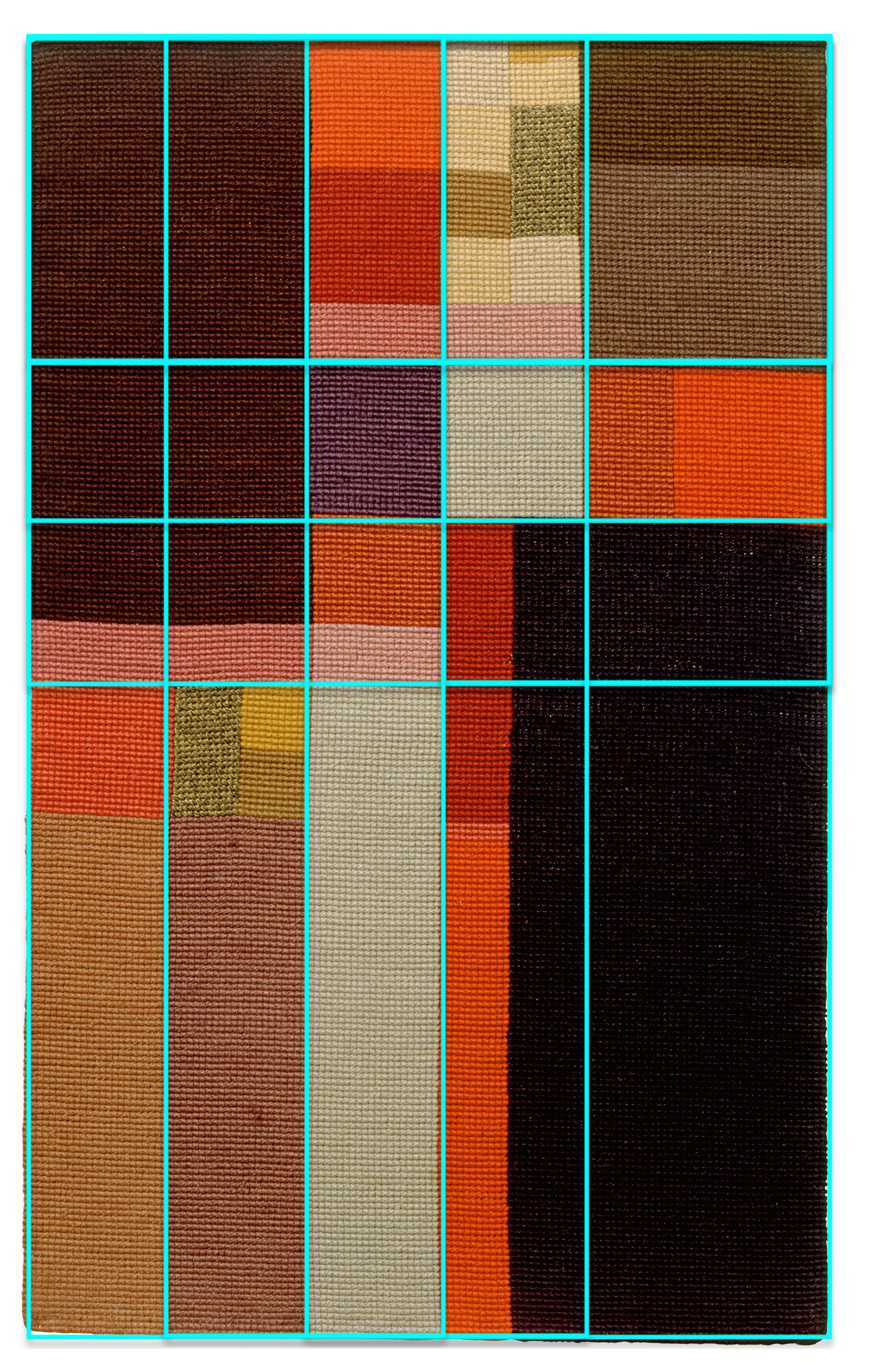
Sophie Taeuber-Arp: ‘Vertical-Horizontal Composition’ c. 1917, wool on canvas, 48×29.5 cm. Private collection, on long-term loan to the Aargauer Kunsthaus Aarau, Switzerland.
See also:
[Composition verticale-horizontale] c.1917
[Untitled (Embroidery)] c. 1918

Emily Noyes Vanderpoel: ‘Color Analysis From a Mummy Cloth’, 1902.

Emily Noyes Vanderpoel: ‘Color Problems: A Practical Manual for the Lay Student of Color’, 1902.
— — —
[02.07.2024]
Carl Einstein’s ‘petite scandale’ = virtuosity in weaving (or painting) is undermined by scale, by restraint, by the refusal of pictorial completion / risks incompleteness = stays with uncertainty.
…the image — ambiguous, fragmentary, indeterminate —“forever fragmentary” / never totalised / perception remains open, relational, and unfinished / precarious dependence [. . .] relinquishing sovereignty for relational invention.
slow craft = long-duration = precariousness / fragility — handmade, small / fragility opens invention / grundkontrast as ethical = ‘fundamental contrast’ or ‘basic opposition’ = not resolved but held in productive tension = poised = a delicate balance = situated unresolved tension / ethical attentiveness = reconfigured subjectivity.
“Situated in a fundamental tension that is morally or ethically significant because it changes the way one experiences and relates to the world and oneself.”
[09.09.2025]
framed in disproportion, fragmentary, and ambiguous . . . with uncertainty, to dwell in the fragmentary / “forever fragmentary” / we enter into a precarious dependence on it = precariousness and fragility, not weakness.
Einstein’s Grundkontrast (fundamental contrast) is tangible: surface/volume, fragility/monumentality, incompleteness/frame . . . not resolved = productive tension = situated unresolved tension.
an attentiveness that reconfigures subjectivity / attentiveness to fragility / an ongoing interruption = situated uncertainty.
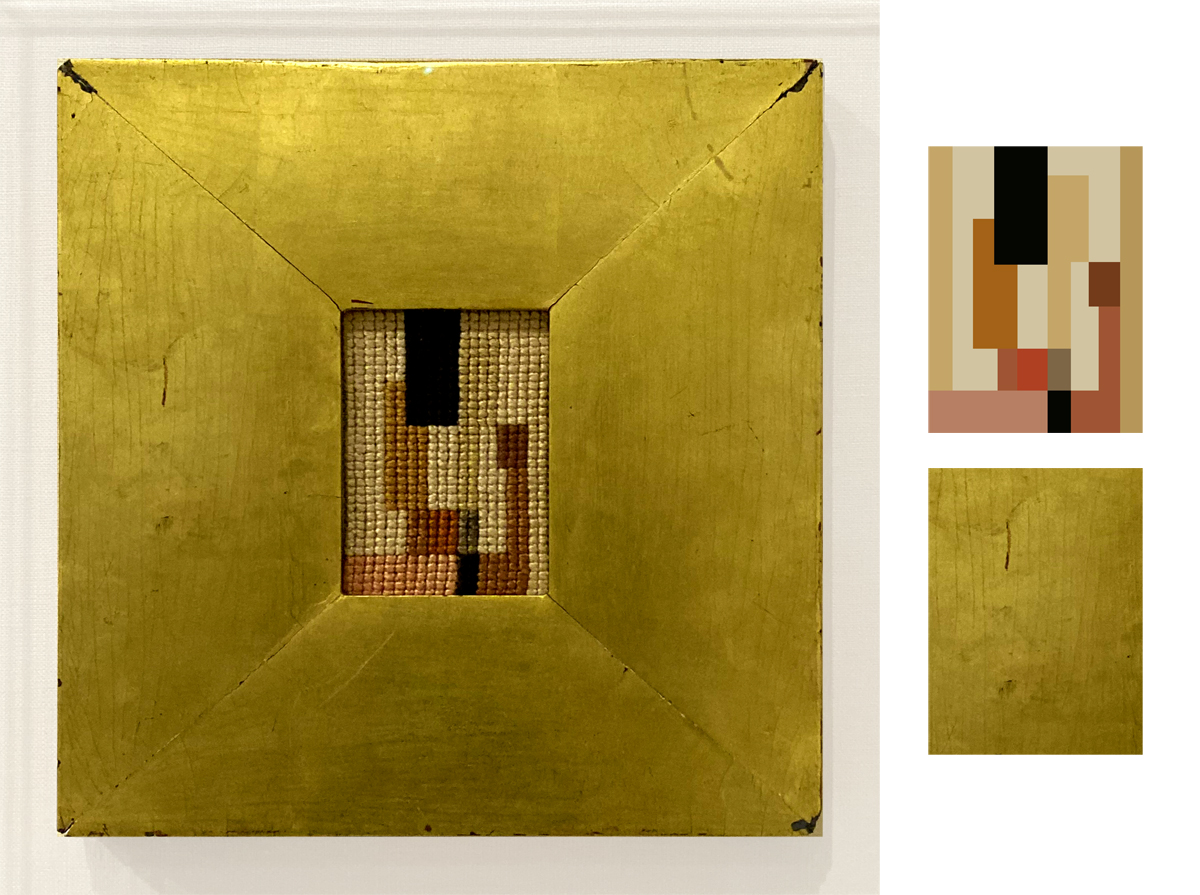
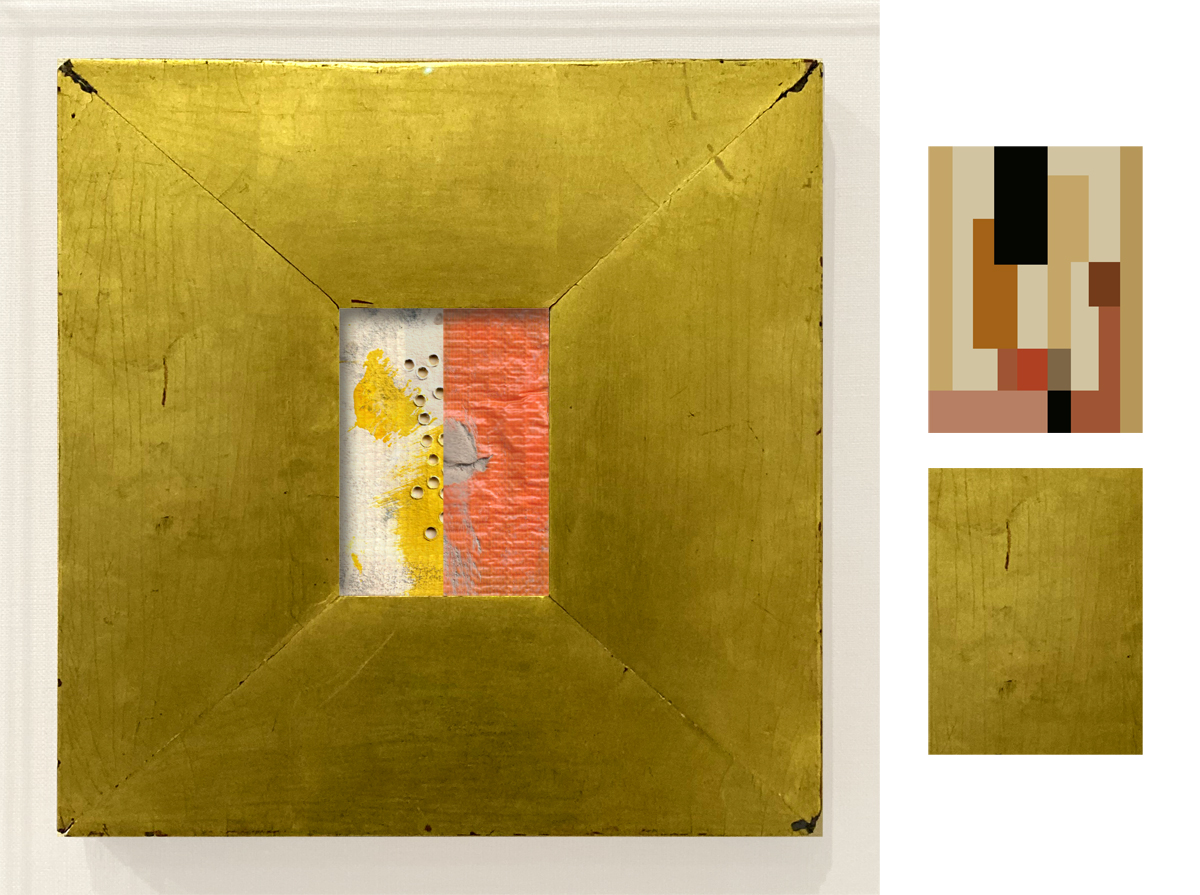
Sophie Taeuber-Arp: Bemerkungen über den Unterricht im ornamentalen Entwerfen (Remarks on instruction in ornamental design), in: Korrespondenzblatt des Schweizer Vereins der Gewerbeund Hauswirtschaftslehrerinnen (1922), No. 11/12, pp. 156–159.
Susanne Nørregård Nielsen: ‘Draw a Square’: Translating and Interpreting the Writings and Artworks of Sophie Taeuber-Arp (1889-1943)
Sophie Taeuber-Arp: Aubette 198 (design for three walls of the Aubette Bar in the Aubette, Strasbourg), 1927, gouache, metallic paint, pencil, ink and coloured ink on diazotype, on board.
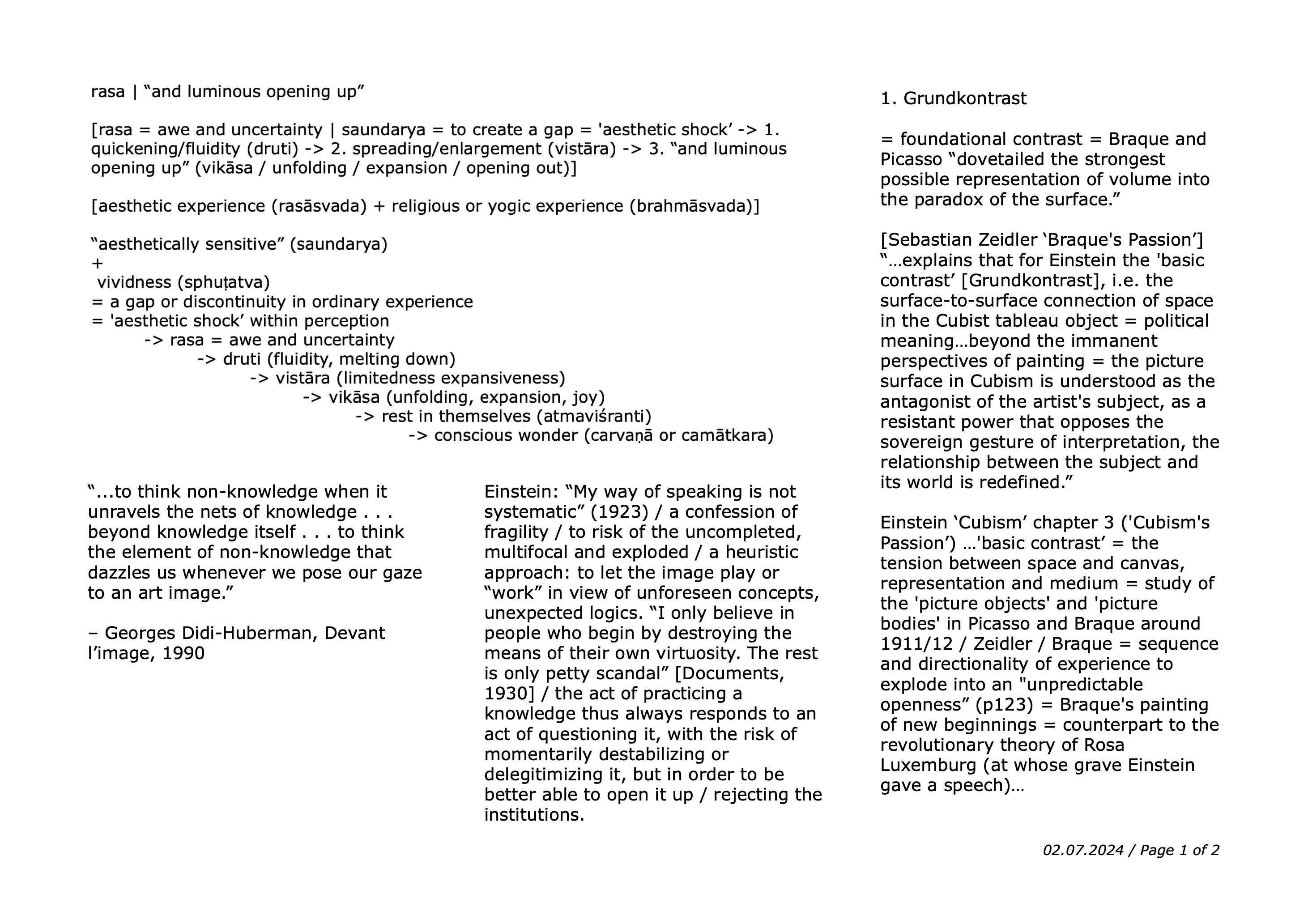

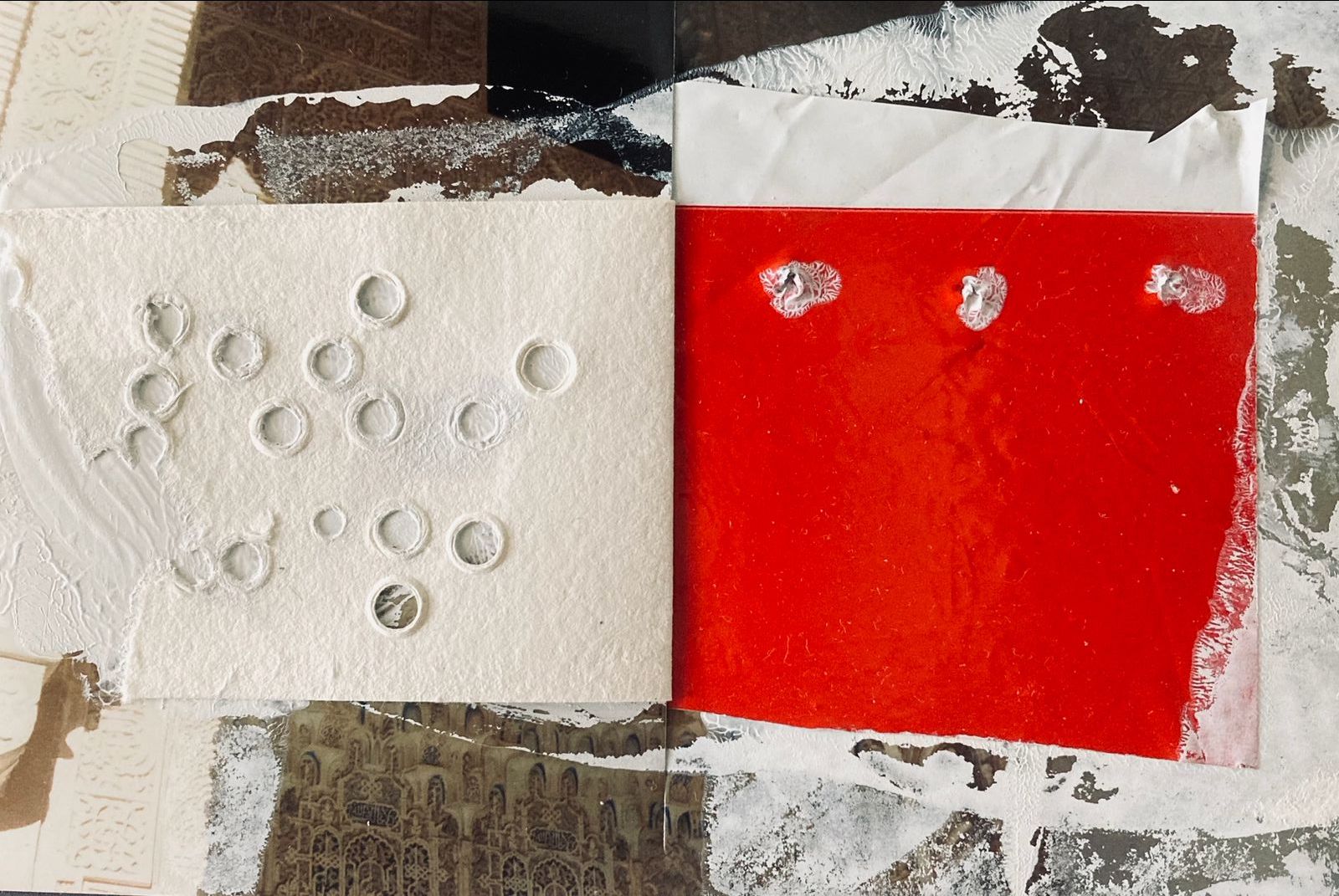
04.08.2025 | coll. Lee Corner
— — —


. . .practice [as] glittering liveliness / drawing on Bataille’s philosophy / art = framed as sacrifice and sovereign moment = a rupture from profane, utilitarian time into the sacred instant, beyond discourse, knowledge, or ego.
the instant / ecstatic, unknowable, and sovereign—where separateness dissolves and experience itself becomes the only priority.
fragments and incompletion = method: aphoristic, provisional, resisting continuity and discursive rationality.
silence and uselessness / as practice: rejecting utility, embracing unknowing, rupture, and the “fruitful blindness” of art.
escape and immanence / fleeting releases from structured existence, constructing continuity outside default forms of meaning, enacting experience as its own end.
. . .a practice of inner experience, non-knowledge, and sacred immediacy—a rebellion against servility, rationalism, and productivity, aiming at transformation through radiant uselessness.
Art becomes an exercise in fleeting escape and immanence—sovereign, rebellious, and transformative through its very uselessness.
“In the spring of 1907, Henri Matisse was on his way to visit the American writer and collector Gertrude Stein in her Paris home when he stopped in what used to be referred to as a ‘curio-shop’ to purchase a small African sculpture. Picasso, who was also visiting Stein when Matisse arrived, was immediately captivated by the sculpture that was later identified as a Vili figure from what is now the Democratic Republic of the Congo. The artist, who was known to be extremely superstitious, believed in the magical and transformative power of objects. According to Max Jacob, French poet and lifelong friend of Picasso, the Spaniard clutched the small sculpture in his hands all night, inspired by its elongated features, streamlined forms and spiritual purpose.”
– Lisa Modiano: ‘How Much Does Picasso Owe to African Art?’, The Collector, 30.04.2022

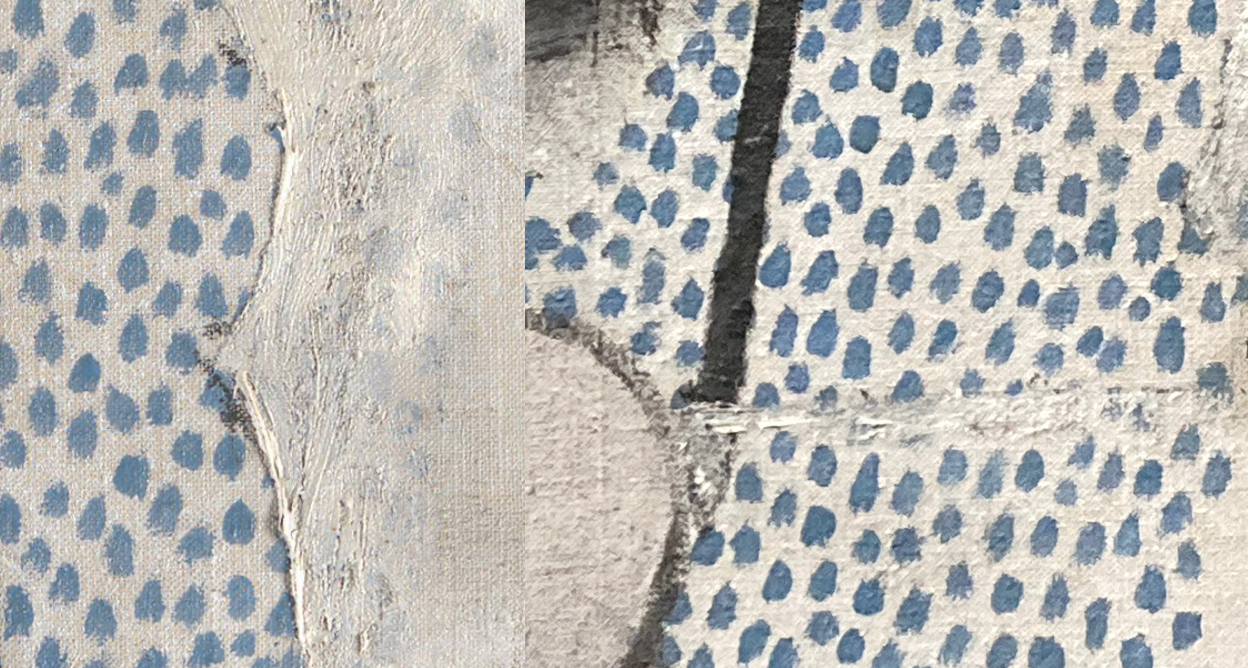
“Painting is a play of the spirit.”
– Picasso, to the poet and painter Andrd Warnod, 1945
01.04.2025 National Gallery, London
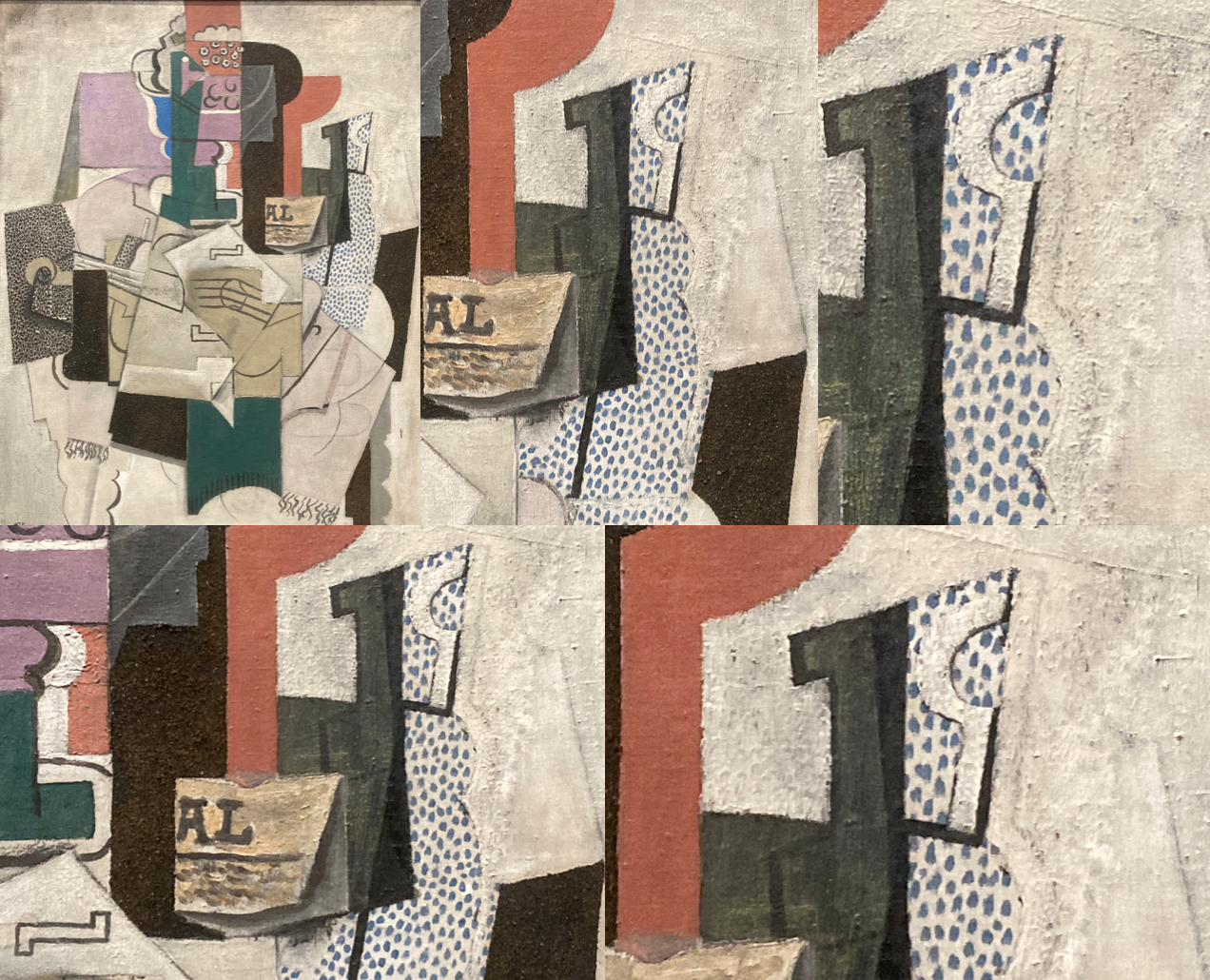

+45º = 1 | –45º =1 | 90º = 45 | +15º = 97


28.06.2025

15.07.2025 | “a field that refuses to resolve…as if the painting were only a fragment…”


Henri Laurens: ‘Bouteille de rhum (Bottle of Rum)’ (1916-1917), ©Musée de Grenoble
Summary of Winthrop Judkins’s ‘Fluctuant Representation in Synthetic Cubism: Picasso, Braque, Gris, 1910–1920‘ (Harvard dissertation 1954, Garland Publishing 1976):
Key Themes in Winthrop Judkins’s Fluctuant Representation in Synthetic Cubism
1. Synthetic Cubism as a Transformative Mode of Seeing
Judkins analyses how artists like Picasso, Braque, and Gris in the Synthetic Cubism period moved away from conventional perspectives, instead crafting works composed of flat planes, overlapping materials, and mixed media. This creative shift redefined representation, emphasising assembly and emergence over illusion and depth.
2. Deconstructing Representational Certainty
Through techniques like collage and papier collé, Cubist artists broke down object-hood into fragmented signs and diverse materials—evoking the chaos of modern life. The use of newspaper, wallpapers, and everyday fragments destabilised the viewer’s reliance on a single coherent viewpoint or optical realism.
3. Fluctuant Representation: Open to Multiple Readings
The core concept of “fluctuant representation” lies in its intentional ambiguity and fluidity—forms that oscillate, identities that overlap, surfaces that both reveal and conceal. Judkins sees this as central to Synthetic Cubism’s vision: a deliberate multiplicity of readings that defy fixed interpretation.
4. Aesthetics of Instability and Iridescence
In Codifying this aesthetic, Judkins notes recurring formal qualities which foreground instability—not as failure, but as aesthetic and conceptual strength:
- Deliberate oscillation of appearances
- Studied multiplicity of readings
- Conscious compounding of identities
- Iridescence of form.
5. Synthetic Cubism as Provocation of Perception
Judkins suggests that Cubism didn’t merely represent the world—it questioned how we perceive it, revealing how our sensory expectations can be unsettled and remade.
Summary Overview
Judkins’s Fluctuant Representation in Synthetic Cubism charts how early Cubist artists reconfigured visual language through fragmentation, layered materiality, and perceptual ambiguity. This led to artworks that demand active, interpretive viewing—eschewing stable representation for dynamic, multi-faceted engagement.
“…its expanding multiplicity of countenances, with subordinate motifs suddenly becoming dominant themes, with familiar continuities unexpectedly shifting to emerge as new forms, with substantial solids opening up into unexplored depths of transparency.”
– Winthrop Judkins: ‘Toward a Re-interpretation of Cubism’, 1948
[‘iridescence of form’ = to shift and fluctuate / oscillating appearances / multiplicity of readings / the collapsing of dominance and depth / refusal of fixed form / a visual shimmering that invites the eye to interpret differently from every angle / instability as an aesthetic strength]
[1913 and 1914] ‘Cubist confetti’ = height of chic / fashion designer Paul Poiret / chiffon fabrics + scatterings of colorful ‘confetti cubes’ / designs / sprinkling square-cut confetti onto paper and painting prototypes based on how they landed / “from head to foot as if it snowed red, yellow, green, blue bits of paper” = Cubists’ visual vocabulary / confetti showers as a phenomenon of optical mixing within three-dimensional space + jubilant and rowdy popular culture.
“…not to conceal it but rather to create translucency and the related corollaries of depth, texture, and light.” [LINK]
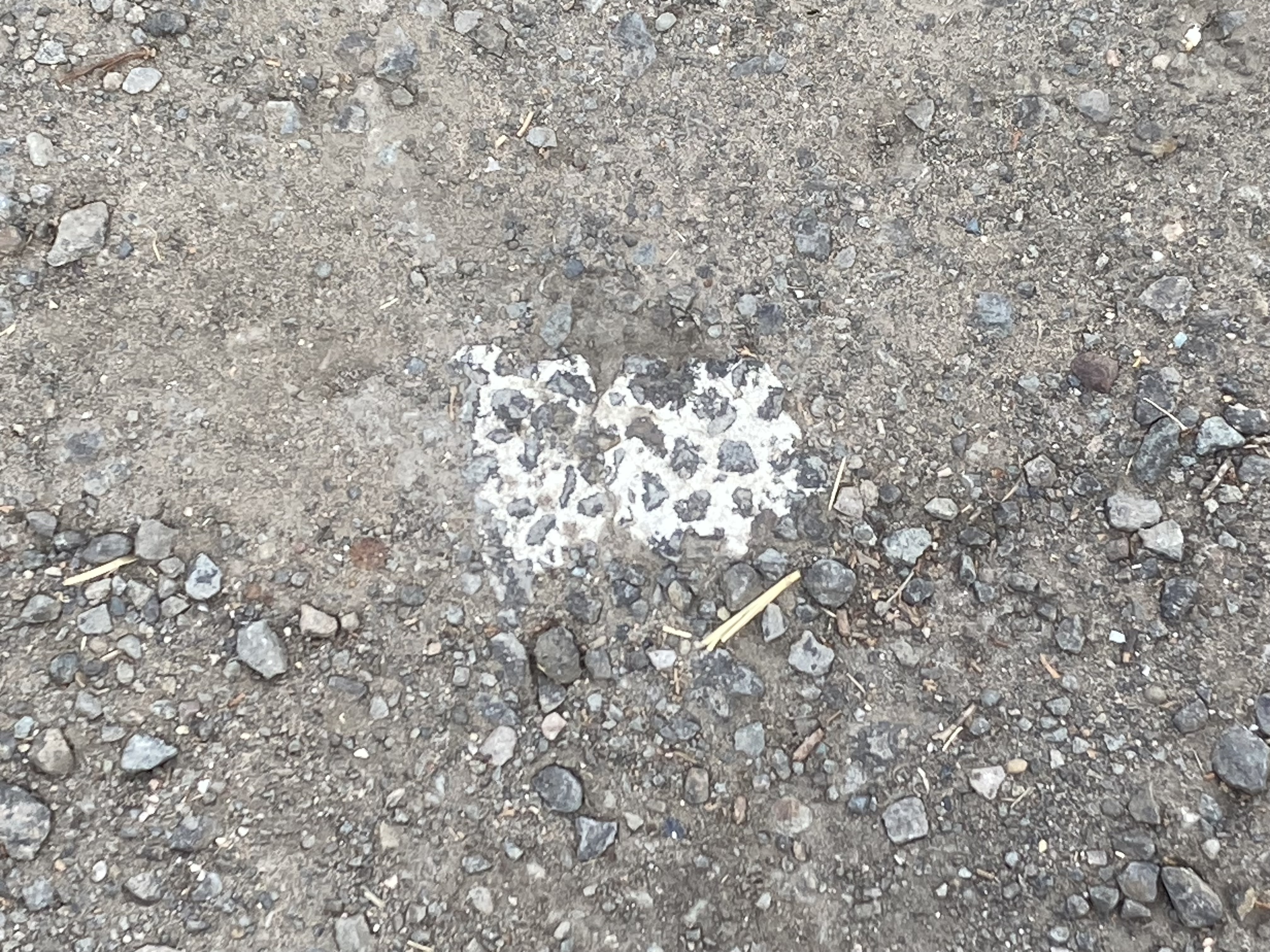
Pavement 18.07.2025
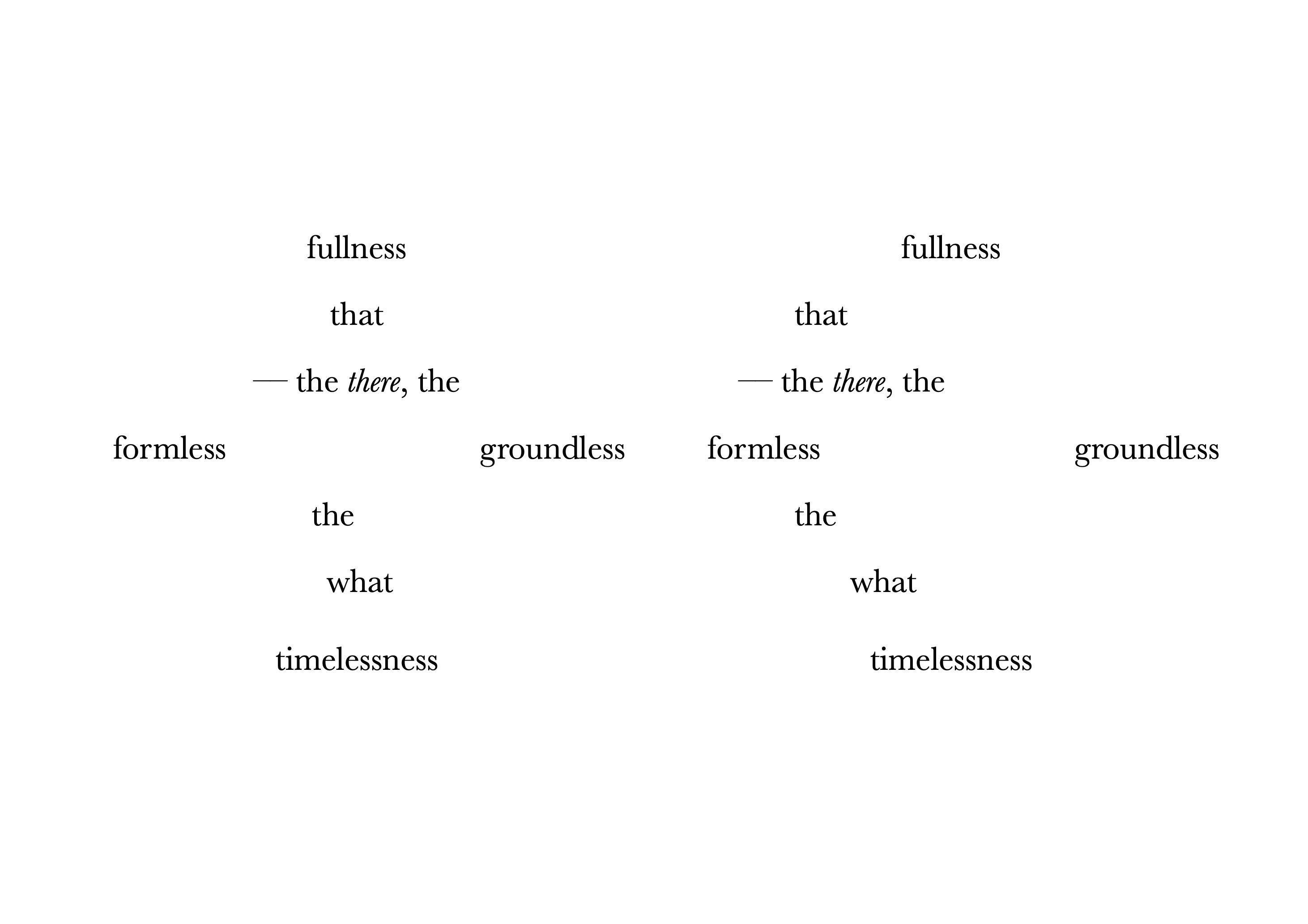
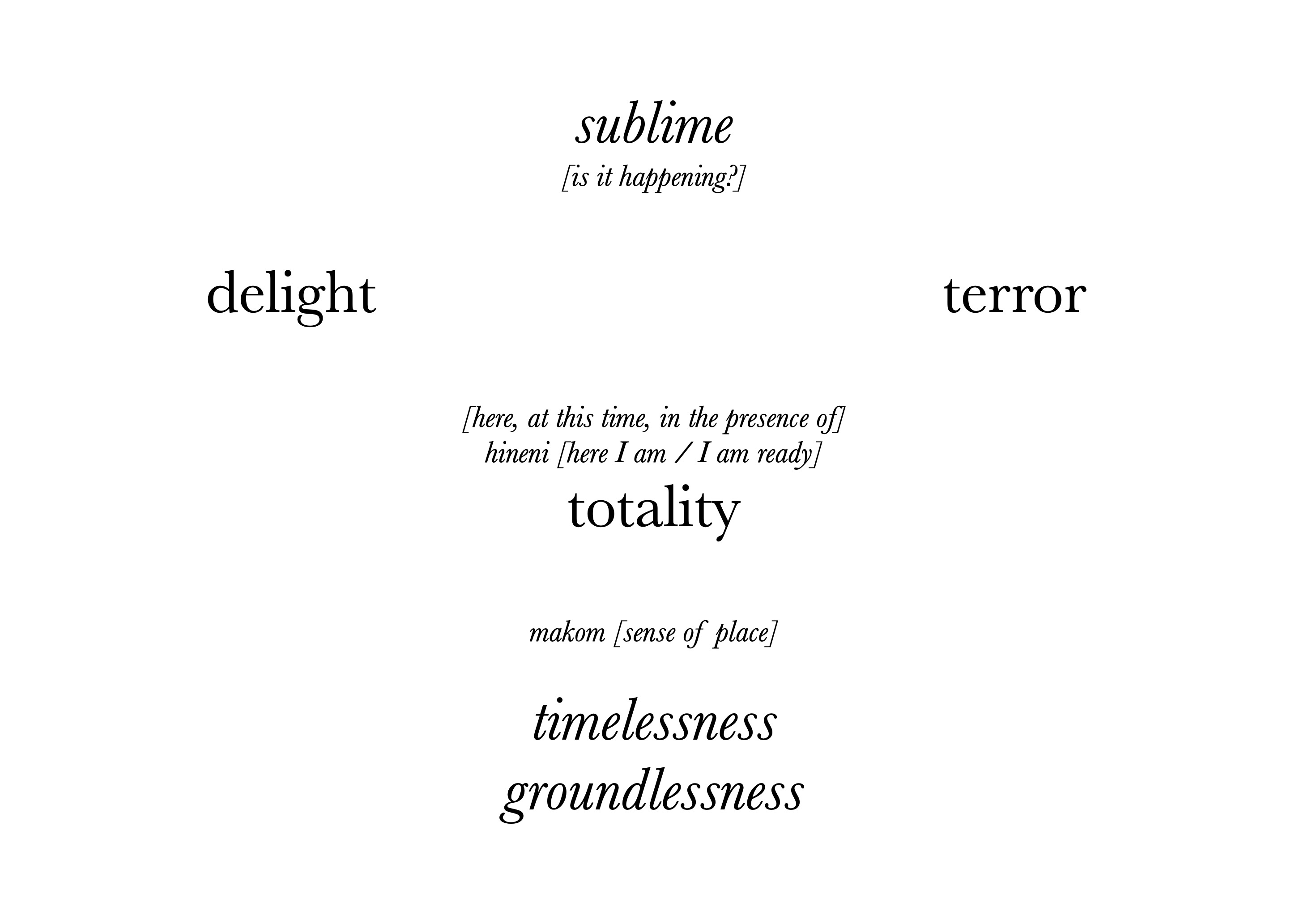
[29.08.2023 & 01.01.2024]
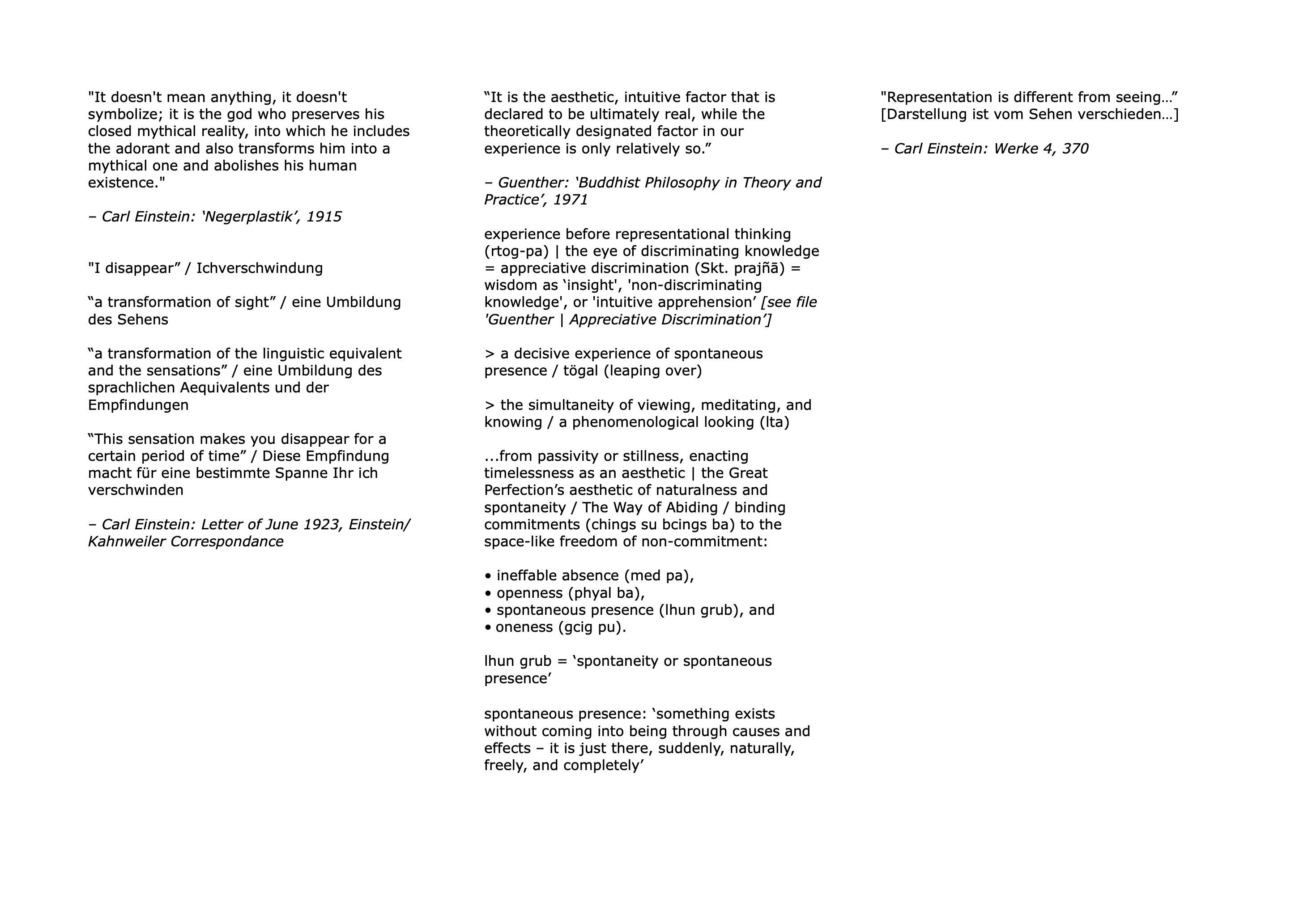
[18.11.2021 + file: ‘Guenther | Longchenpa wisdom mind’ 16.12.2021]
[file: ‘Longchenpa Notes’ 24.05.2020]
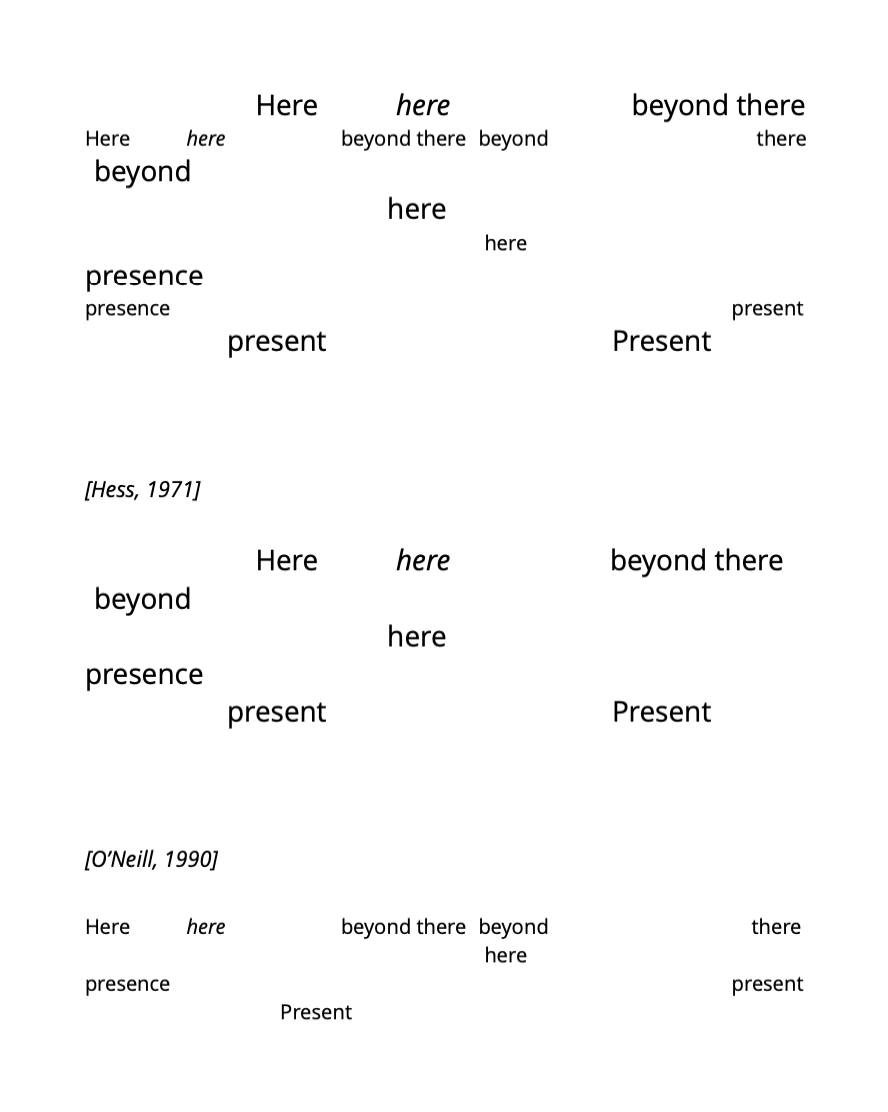
[31.08.2023]
— — —
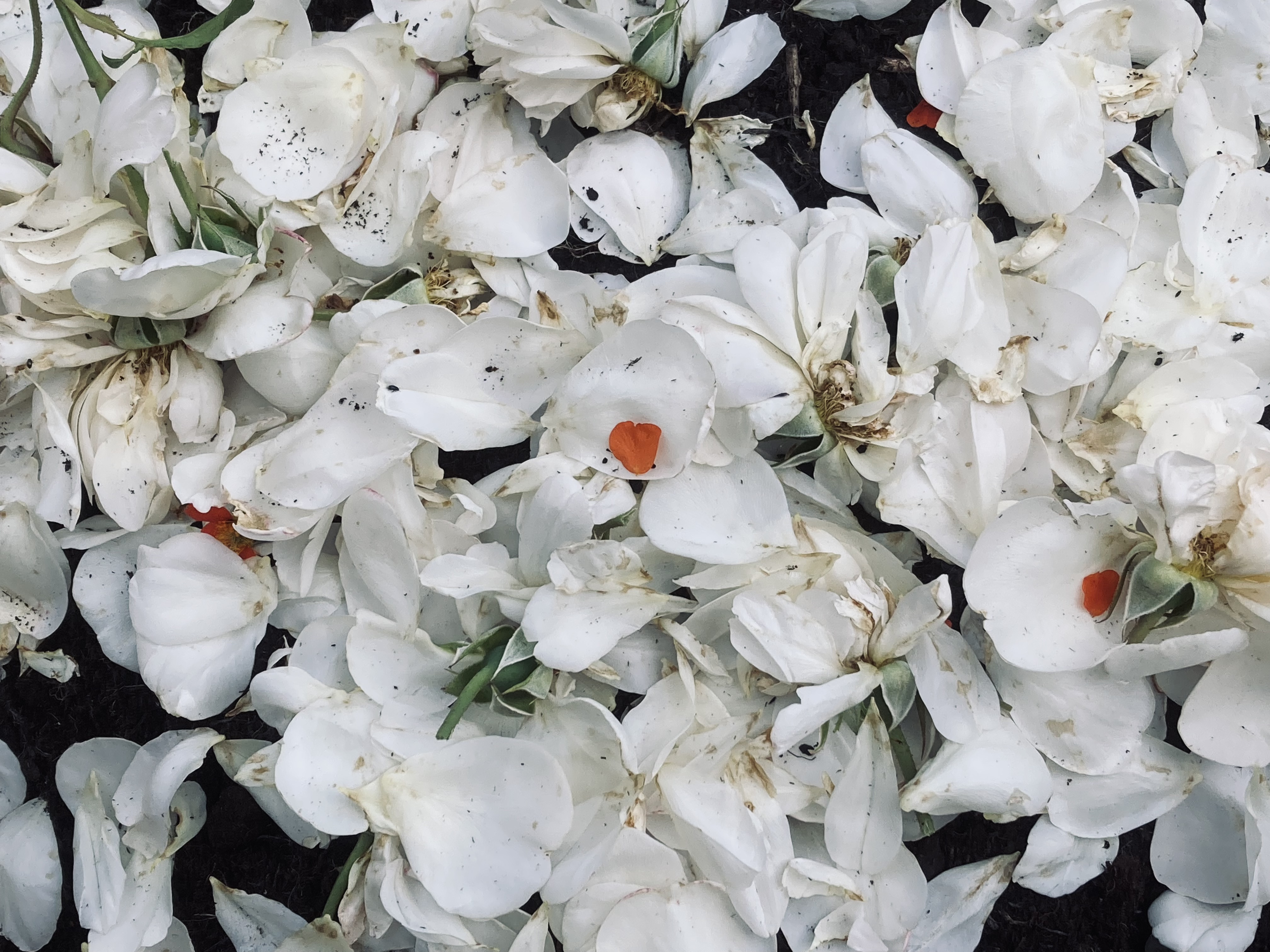
01.07.2025 | Compost Bin
[Notes: 01.01.2024 & 21.09.2025]
Dubuffet’s materialism in the 1940s / materiality and materialism / engages materiality and emphasises the material / unusual material / new material / crude material / uses materials (the physicality of material substance) / the materiality of the work breaking away from the image / material endeavours / (early 1940s) the issue of materiality takes over / raw materials / lack of materials / a material world in need of rebirth and renewal / material excesses / [Breton] ‘poetical materiality’ / [Bataille] anti-idealist materialism = ‘base materialism‘ / [Althusser] ‘materialism of the encounter’ / concrete and material / material crudeness / materiality offers a reality of its own / ‘materialism combined with positivism’ / [Greenberg] “The concern of French painting […] with the ‘physical’ or technical has reflected, more integrally perhaps than any contemporary phase of any other art, the conscious or unconscious positivism that forms the core of the ‘bourgeois-industrialist ethos’.” / “the most drastic possible reduction of visual acts” [Greenberg: ‘Review of an Exhibition of School of Paris Painters’ in The Collected Essays and Criticism, 2:87-90] / material becomes the subject, the object, and the objective of painting / [Greenberg] “physicality” and “materialism” / a material presence / [Margit Rowell] “…what is present is a concrete presence or reality. What is absent is an illusion or a mental image, which serves as a model for the concrete reality now before the viewer” + “starting from an illusion, he invents a physical reality” / materiality as a means to arrive at a pictorial expression / [Braque] sand and sawdust / upon and behind the painted surface / threatening the compositional frame, and becoming physical things themselves / constructed spatial and material layering / tangible physicality / actual material substance / building up the surface / the surface is not a plane upon which things appear / directness / the material embedded-ness / [Krauss] ‘Rauschenberg and the Materialized Image’, Artforum 13, no. 4 (December, 1974) / method, medium, and material = method + medium + material / Dubuffet / 1945 / Haute Pâte (Michel Tapié, 1946) / oil + straw, pebbles, and gravel / diverse meanings of materialism / matter and materiality / non-art-studio substances / materials speak for themselves / materials take over everything / unruly materials / against material hierarchy / peculiarity of material beauty / depiction as rudimentary ‘thingness’ / speaking its own language / something extremely material /
“It is true that in my trituration(s) of materials and manners of applying them, I found myself led to allusions which most often pointed not toward so-called noble materials such as marble, or fine marquetry woods, but to very common everyday stuff of no value like coal, asphalt, or even mud, toward the accidental effects of rain wearing away different kinds of commonest soils or of decay with age of things that are themselves of the crudest sort such as old scrap iron, rough cast walls, and every kind of junk and whatever pertains to trash and waste.”
“Art must be born out of the material. Spirituality must borrow the language of material. Each material has its language, is a language. It is not a matter of associating a language with it or even putting it at a service of a language.”
– Dubuffet: ‘Prospectus et tous écrits suivants’, Paris, Gallimard, 1967
Hubert Damisch: ‘Dubuffet ou la lecture du monde’ (‘Dubuffet or the Reading of the World’), Revue de l’art, 1962:
Art as Reading, Not Representation = a radical rethinking of how we perceive and “read” the world / critique of cultural elitism + valorisation of art brut = rejection of academic or idealised aesthetics / doesn’t aim to represent the world (in the mimetic or classical sense) / the work is a lecture — a ‘reading’ that unfolds the world’s multiplicity and raw presence / reading as active and processual and not passive imitation / rejection of idealism / Western tradition separates art from life by idealising form or beauty / textures, crude materials, and rough surfaces dismantle the hierarchy between ‘high’ and ‘low’ art, culture and nature / World as Inexhaustible Surface / the world as surface, mark, material trace, not as depth or hidden essence = phenomenological practice: the world is encountered through its visible, tactile givenness / art brut (art outside institutional and cultural norms) = model for a more authentic, unmediated relation to reality / “reading of the world” = democratic, anarchic, and plural practice / how art can resist codification by continually returning to the immediacy of the world as encountered, rather than as systematised or symbolically mastered / art as a materialist and phenomenological “reading” of the world — one that bypasses traditional representation and instead affirms surface, multiplicity, and immediacy / not depicting the world but enacting our relation to it, in ways that destabilise hierarchies and open perception.
Dubuffet’s ‘reading of the world’ as glittering uselessness / ‘glittering uselessness’ + ‘beneficial practice’ / refusal of cultural hierarchies and the productivity-driven demands of representation (aka ‘art as truth, beauty, or skill’) / lingers in surface, texture, trace = [Damisch] lecture du monde that is open, excessive, non-instrumental = glittering uselessness: an activity not measured by utility, but by its capacity to sparkle perception, to redirect relation
Beneficial practice without productivity / art brut = the world ungoverned by cultural norms / practice is beneficial transforms how the world is read / transforms relation, perception, and worlding / perceptional interruption & relational worlding / interrupts the ‘normal’ codes of seeing — flattening space, amplifying texture, working with mud, graffiti, chance / the interruption that destabilises habits of perception, opening onto new modes of relation
[plus]
Althusser’s contingency (encounters) / encounters with matter, surface, raw mark.
Negri’s constituent fragments / the surface-world holds constituent potential, irreducible but co-present.
…to create situated practices / ‘useless readings’ = fragments of perception to encounter and cohere — not productivity but glittering relational transformation / “reading of the world”: non-representational, non-productive / capacity to open surfaces, interrupt perception, and nurture contingent new worlds of relation = deeply beneficial.
Jean Duffy: ‘Perceiving Dubuffet: Art, Embodiment and the Viewer’, Liverpool University Press, 2021
…the affinities between Merleau-Ponty’s account of the phenomenological reduction and Dubuffet’s conception of the functioning of the artwork; Dubuffet’s thematisation of the experience of embodiment; the foregrounding of temporality and the exploration of corporeal and associative memory; the testing and transgression of generic boundaries; the experimentation with unconventional materials and with dimensionality; the impact of Dubuffet’s reading of scientific theory and of Daoist and Buddhist philosophy on his understanding of man’s relationship with his environment; and the central role given to the viewer’s physical interaction with the artwork. Perceiving Dubuffet: Art, Embodiment, and the Viewer covers Dubuffet’s lengthy career and examines the full range of his pictorial and sculptural œuvre and the large corpus of aesthetic writings produced between the 1940s and the 1980s.
[Note: 24.09.2025]
Huayan Framing of Benefit (li 利, pu 普, “universal benefit”) / practice as ornamentation (śobhā, adornment) / practice does not “fix” or “improve” the world; it adorns it, revealing its inherent jewelled structure = “glittering uselessness” / practice glitters, and this glittering itself is benefit / lets perception expand into the nonobstructed dharmadhātu [the ‘realm of phenomena’ or the ‘expanse of all things and truths’] / ornamental as revelation of interpenetration; it adorns reality by showing the cosmos in each act.
See also Non-Representational Theory.
[Note: 06.10.2025]
Totalität ist ein in keiner Weise ableitbarer Begriff, der weder aus Teilen gewonnen, noch auf eine höhere Einheit zurückgeführt werden kann (rechtfertigt jedes Lebewesen).
Totalität schließt niemals irgend etwas aus, das heißt vor ihr gibt es weder ein Positives noch ein Negatives, denn der Kontrast, das heißt die unbedingte Einheit von Gegensätzen macht die Totalität aus.
Totalität ist niemals irgendwie quantitativ bestimmt und kann immer eintreten gemäß rein qualitativer Voraussetzun-gen. Jeder individuelle Organismus muß total sein. Totalität ist nicht Einheit; denn diese bedeutet stets Wieder-holung, und zwar Wiederholung ins quantitativ Unendliche; während Totalität als endliches System nur unter Mitwirkung aller bestimmten, verschiedengearteten Teile eines Systems da ist. Infolgedessen wird, was eine übergedankliche Tendenz besitzt, innerhalb des Gesetzmäßigen ausgeschaltet.
Die Totalität ermöglicht die konkrete Anschauung, und durch sie wird jeder konkrete Gegenstand transzendent. Sie hat als Intensität nichts mit der extensiven Größe des räumlich Unendlichen zu schaffen, dessen Abgeleitetes das Zeitlich-Unendliche der Physiker ist.
– Carl Einstein: ‘Gesammelte Werke’, p.77, 1962
[Summary translation: “Totality is an indivisible concept that cannot be derived from parts or reduced to higher unity. It includes all opposites within itself, transcending positive and negative distinctions. Unlike quantitative unity, totality is qualitative and finite, existing through the cooperation of diverse parts within a system. Each organism embodies totality as a self-justifying whole. It excludes anything “supra-mental,” grounding itself in lawful relationality. Through totality, concrete intuition becomes possible—each object, when grasped in its totality, becomes transcendent. As intensity rather than extension, totality differs from spatial or temporal infinity, expressing the finite fullness of being rather than endless magnitude.”]
Einstein’s idea of totality rejects both atomistic fragmentation (the world as sum of parts) and transcendent unity (a higher synthesis beyond the empirical). Instead, totality is the immanent cooperation of diverse elements within a finite system — a qualitative, living whole in which contrasts coexist.
Picasso and Braque’s cubism enacts precisely this logic. Their paintings dissolve the classical opposition between object and space, figure and ground, perception and memory. In works between 1912 and 1914, forms are not assembled from separate fragments nor subordinated to an overarching unity. Instead, each formal element — plane, contour, texture, typographic fragment — participates in a relational field where meaning arises through mutual dependence.
Between 1912 and 1914, especially with the introduction of papier collé and the shift toward synthetic composition, the two artists began to explore how heterogeneity itself (newsprint, wallpaper, shading, lettering) could generate coherence — not as repetition or symmetry, but as a qualitative totality. The image becomes a “finite system” whose internal differences sustain its integrity.
Einstein saw in cubism’s spatial revolution a dialectical destruction of reality: not negation, but transformation — the reconstitution of perception as a dynamic total field. The cubist canvas thus embodies his vision of totality as intensity: a concrete intuition in which the material and the transcendent, the part and the whole, coexist without hierarchy.
Cubism = totality as a relational system of differences replaces unity with inherent cooperation and enacts the collapse of fixed perspective into lived, multidimensional perception — a totality of seeing.
— — —

Collages 03.11.2025 – 12.12.2025
 David Patten

