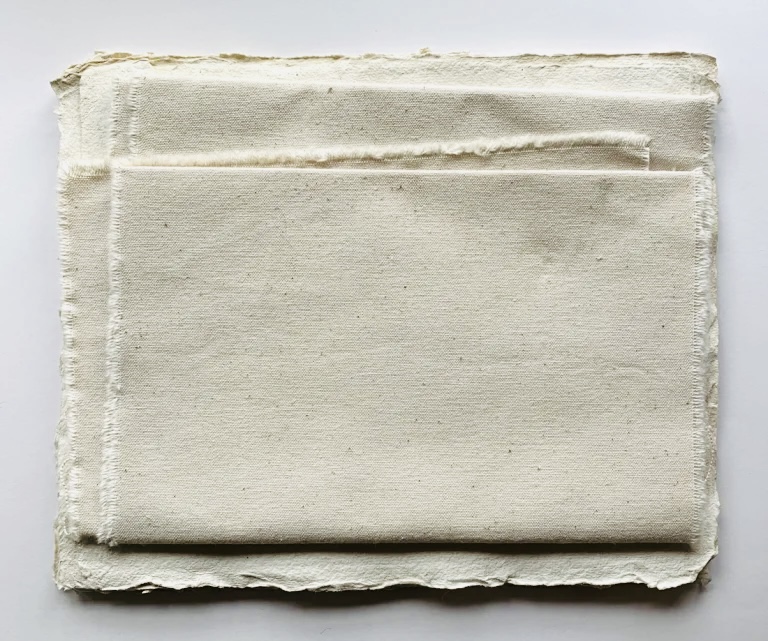
1992-1994 ‘Paper & Canvas’
canvas / dyeing, staining, folding / cutting and unstretching = materials as materials

Collage 03.11.2025 -> 12.12.2025
“When the edge is pulled out and exposed to the air it plays itself out into nothing” / surfaces become over-stretched and “make the character of their edges gratuitous.”
– Walter Darby Bannard, 1971
“poet must know | more than a surface suggests”
– Grace Lake (Anna Mendelssohn): ‘Propaganda multi-billion bun’, 1985
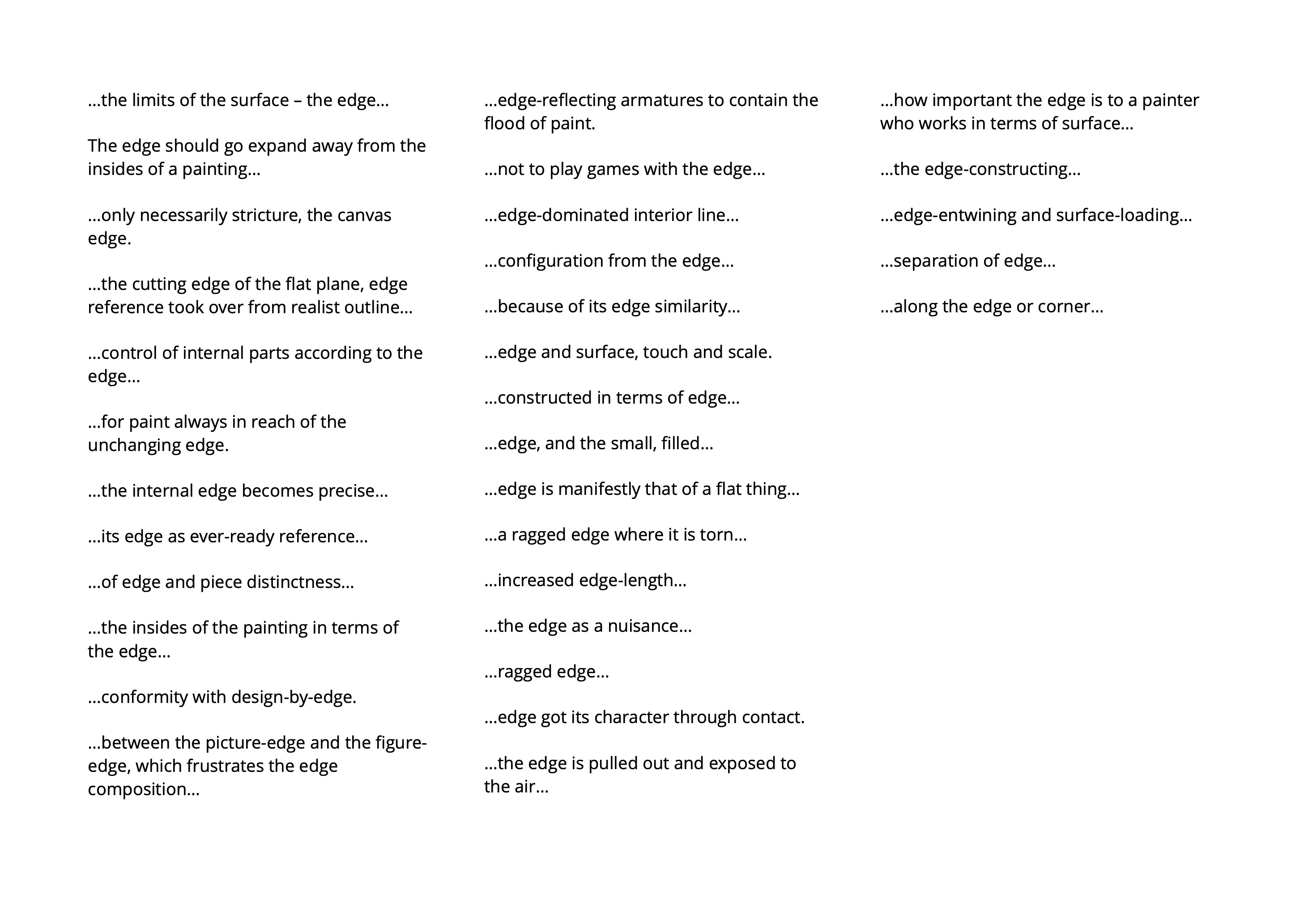
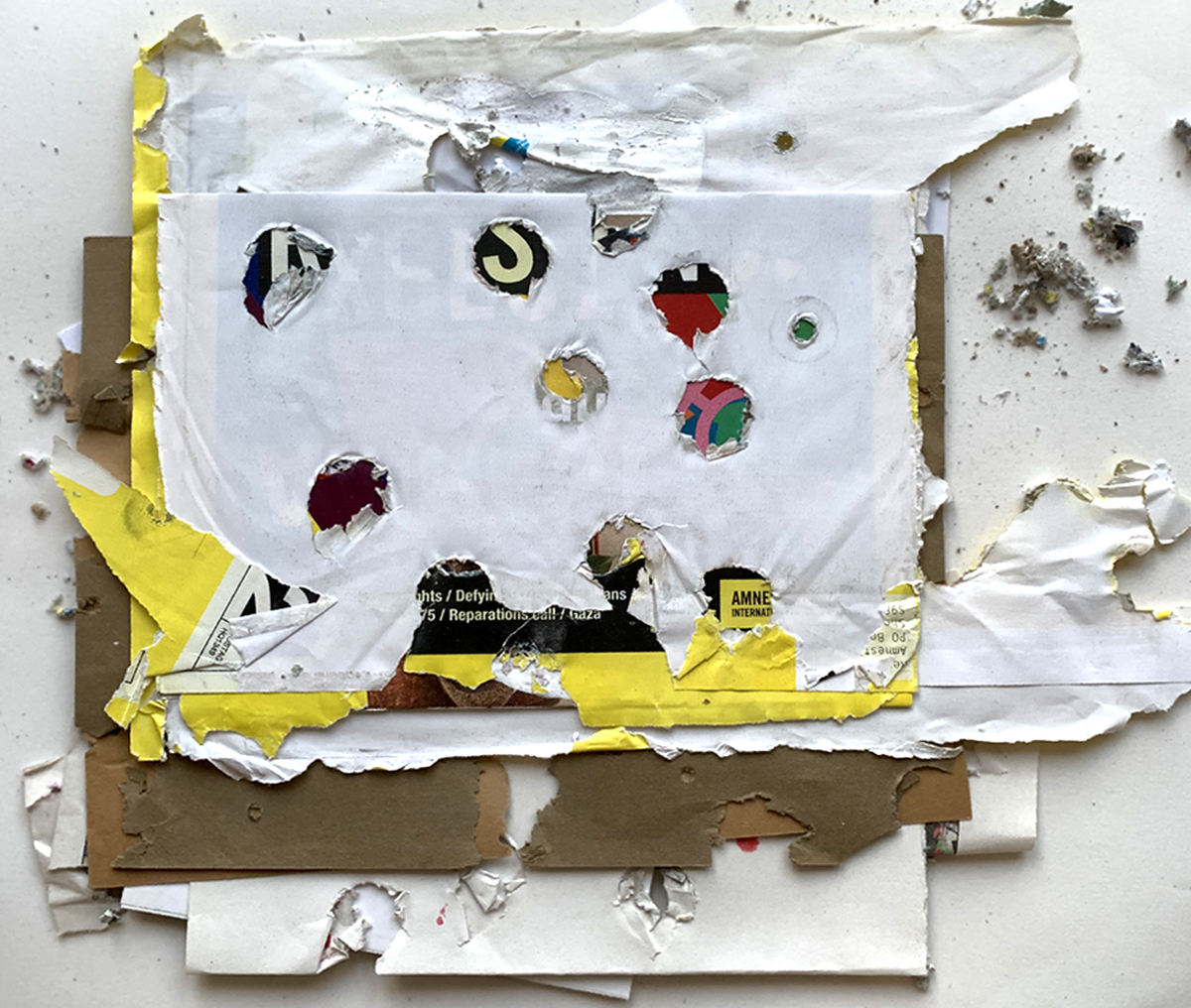
Collage 03.11.2025 -> 19.12.2025
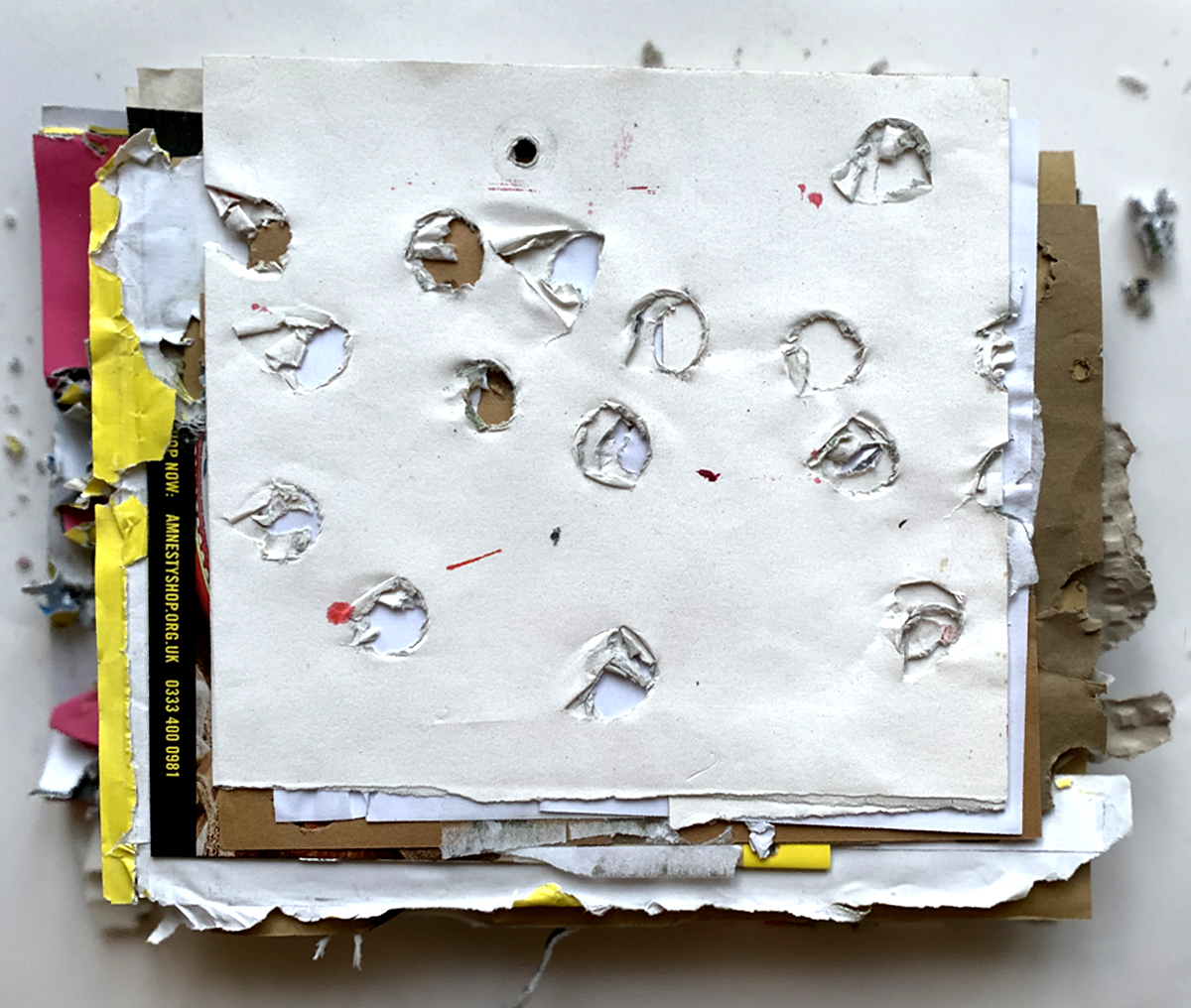
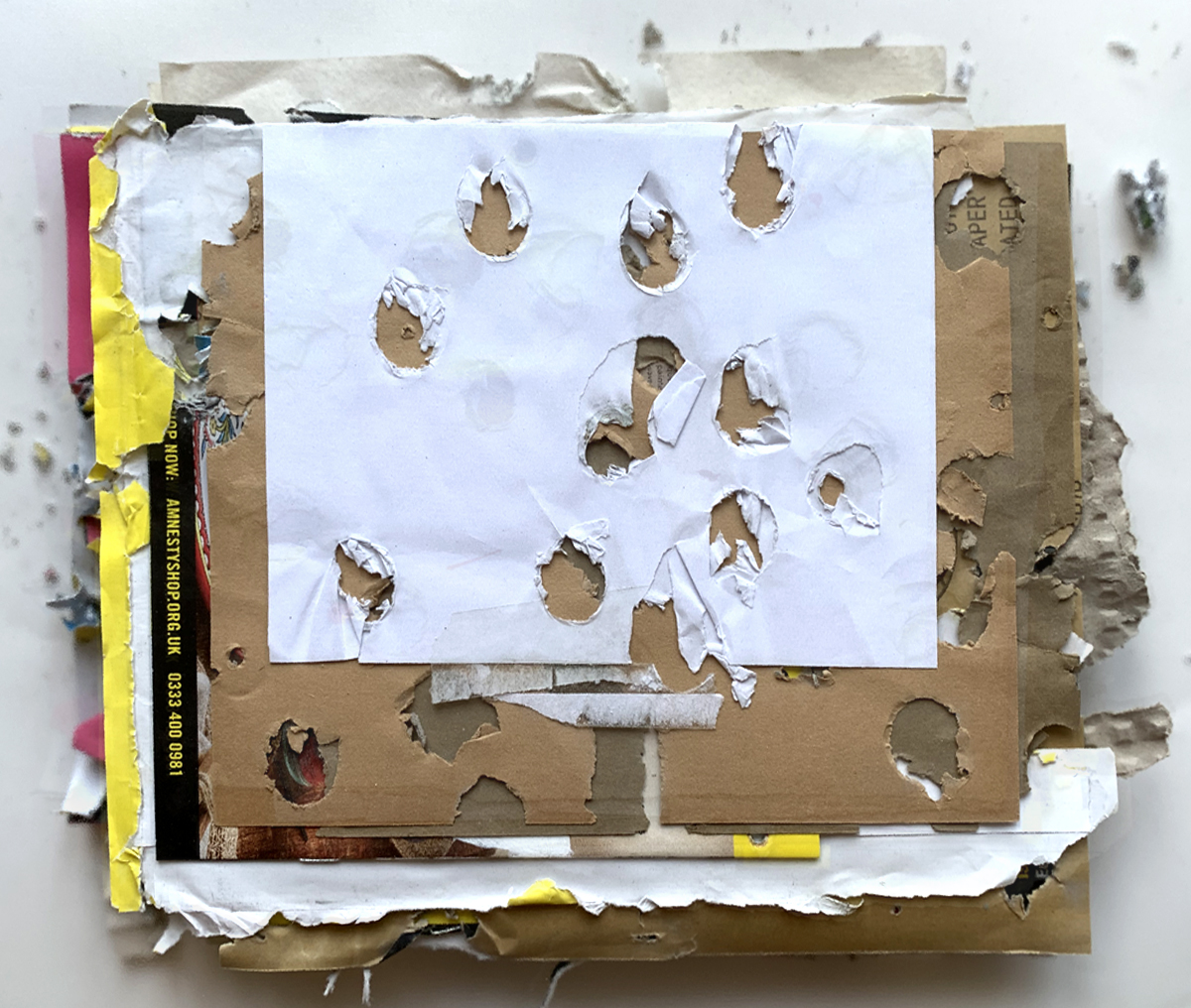
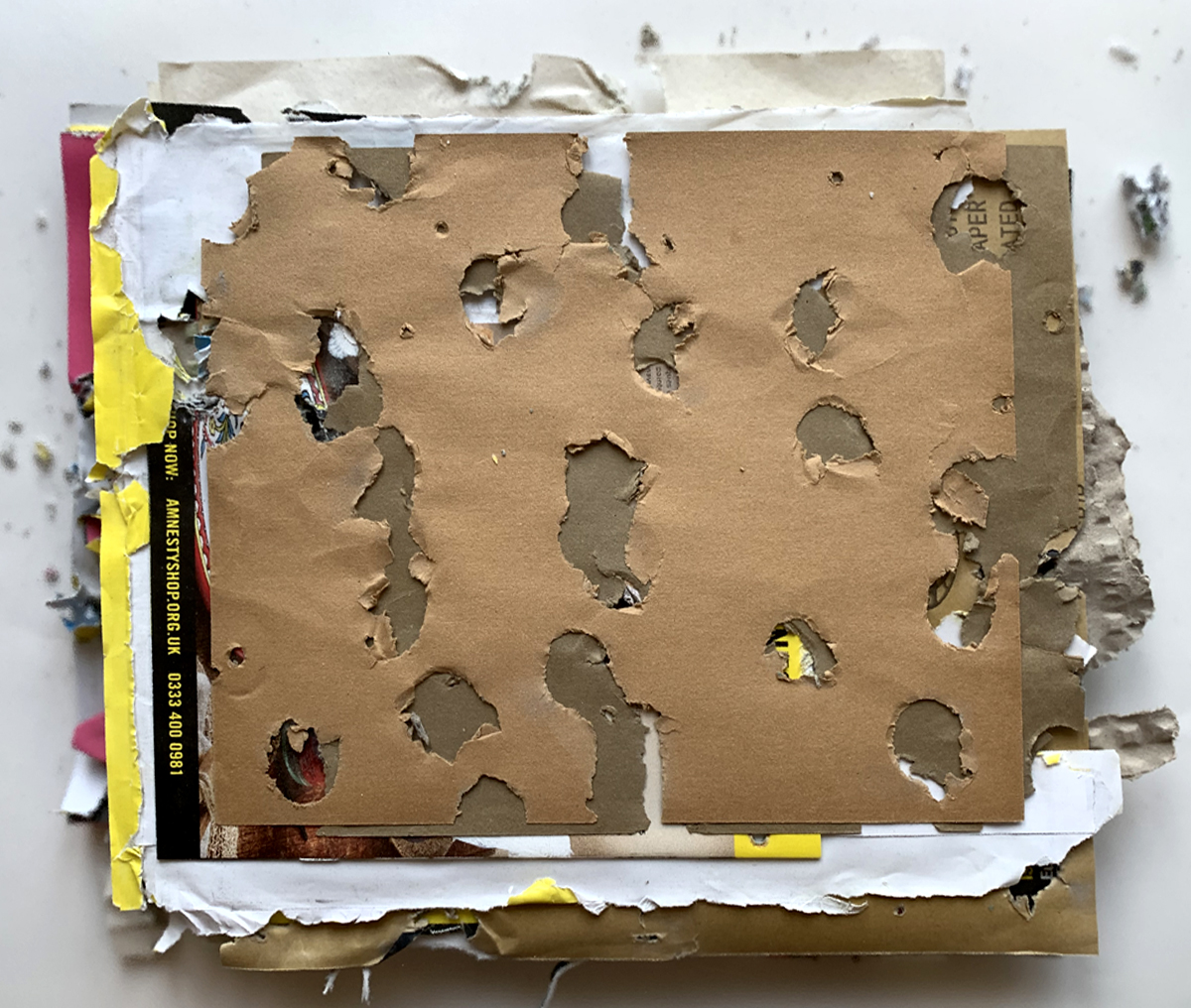
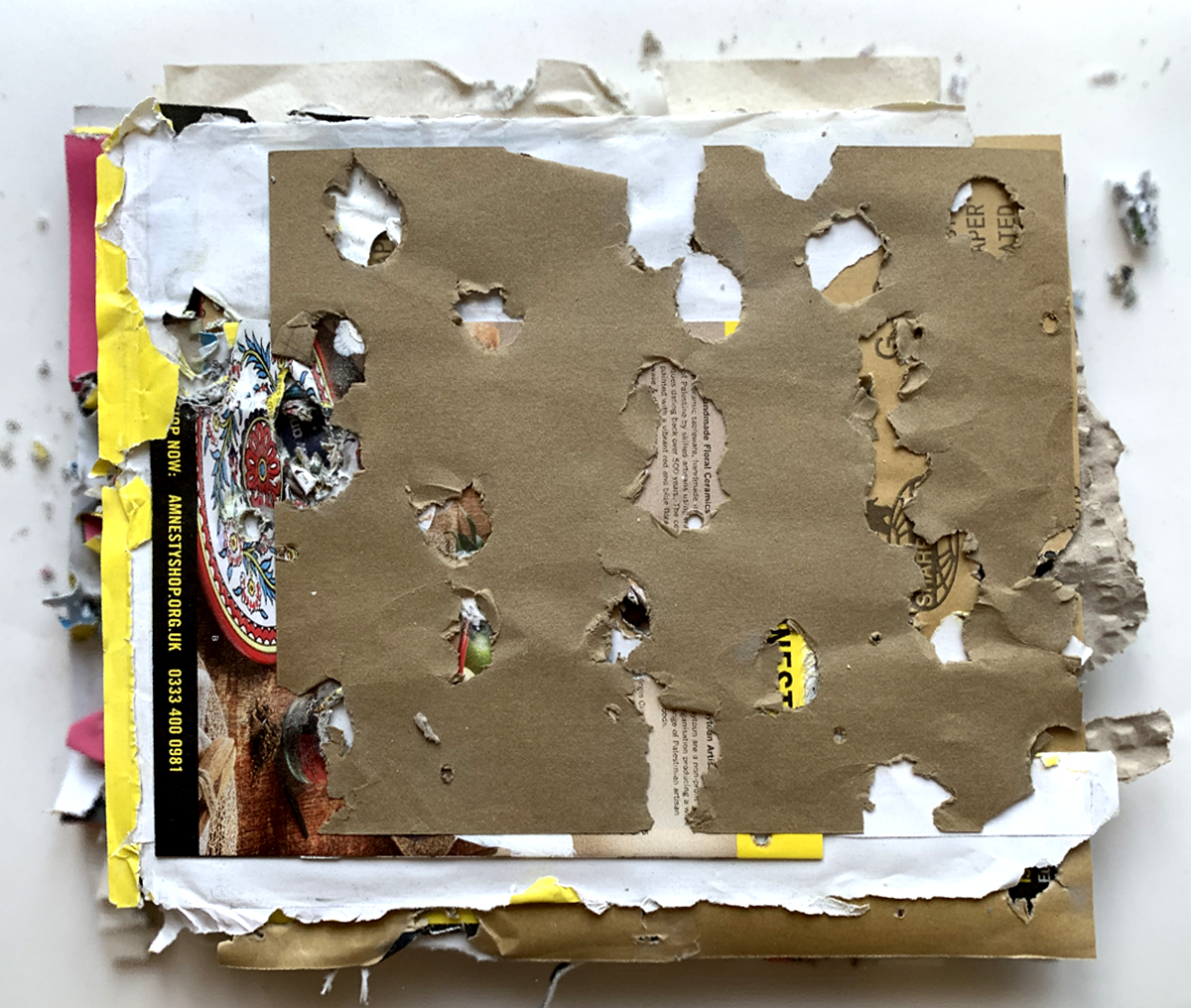
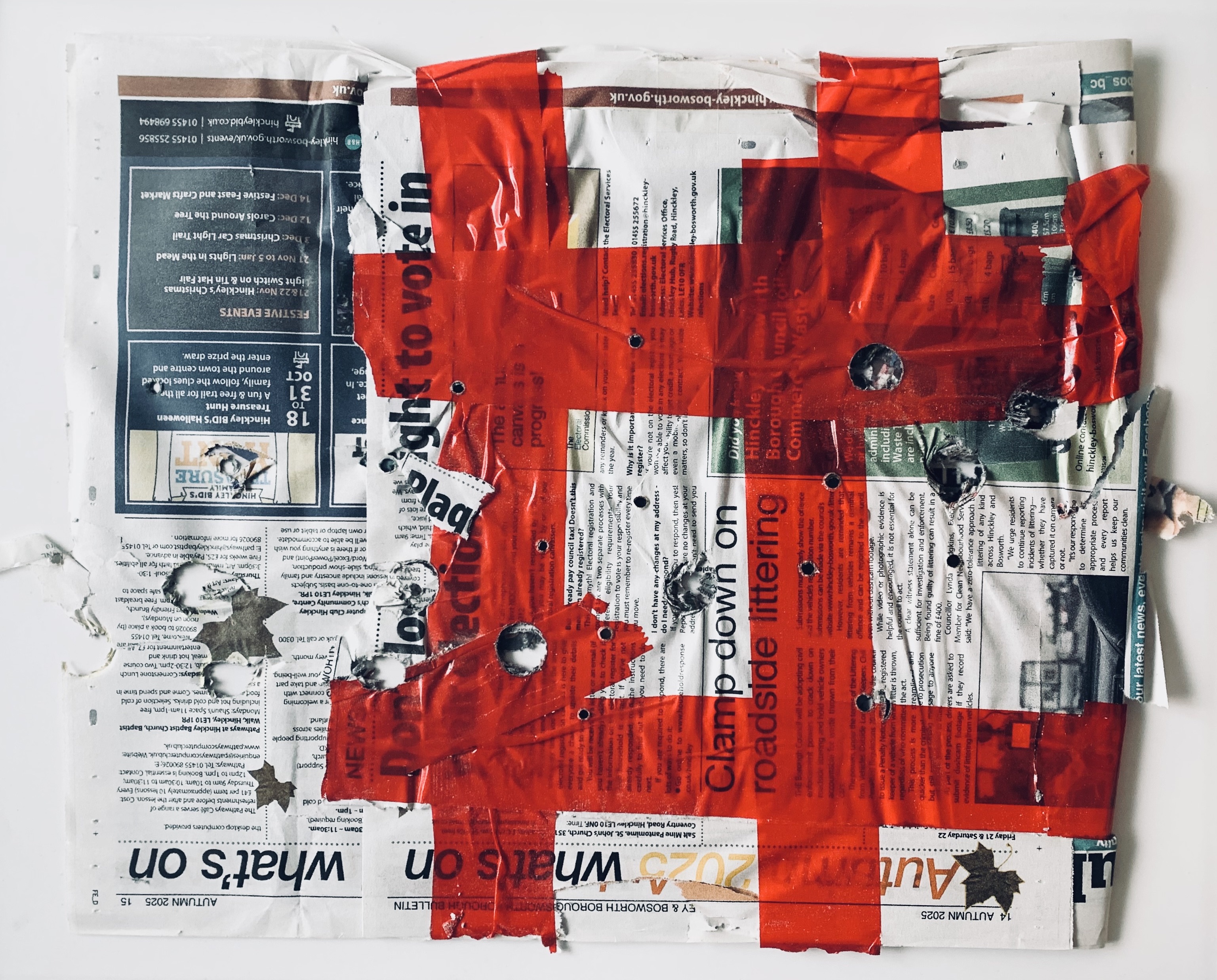
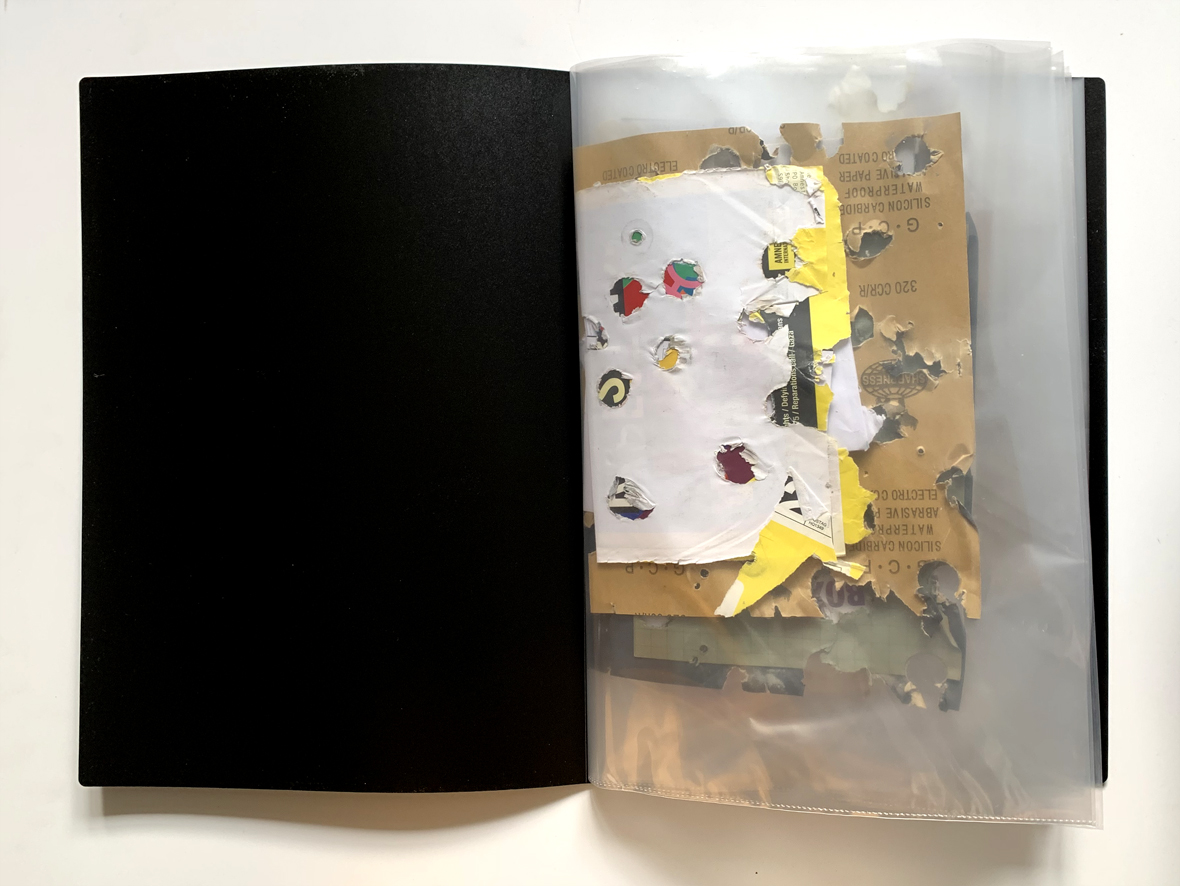
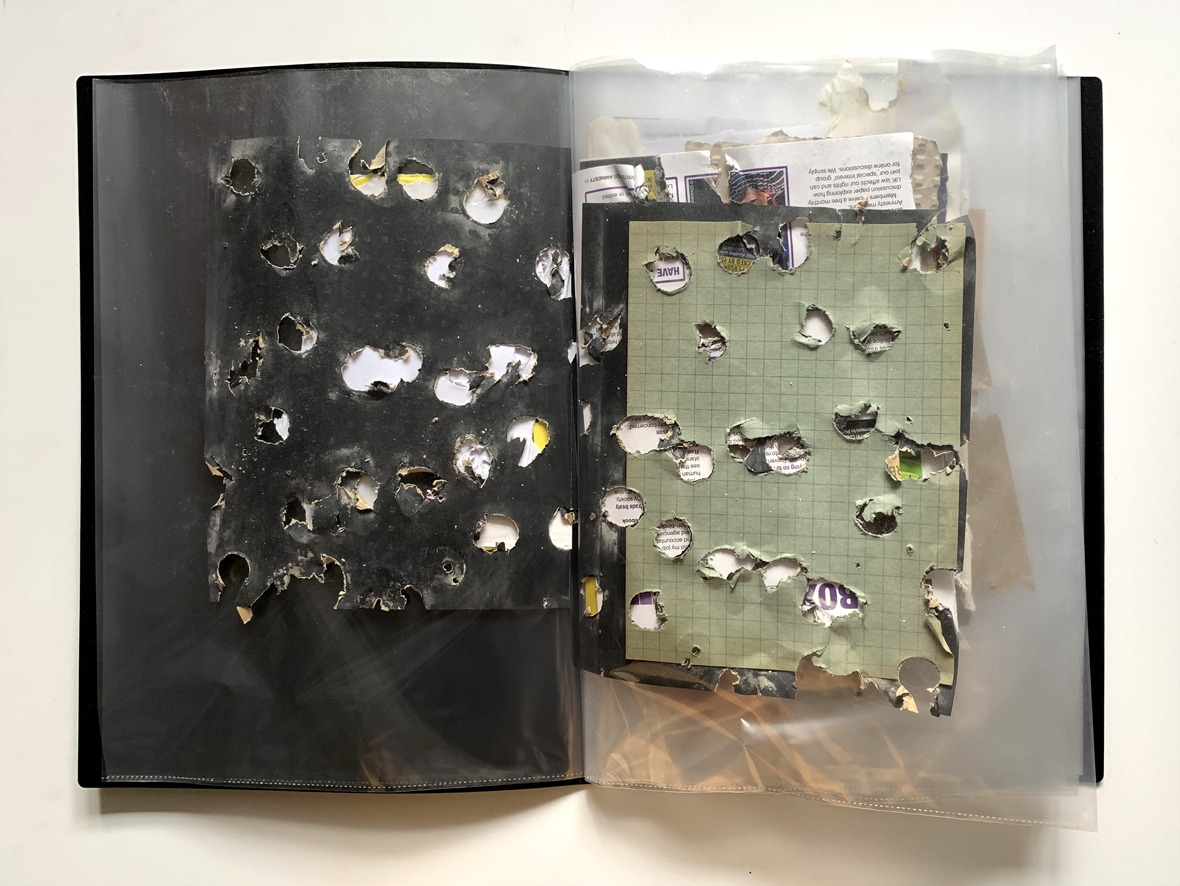
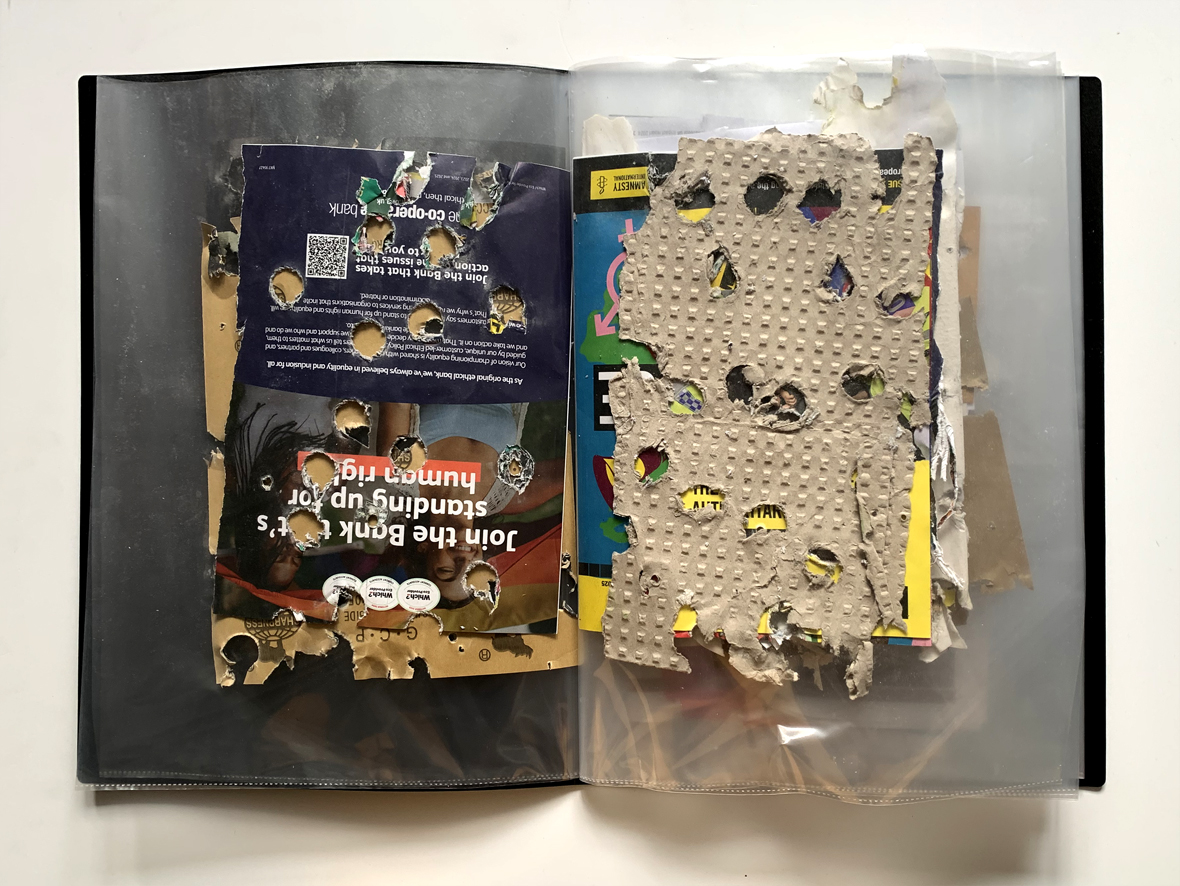
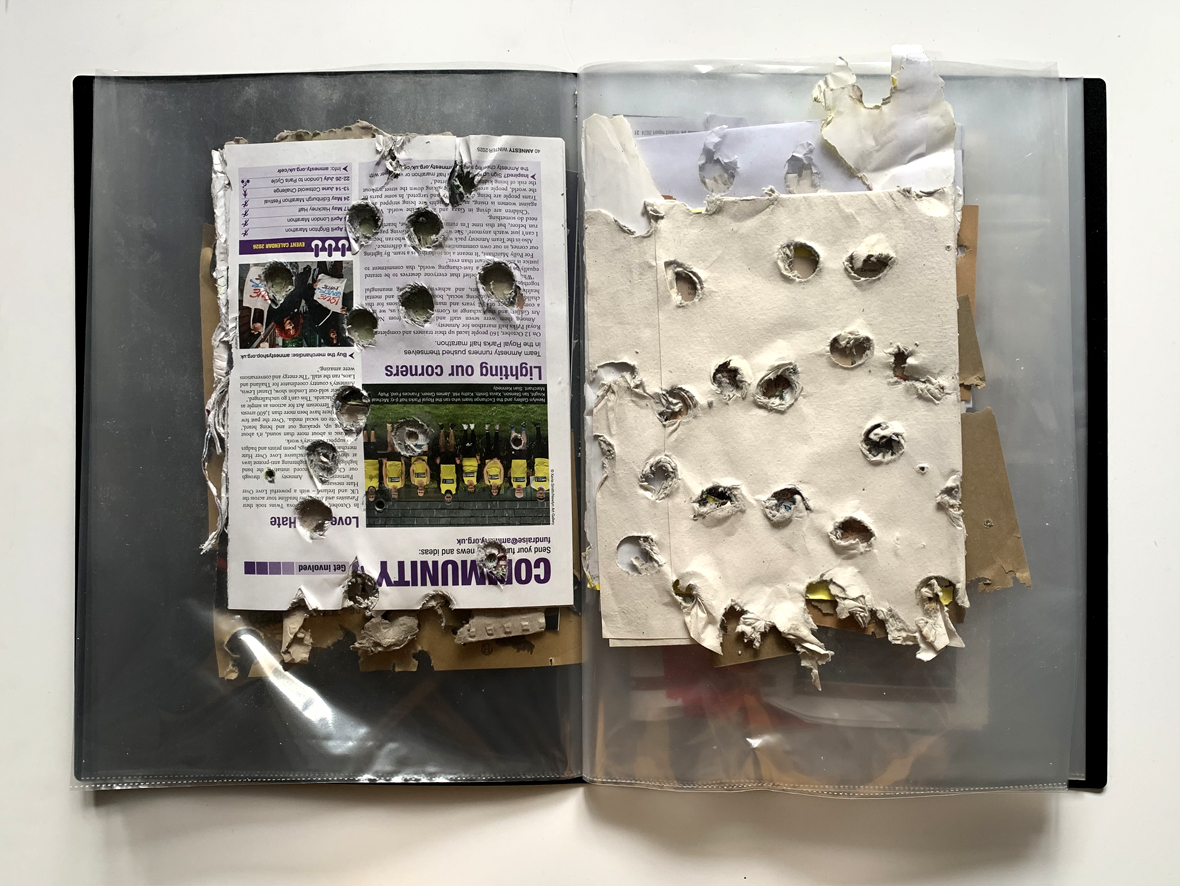
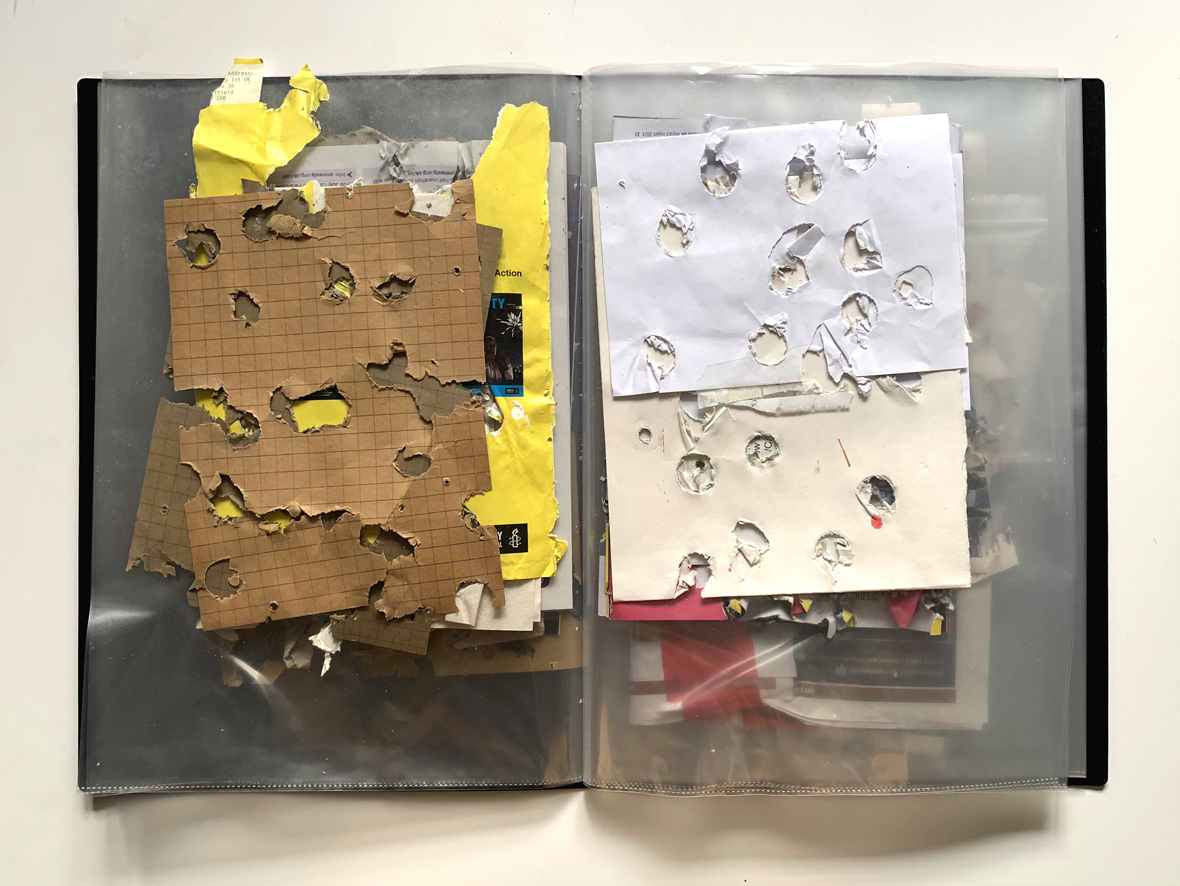
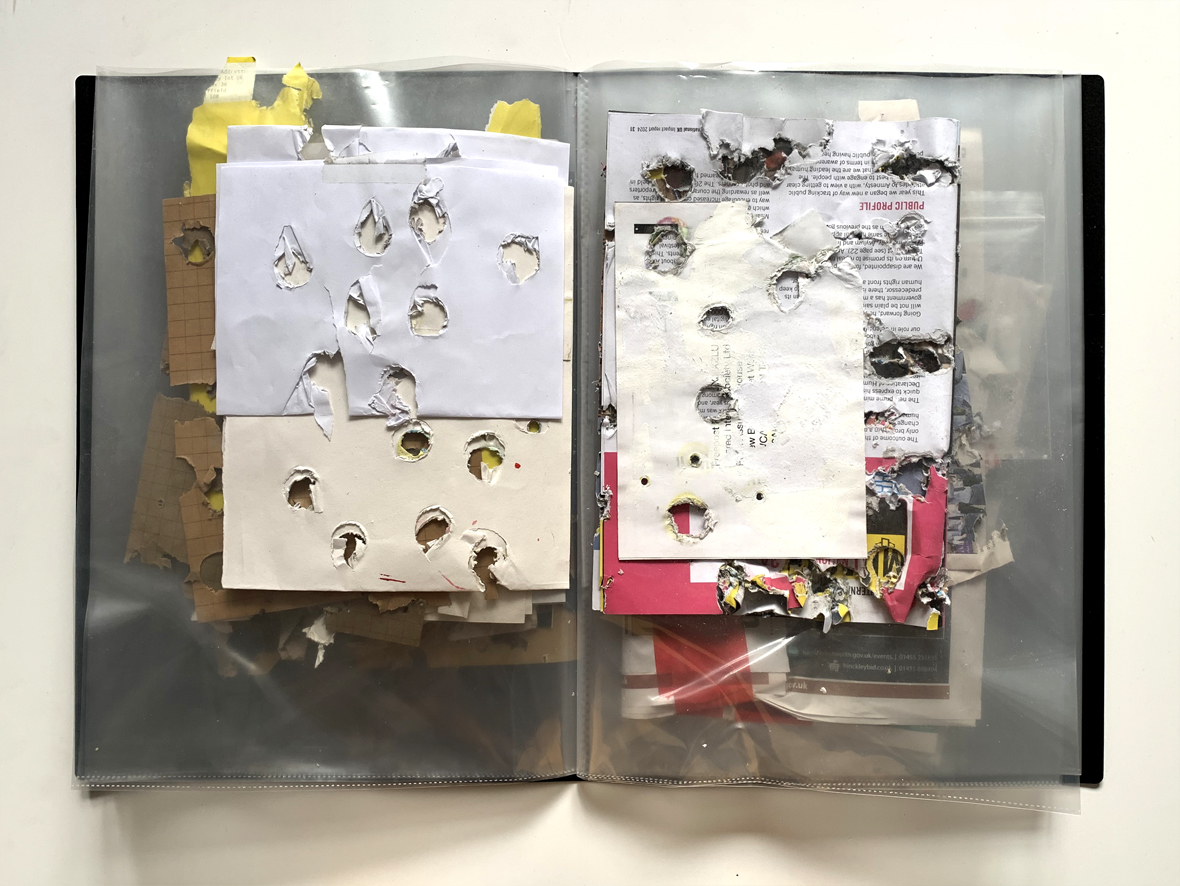
[12.12.2025] / hybrid-form within the expanded field / emphasising material presence and physical process / a negotiation between surface, void, and depth / an occupation of both surface and shallow relief through overlapping planes, irregular edges, and physical layering / conceptually between painting, sculpture, and collage / …material emphasis and process / foregrounding material disruption and process / physicality and presence / process over illusion—tearing, layering, and revealing underlying strata rather than simulating depth / a refusal of unified pictorial space / a layering of material / between -> neither -> nor = in the expanded field of related practices = relations among categories rather than by belonging to a single medium / “not painting, not sculpture” = hybrid event / relief-like layering -> sculptural depth + overall flattened presentation and reliance on surface materials recall painting and collage / surface, object, and space interpenetrate rather than align / material disruptions / refusal to fix / actively negotiating a space between painting and sculpture = material and theoretical complexity.
— — —
3rd May 2006 | Raymond Haines
Unlikely happenstance and the aesthetics of coincidence.
“A highly coloured visit [where] less were charmed [and] whoever wrote the land spilled over [and] swirled, lushly underdressed.”
Note:
“unlikely happenstance and the aesthetics of coincidence” / relates to the way various elements, ideas, or events come together unexpectedly in the creative process and their resulting visual or conceptual impact. The text “A highly coloured visit [where] less were charmed [and] whoever wrote the land spilled over [and] swirled, lushly underdressed”, further contextualises working narrative and approach. This comprises:
1. chance and accident (unlikely happenstance) in the making and experiencing of art.
2. the formal or experiential appeal (aesthetics) of these chance occurrences when they align in a meaningful way (coincidence).
3. an ‘ethical-aesthetic’ orientation in terms of living and relating to the world.
[‘Babel Texts’ and ‘Small Painting’ series, 2006-2007]
— — —
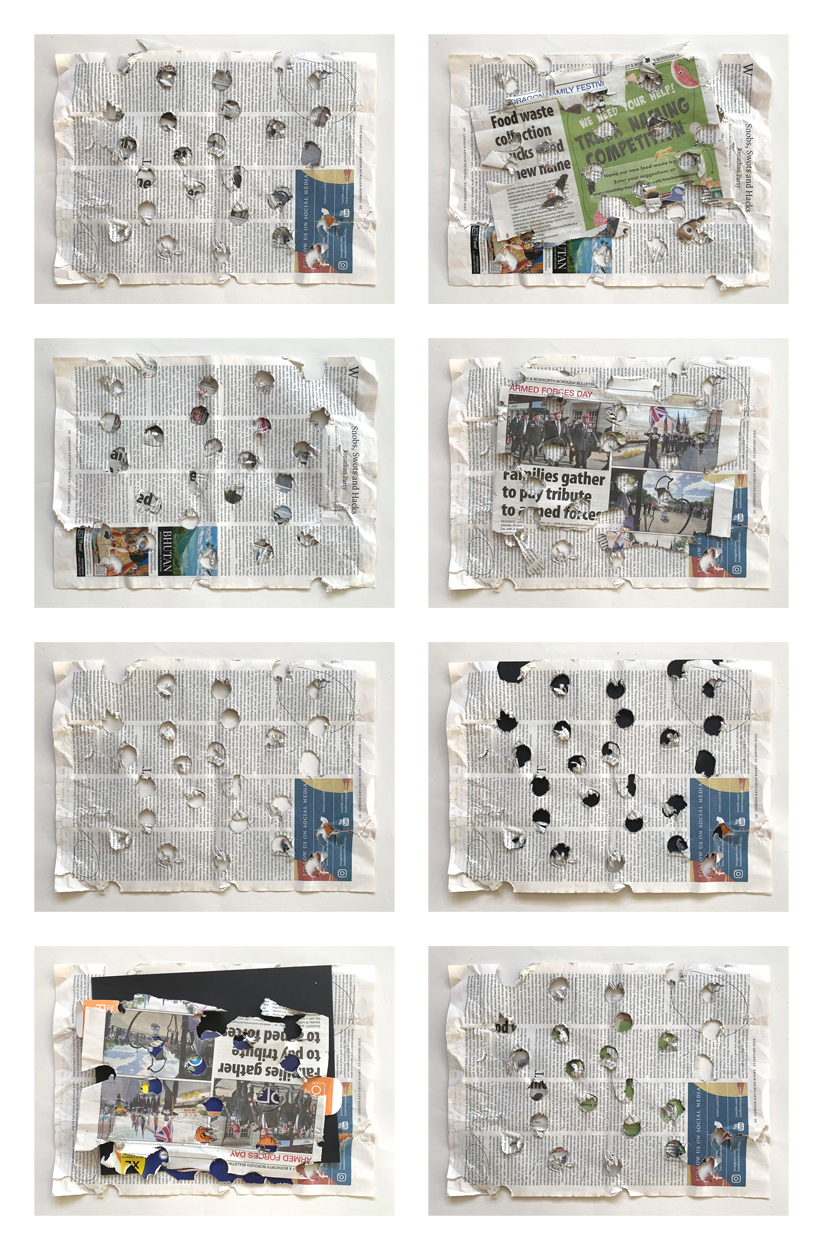

Artist: Unknown | 27.11.2025


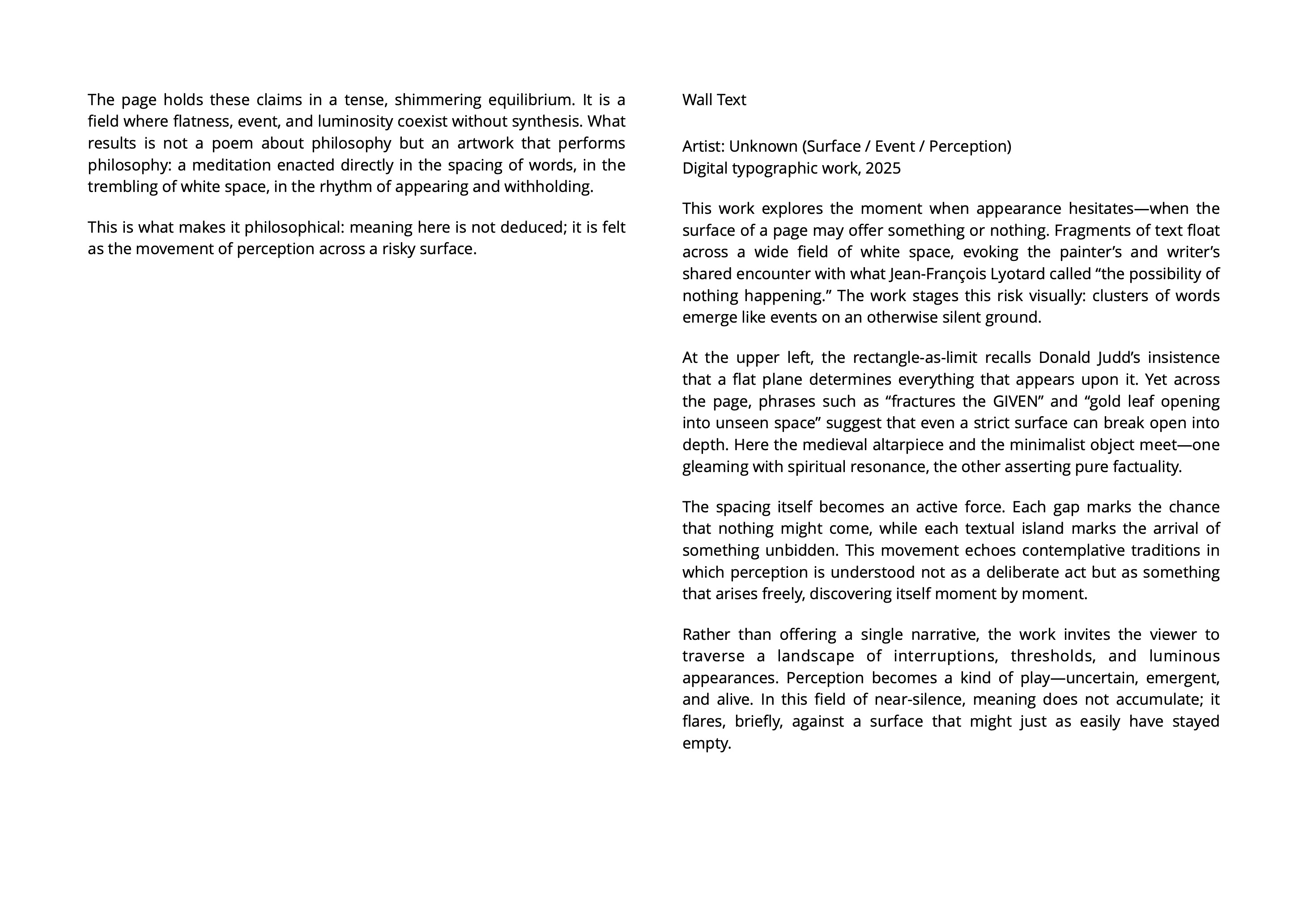

‘Borough B’ 28.11.2025

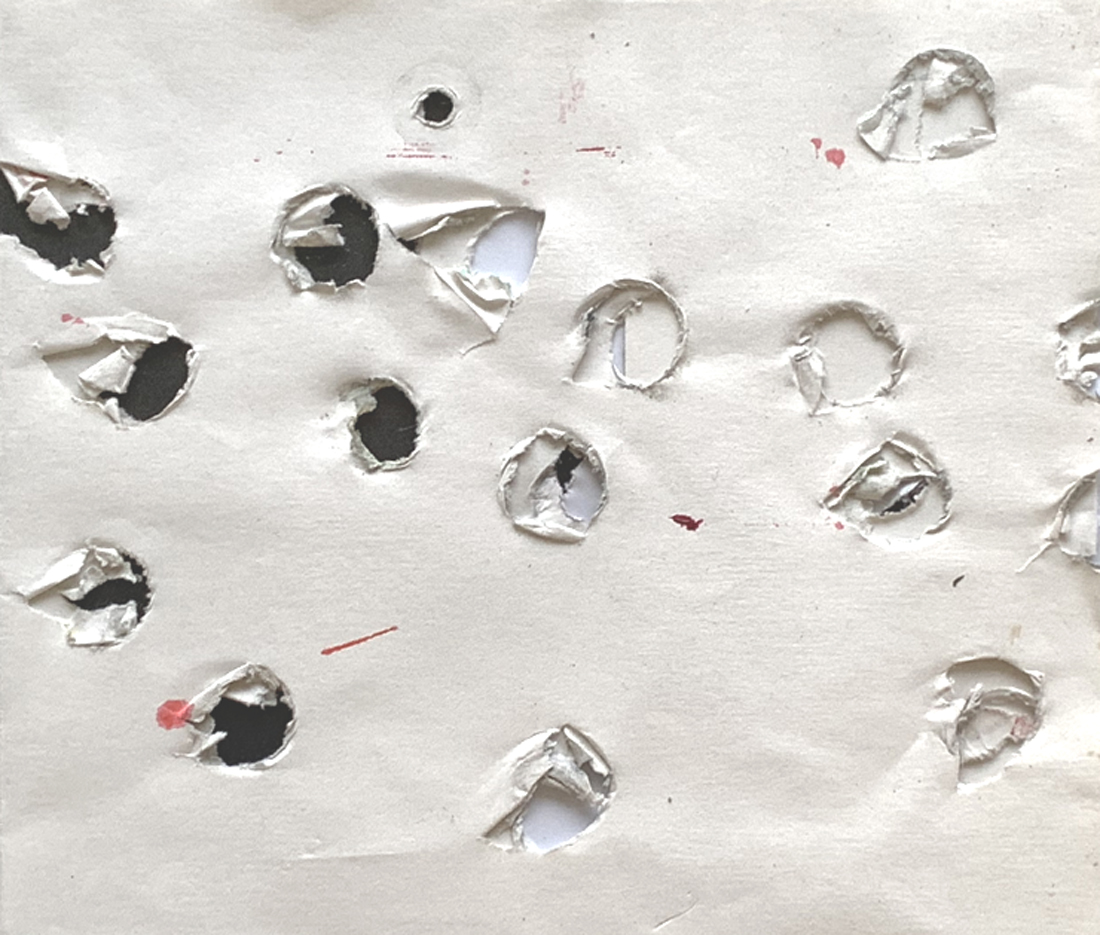


— — —
Walter Darby Bannard | ‘surface-conscious painting’
(draft slogans) 11.12.2027

— — —

#1
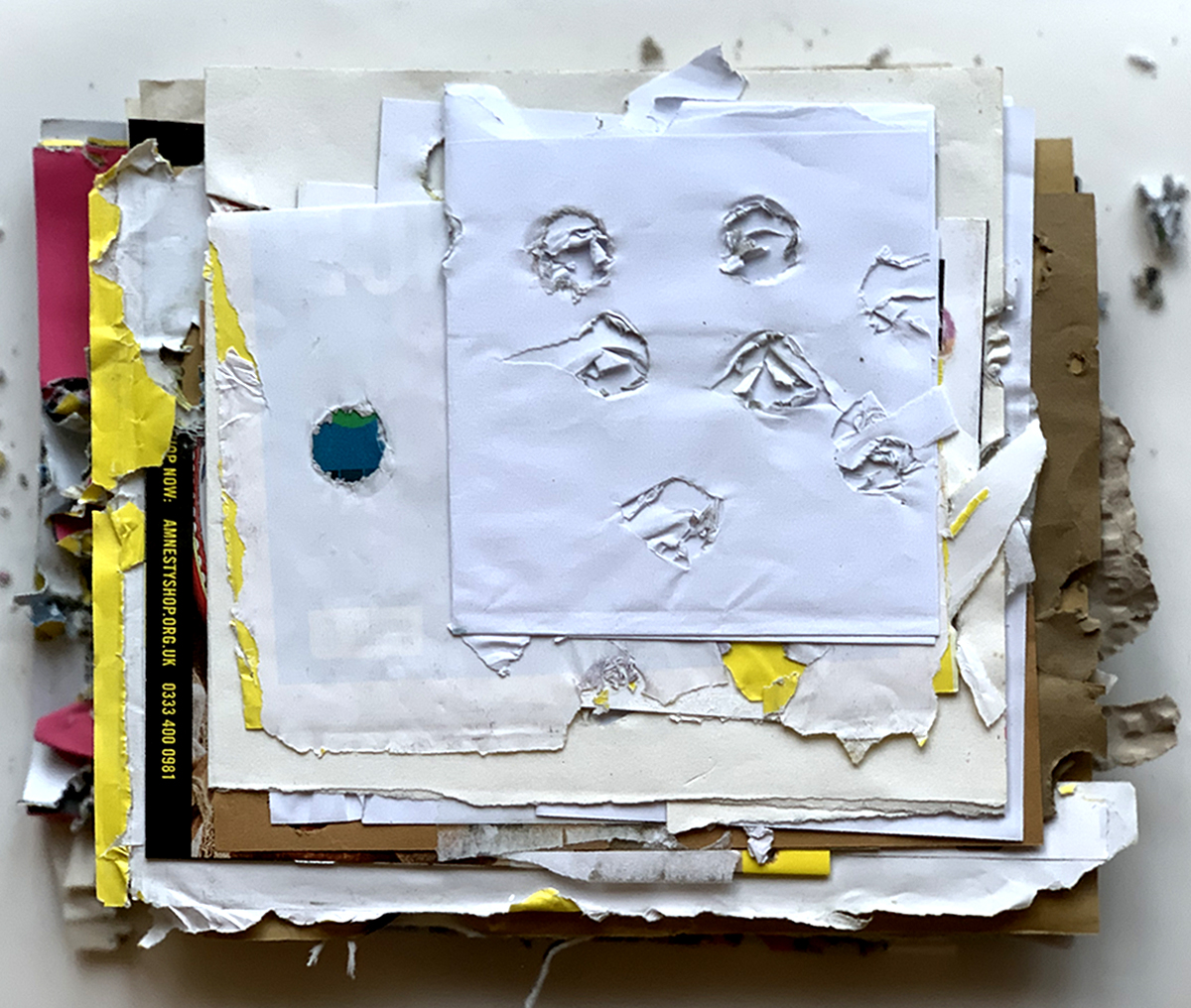
#2
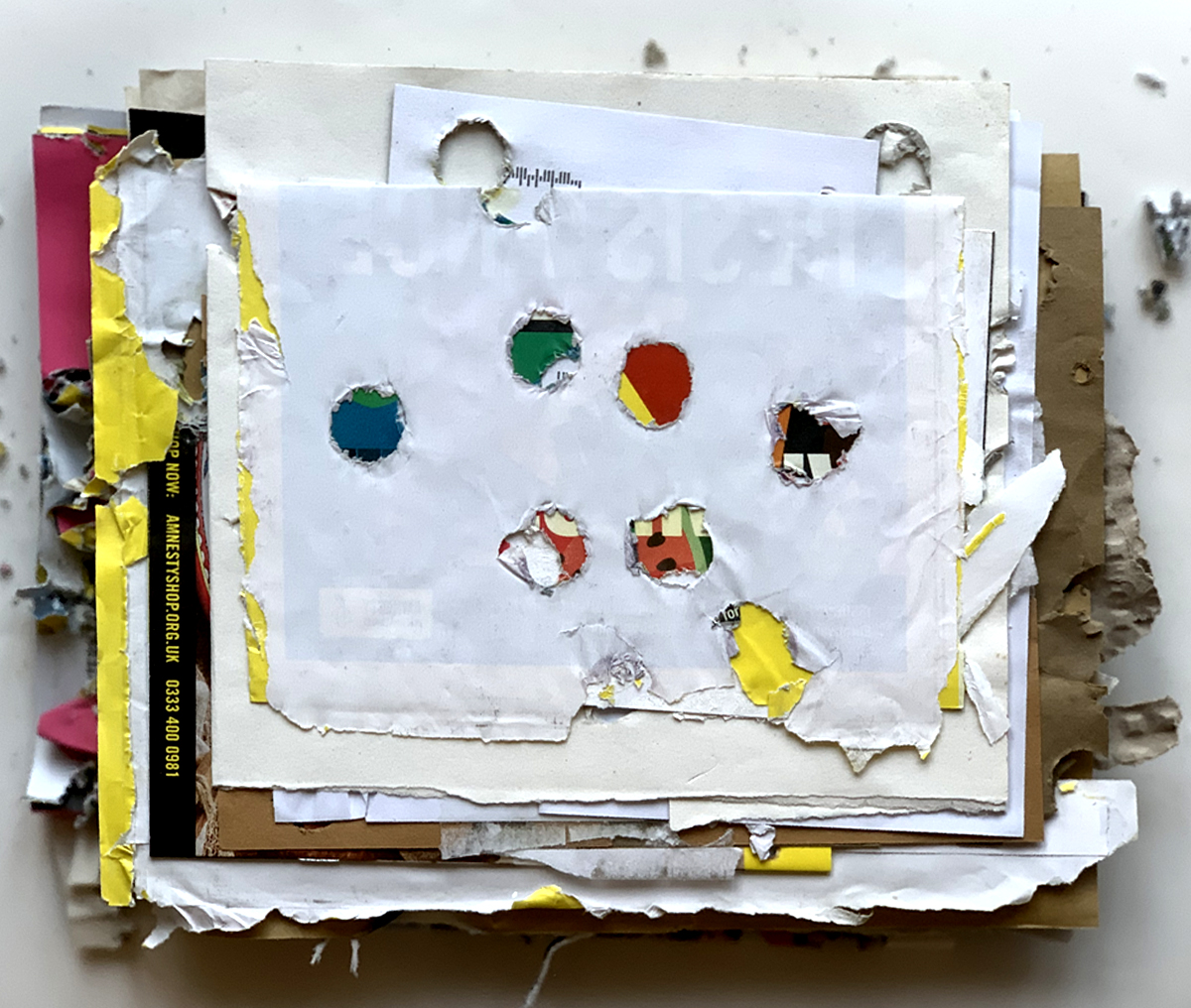
#3
#4
#5
#6
#7

#8
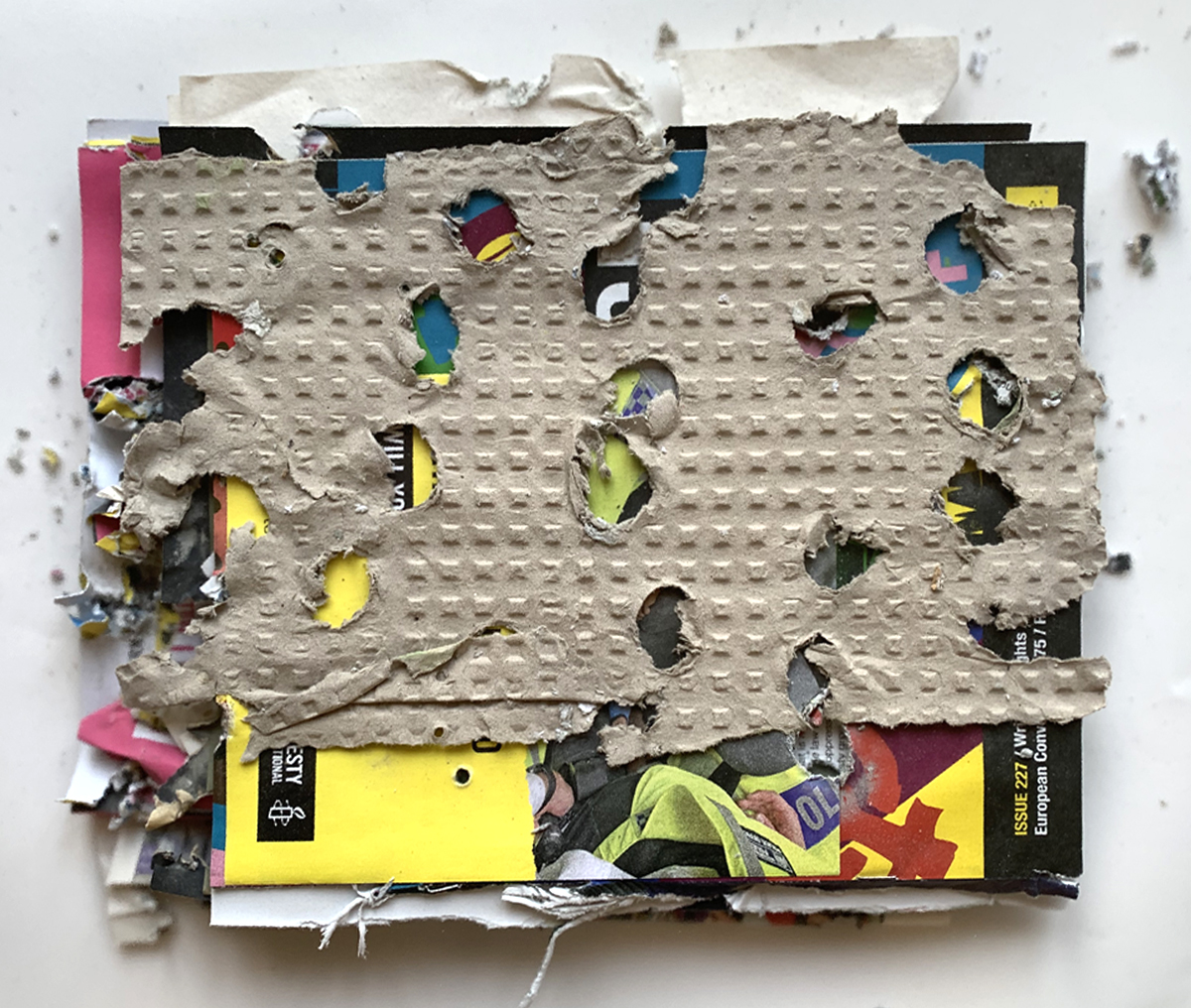
#9
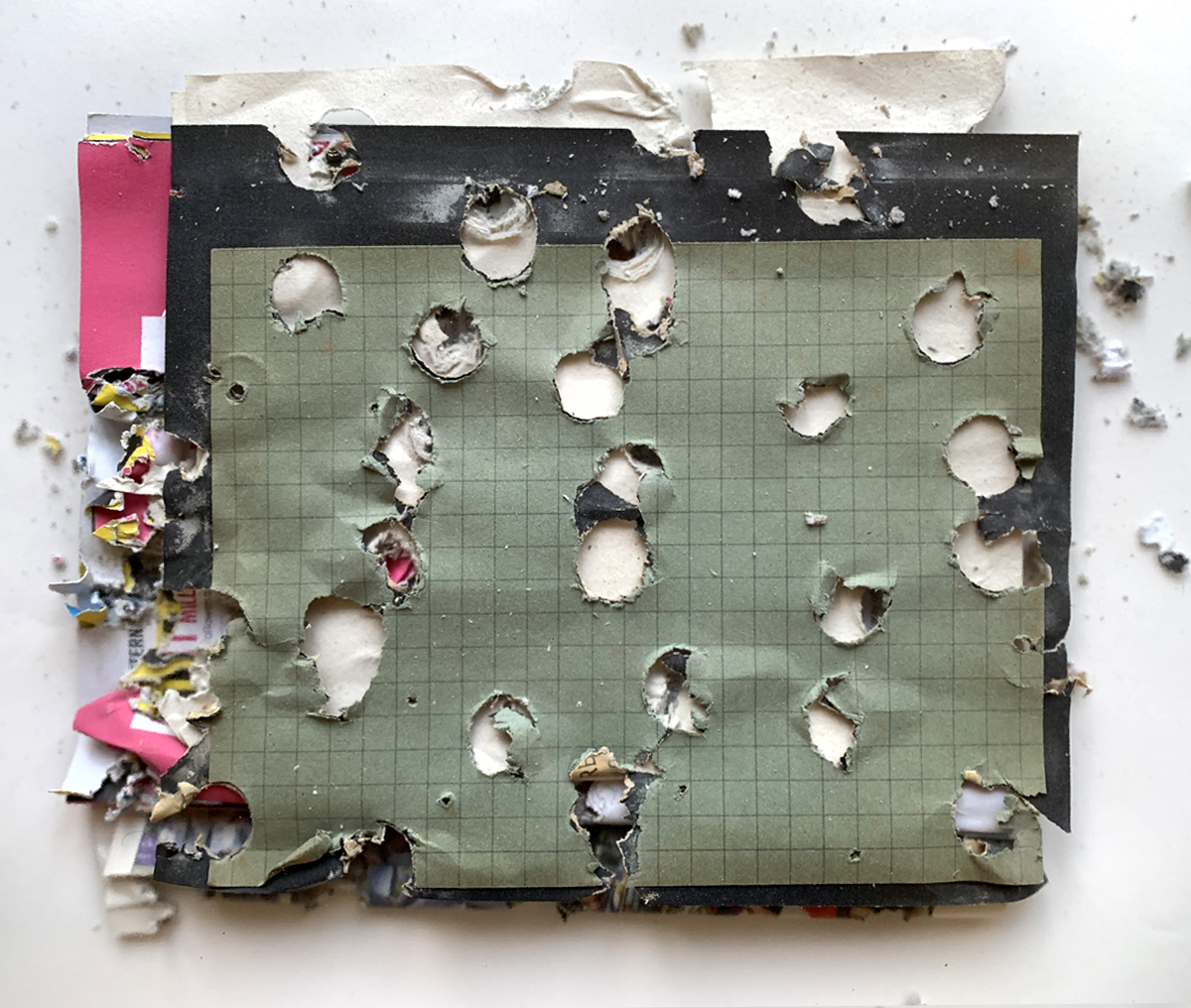
#10
— — —
‘Collage 03.11.2025’ | Working Notes 05.11.2025
Art as Found Perception: Enactive Awareness -> Beneficial Practice
Found Perception / convergence of Buddhist phenomenology, enactive cognition, and twentieth-century art / as beneficial practice—a discipline that transforms relation, perception, and worlding rather than assuming productivity or permanence.
Zhang et al’s enactive neuroscience and Herbert V. Guenther’s interpretation of free-rising perception / perception itself is a field of co-creation between awareness and materiality / art not as representation but participatory awareness—a dynamic practice of “entering the world and going beyond it” [Indriyeśvara] simultaneously.
To attend and to let perception find itself anew as the work of both awakening and art / surface / not image nor message but situation: perception revealed as an event in progress / habits of ordering and the undoing of certainty / a play of absence and emergence, a relational field in which attention must continually adjust, anticipate, and recompose / perception not as a means of recognition but as a form of participation—a found perception, co-created by matter and awareness.
[Zhang et al, 2023] perception, action, and spontaneous neural dynamics = not separate processes [but] mutually constitutive aspects of cognition understood as “an ongoing, embodied activity” = anticipatory and self-organising dynamics engaging continuously with environmental circumstance / perception as event / a negotiation between openness and constraint / art as less an object and more a site of enactive participation = a structure inviting perceptual adjustment + awareness to discover its own operation.
[Gaṇḍavyūha Sūtra / Thomas Cleary / Indriyeśvara] “because play is buddha-work, Sudhana saw the boy playing in the sand” = “substance of discipline” + the capacity to “use practical and artistic genius to enter the world and yet go beyond the world.” Mastery of worldly crafts (architecture, design, and the practical arts, et al) = enlightenment not through withdrawal but via engaged ‘art-ing’ = participation in form = awareness as immanent transcendence, presence arising within and through the flux of appearances.
Surface materiality as Indriyeśvara’s buddha-play / facticity + susceptibility / perception / the eye navigates gaps, aligns fragments, and shapes temporary coherences = perception finding itself = seeing as both aesthetic and ethical = beneficial practice / transforming the conditions of relation and attention rather than producing a consumable outcome.
[Raymond Hains] / “creative deconstruction” + “deductions and comparisons” (Bompuis 1997) = ongoing dismantling of the perceptual order of the city / challenging stabilising frameworks of contemporary art / the world becomes a collage / in flux / perception continuously displaced and reconfigured.
[Georges Braque 1914 / Plaut, 2021] / Hotel Roma / sculpture “made solely to be photographed”—an arrangement of “papery things and charcoal” affixed to the wall without the intention of permanence = temporal composition, an act of appearance destined to disappear / between presence and absence.
[Georges Braque 1914 / Isabelle Duvernois, 2019] ‘Bottle of Rum’ / pinning shapes onto the canvas: “He’s not drawing, but physically using cut-out shapes” = physicality of placement = drawing as spatial negotiation = composition as an event of relation rather than representation.
In both, perception enacted through the provisional and the tactile = art that functions as a rehearsal for awareness / not a finished form.
[John Panting / ‘Late Works’, 1974] / “attending to the nature of spatial relationships, their manipulation and the nature of their construction and perception” [to] “divest material of associative meaning” [as] “perceptual configurations that function in terms of their relationships.” / “no attempt to abridge the apparent redundancy with a sense of tacit order. The usual checks and balances are conspicuously absent” [Ronnie Rees, 1975] / fragmented assemblages = sculptures as awareness: materiality = state of becoming / between collapse and emergence.
A lineage of disciplinary transgression towards a contemplative discipline / abandon mastery and closure / open the process of making to uncertainty and relational intelligence / [Guenther 1975 / Dzogchen phenomenology] / free-rising perception (mthong ba rang shar) / the spontaneous self-arising of awareness unbounded by conceptual imposition / awareness as the event of experience arising = the world seeing itself / art = realisation not expression / perception as world-making.
‘Collage 03.11.2025’ as an enactive field in which material and awareness co-produce each other / surface as perceptual ecology / engagement without fixed meaning / the rhythm of attention + a cycle of anticipation and adjustment / the work “modulates its own sensory consequences” [Zhang et al, 2023] / it liberates itself as it appears [Guenther, 1975].
Art reorganises perception = a practice of enactive awareness / when making and/or viewing become conscious of its own relational unfolding = perception perceiving = art as beneficial / neither represents nor produces but transforms.
Art as objectless relation / Indriyeśvara’s play: to enter the world completely and to go beyond it in the same gesture / deconstructive yet creative / dismantling / revealing awareness at work / ethics as material lucidity: a refusal of associative closure, an openness to perception’s own rhythms /an art of beneficial uselessness / not productivity / but transforming relation, perception, and world-making = not a representation of the world but the world’s own act of seeing / a seeing that liberates itself through the very act of seeing.
References
Bompuis, Catherine. 1997. Raymond Hains: L’Invention du Monde. Paris: Centre Pompidou.
Cleary, Thomas. 1984. The Flower Ornament Scripture: A Translation of the Avatamsaka Sutra. Boston: Shambhala.
Duvernois, Isabelle. 2019. Metropolitan Museum of Art, video interview, “Braque’s Bottle of Rum.”
Guenther, Herbert V. 1975. Matrix of Mystery: Scientific and Humanistic Aspects of rDzogs-chen Thought. Berkeley: Shambhala.
Panting, John. 1974. Artist’s notes, unpublished. Quoted in Ronnie Rees, “John Panting,” exhibition catalogue, Lisson Gallery, 1975.
Plaut, Tony. 2021. “The Grand Trompe-L’Oeil of Georges Braque.” Academia.edu. https://www.academia.edu/49712885/The_Grand_Trompe_Loeil_of_Georges_Braque.
Zhang, Chenguang, et al. 2023. “Brain Mechanisms of Mental Processing: From Evoked and Spontaneous Brain Activities to Enactive Brain Activities.” Psychoradiology 3 (2): 55–68.
— — —
Drawing Notes 12th January 2007
Pure white, 220g/m, matt surface, dense and strong, withstands erasure and reworking, universal application, especially good for pencil and crayon drawings, chalk, pastel and charcoal.
always drawing
never making a drawing a breathless notation.
tearing up torn-up tracings.
held horizontally
in the middle of the page.
nothing special
“I found that closing my eyes was very helpful to me”.
smashes down half-erased
repetitive
starting and breaking a sense of place visible coefficients.
a kind of ground zero exposure
and openness
no such thing as a renewal.
answer easy questions raise suspicions.
huge expanses minutely detailed.
dense black
shimmering white claustrophobic and abstract.
the blank
skitter and flicker precarious thrashing.
arabesques
disrupted and mocking full of knowing pleasure superfluous
urgent.
hardly visionary add nothing just walk.
gestural scribblings effortless
thick drawings.
glimpsed in passing possibilities.
randomly arranged half-demolished stacked
strips
paper.
pinks
and lavenders.
redundant
shut down
final propositions
without interesting possibilities.
specificity
is misleading.
black and white dabs
stark black outlined overflowing.
smudging smearing dabbing.
complete darkness.
mocking the legacy.
blindness imagined
as yet unseen.
the sky is the limit.
such as trees
a horizontal line parallel.
Fernand Leger: Les Constructeurs 1951
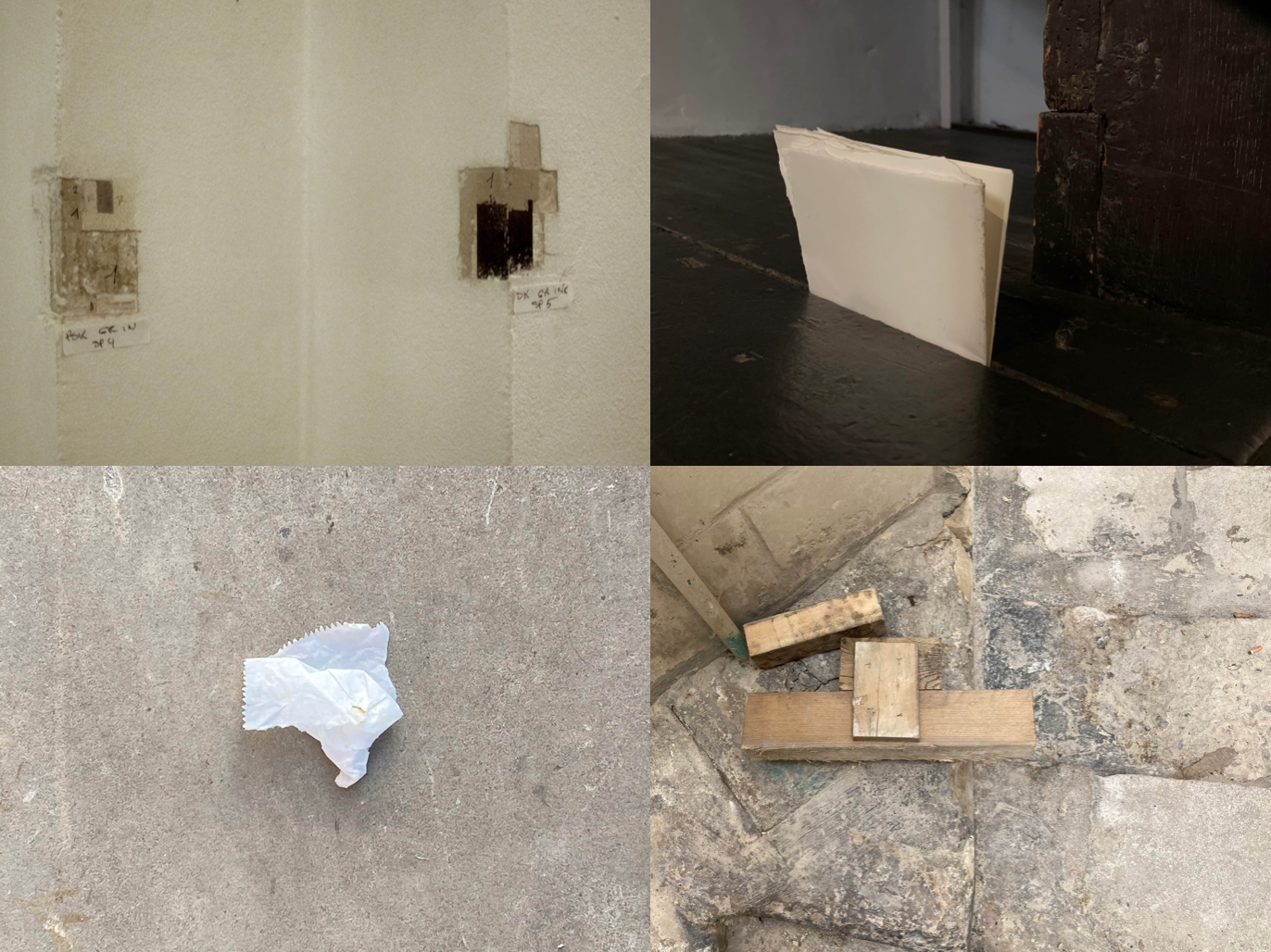
34. FRAMING / FRAGMENT / FABRICATION
- Centre for Fine Arts, Brussels, 2015
- Charlton, London, 2023
- Plantin-Moretus Museum, Antwerp, 2024
- Valletta, Malta, 2023.
— — —
Revision | 08.12.2025
[, ponderous loco mobile omnibuses lose themselves and pump ponderously into uninteresting little side streets, and] / [On Shrove Tuesday preceding Lent Paris takes a breath before fasting and goes mad for the day and night.] / [. None of the harsh stinging stuff, no plaster-of-Paris, or red pepper as at Milan and Coney Island—that is not the Parisians’ idea of wit or pleasure! The showers are soft and…]
“…and the dust of the streets rises to meet the dust of the confetti, whilst through this haze the electric light shines with bizarre delicacy.” / ‘All the Things You Are’ / “You are the dust of the streets that rises / To meet the dust of the confetti.” / “And the feet of the dancers rise
“To meet the feet of the dancers.”
80,000 bags (20,000 kilograms) of soft paper confetti / 500,000 kilograms / the country’s flagging paper industry / “Confetti Rain” / conficere (“to prepare, to make ready”) / waste from punched-paper factories / “I dislike confetti…” / “Time you enjoy wasting is not wasted time.”
finding little paper dots in one’s drink / to incorporate a “found” object / the sixth is covered in sand / the areas of colorful dots, which were painted on white to provide more contrast / passages of stippling, or fields of small colored flecks / staccato horizontal dashes that signify printed words / purple dots / quickly painted—the brush dragged in places / white lines were formed by the negative space
“blinding showers of multicolor confetti” / “confetti on the sidewalk” and “avalanches of confetti”
glossy Ripolin house paint / “scattering of points and small dots…and pretty pleasant colors,” as “the taste of the embroiderer or lace-maker” / dots are monochromatic
“RD[E?],” “AUX-[P? B?], 5600 KILO[M?], “PR[O?]” / “BO[RD]e[AUX-P]aris”
dozens of pinholes in the canvas / the flat areas of dots / a two-dimensional sculpting medium / a thin wash of white paint / translucency / the related corollaries of depth, texture, and light / luminous planes / sprinkling square-cut confetti onto paper and painting prototypes based on how they landed / optical mixing within three-dimensional space / jubilant and rowdy popular culture
[confetti, dust, translucency, optical vibration, foundness, and Cubist procedure]
Revision | 10.01.2026
4. …the structure of joy.
7. …painting hasn’t forgotten.
10. …a quiet riot.
12. …refuse depth.
13. …teach the canvas how to think.
14. …enough to make light reconsider itself.
15. …teach the eye to waste time beautifully.
18. …pinholes and propositions.
20. …the structure of delight.
— — —
5. Surfaces speak by refusing depth.
8. Chance performs its own geometry.
9. Space thickens when touched by repetition.
10. Fragments decide what the whole will be.
11. A hole is the memory of an intention.
15. Silence appears where colour gathers.
18. …the rhythm of interruptions.
09.01.2026


21.01.2026
#1
#2
#3
#4
#5
#6
#7
#8
#9
#10
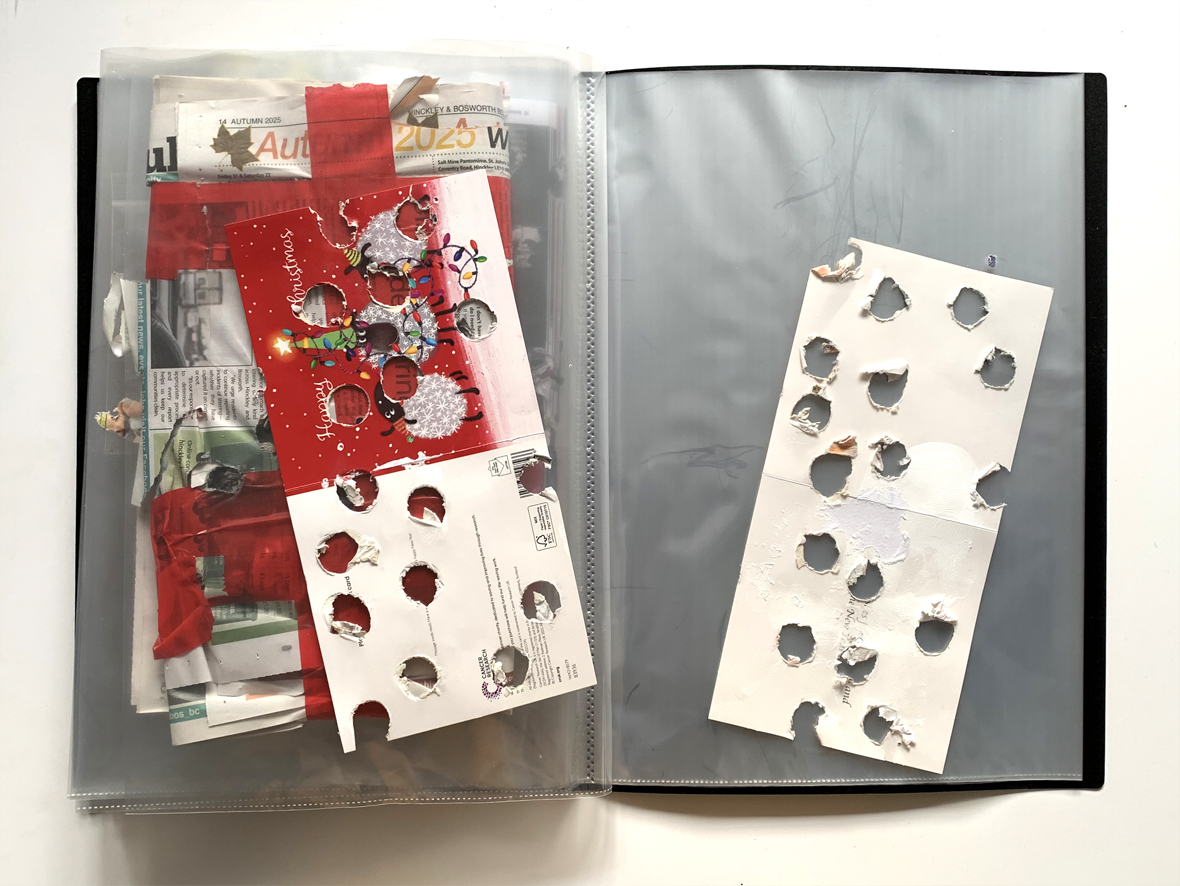
#11
Summary
Art reorganises perception: it is a practice of enactive awareness. When making or viewing becomes conscious of its own relational unfolding, perception perceives itself. Art is thus neither representational nor productive but transformative — an objectless relation in which awareness reveals its own activity. Like Indriyeśvara’s play, it enters the world completely while simultaneously exceeding it. Deconstructive yet generative, art dismantles habitual forms in order to disclose perception at work. Its ethics is material lucidity: a refusal of associative closure and an openness to perception’s own rhythms. This is an art of beneficial uselessness — not oriented toward output, but toward the transformation of relation, perception, and world-making. Art does not represent the world; it becomes the world’s own act of seeing, a seeing that liberates itself through the very act of seeing.
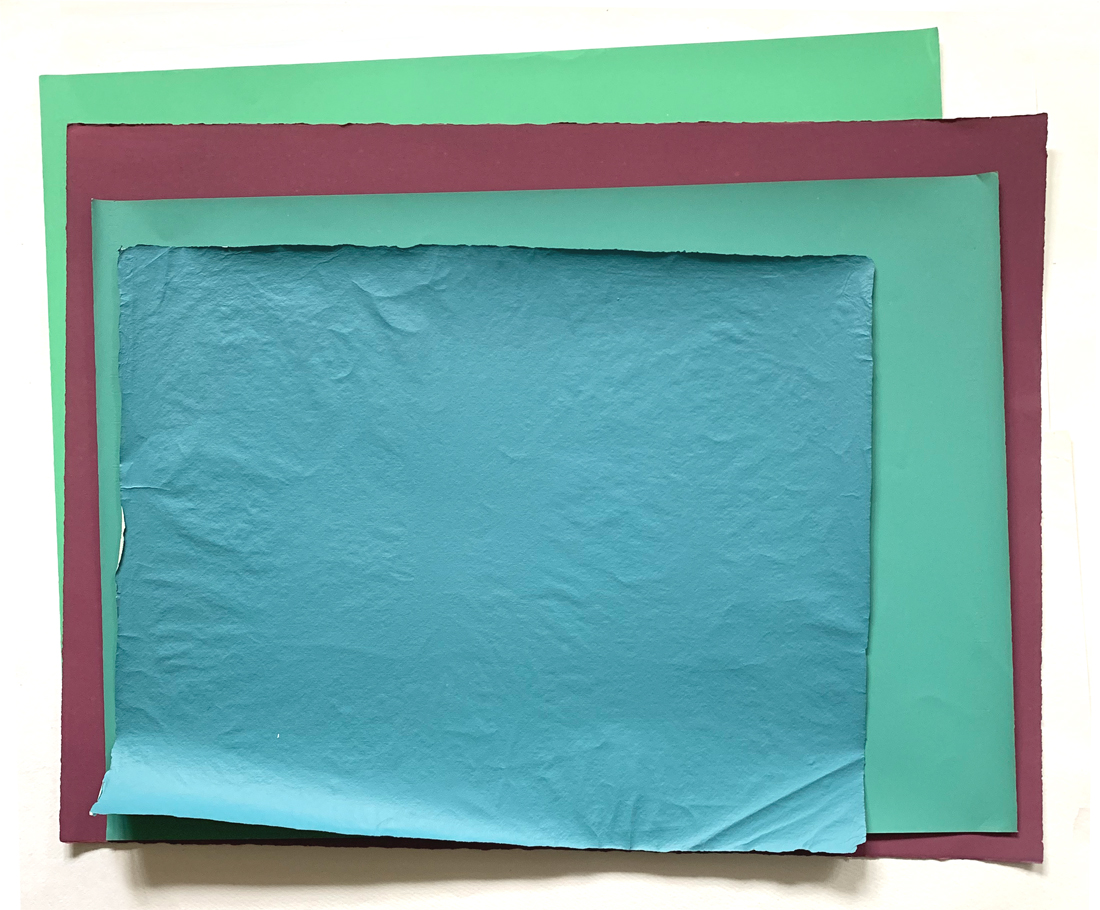
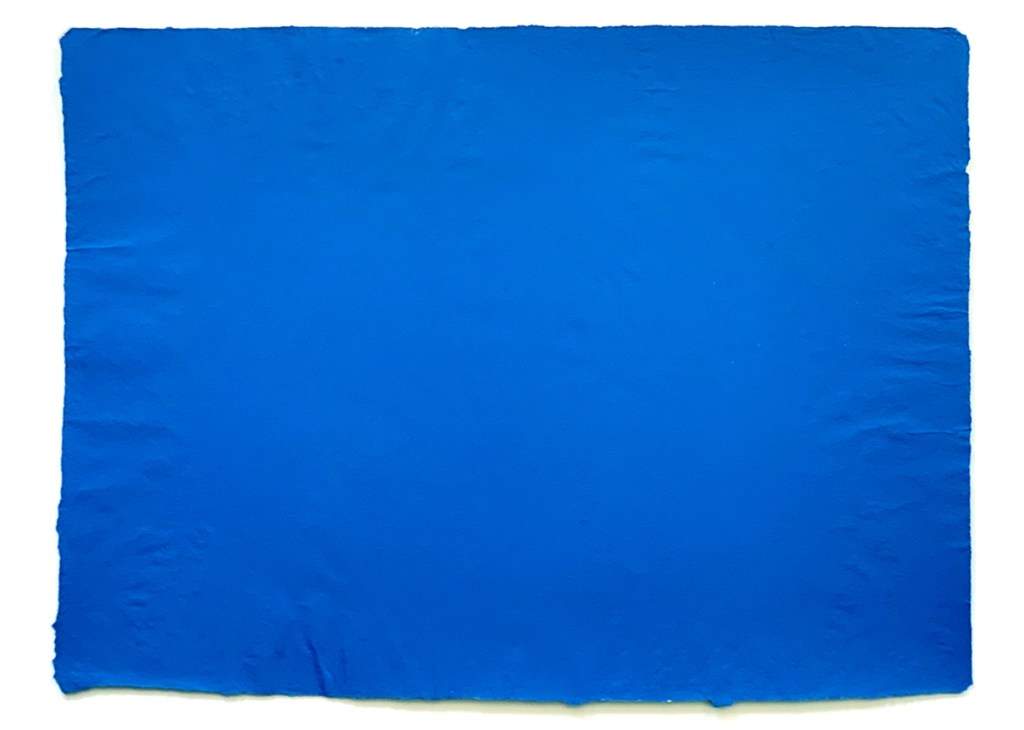
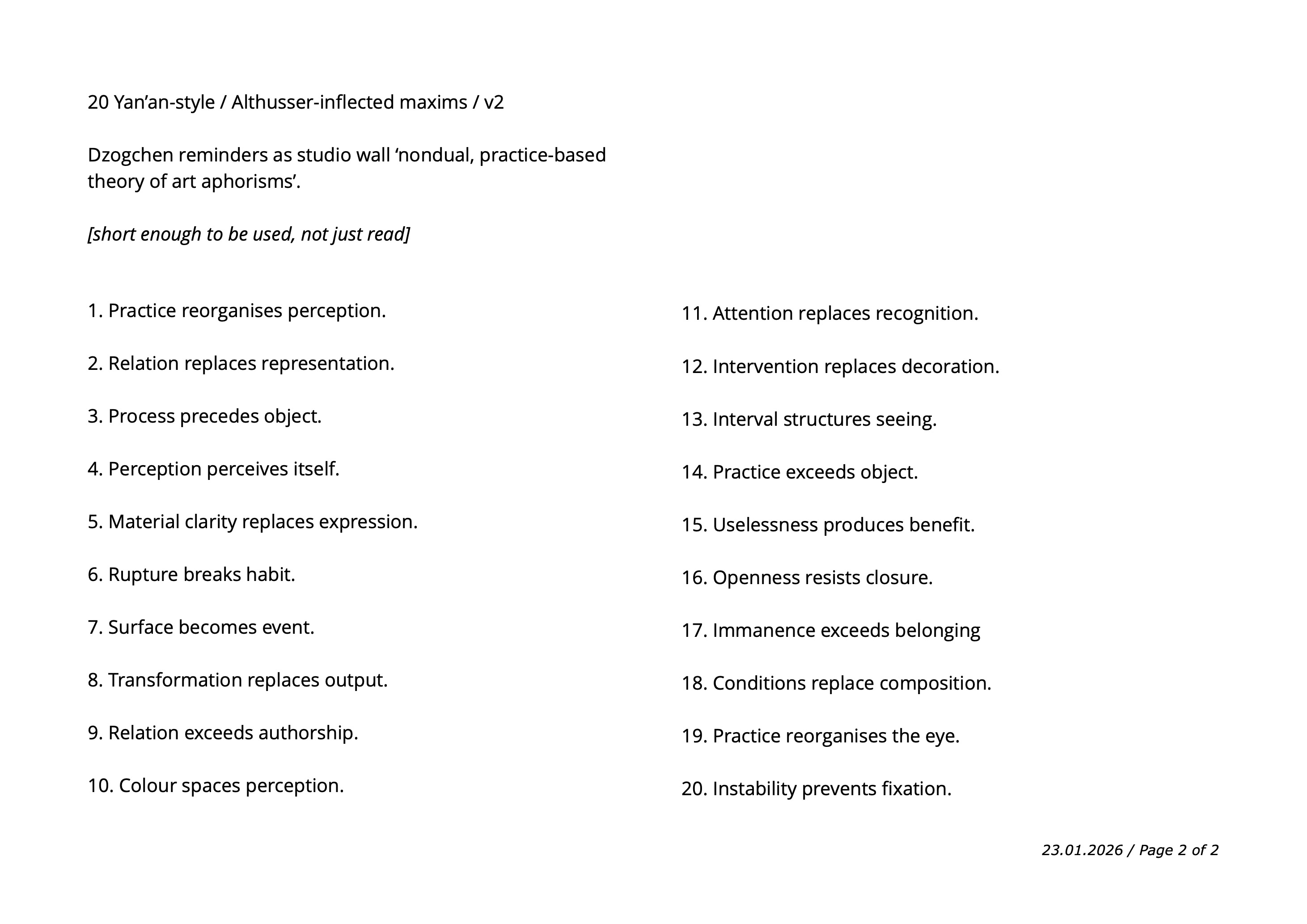
1990 ‘Screenprinted Hand-Made Papers’
gaps without emptiness — spacing as relational distance, not blankness
colour breathing against its limits
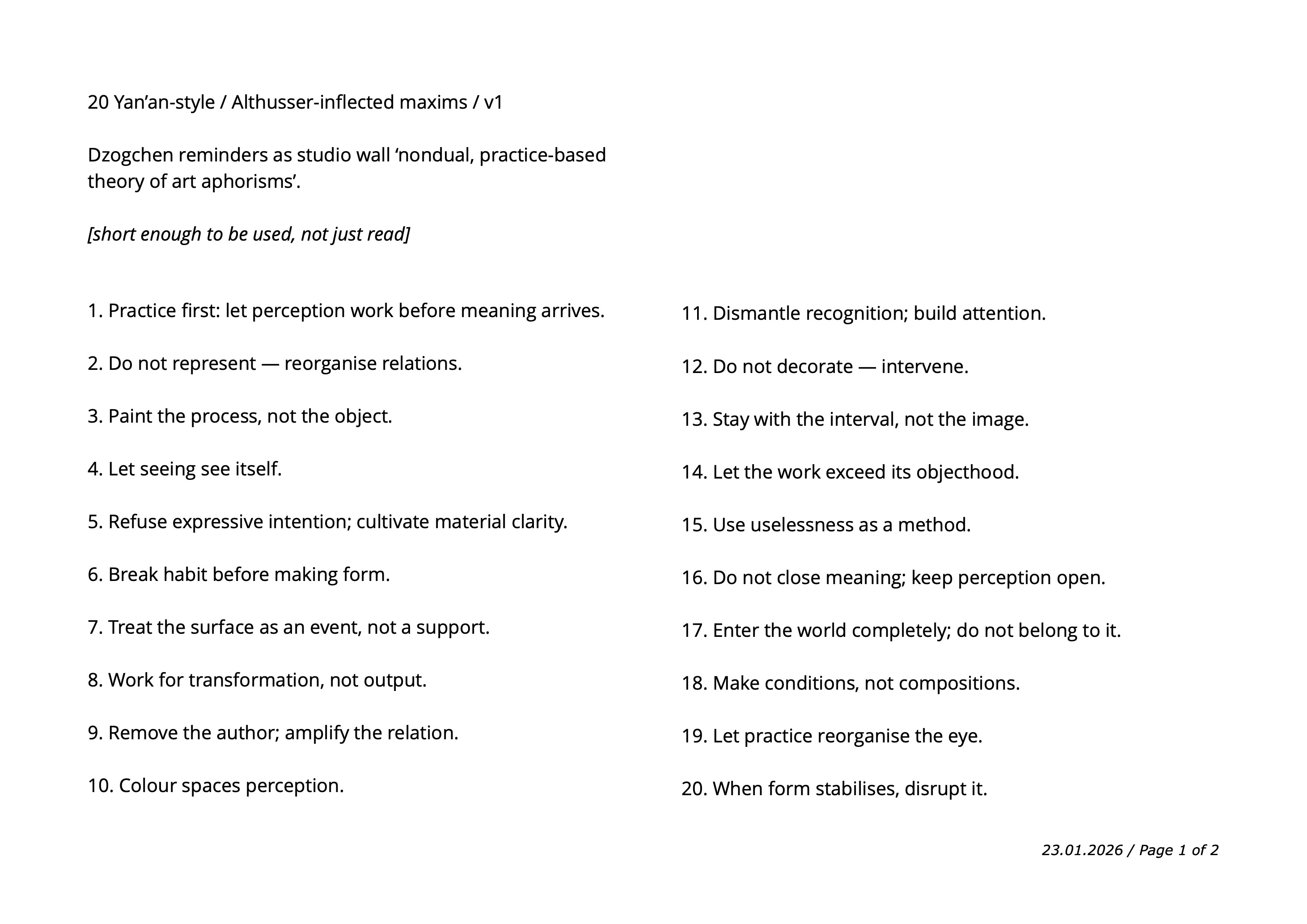
[05.02.2026]
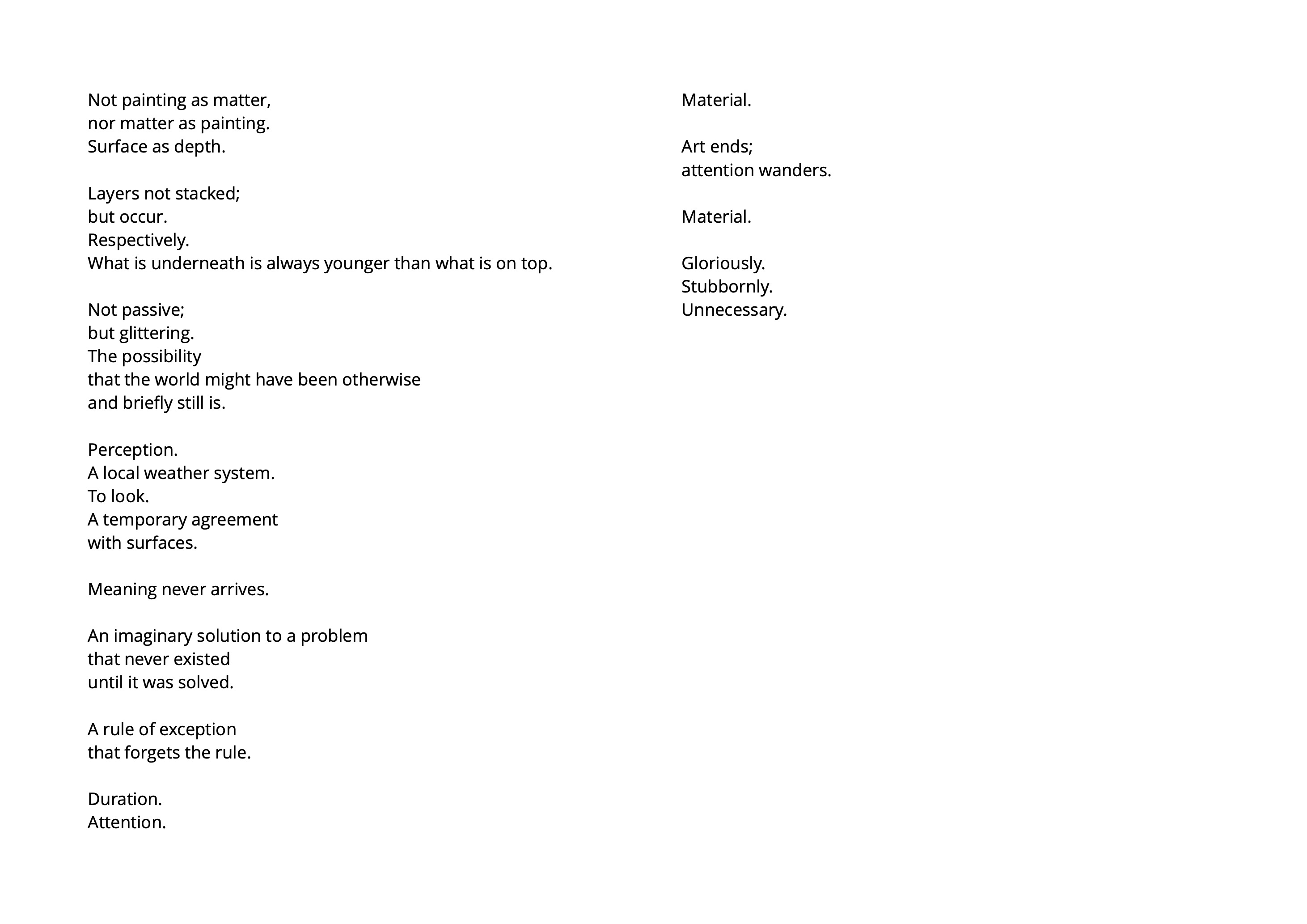
Not painting as matter,
nor matter as painting.
Surface as depth.
Layers not stacked;
but occur.
Respectively.
What is underneath is always younger than what is on top.
Not passive;
but glittering.
The possibility
that the world might have been otherwise
and briefly still is.
Perception.
A local weather system.
To look.
A temporary agreement
with surfaces.
Meaning never arrives.
An imaginary solution to a problem
that never existed
until it was solved.
A rule of exception
that forgets the rule.
Duration.
Attention.
Material.
Art ends;
attention wanders.
Material.
Gloriously.
Stubbornly.
Unnecessary.
Painting | “engaged research practice”
To speak of painting as an engaged research practice is to shift it away from expression or representation and toward method: a way of producing knowledge through situated, material, and temporal inquiry.
Painting, in this sense, is not a medium that illustrates prior ideas but a site of investigation. Its materials—surface, pigment, binders, supports, rhythms of application—operate as variables within an experimental system. Knowledge emerges immanently, through trial, resistance, sedimentation, failure. What is “known” is not fully propositional; it is embodied, procedural, and often non-translatable without loss.
The engagement is double. First, painting engages the world materially: it is embedded in economies of labour, histories of technique, infrastructures of display, and regimes of visibility. Second, it engages perception itself. Painting researches how seeing is produced—how surfaces organise attention, how duration and repetition condition sense, how meaning flickers without stabilising. In this respect, painting functions as a perceptual laboratory, testing the limits of recognition and habit.
As research, painting is cumulative rather than illustrative. Works do not “stand alone” but form sequences, series, and problematics. Each painting modifies the conditions of the next. This aligns painting with practice-based research models (ref. Michael Polanyi’s tacit knowledge — “we know more than we can tell”, Donald Schön’s reflection-in-action — “thinking on your feet”), but also with Marxist and Maoist accounts of practice: knowledge arises from activity, from engagement with contradictions internal to the process itself.
An engaged research practice does not collapse into pure formalism, its autonomy is relative, not absolute. Painting remains responsive to social conditions—modes of production, institutional framing, collective spectatorship—without reducing itself to messaging. Its politics lies in how it reorganises experience: how it trains perception, redistributes attention, and opens a space in which the world might be sensed otherwise.
Painting, then, is research not because it explains, but because it tests. It poses problems it cannot solve in advance, and in doing so, produces forms of knowledge that only sustained, material practice can yield.
[328 words]
[25.02.2026]
“the standing-forth of what is”
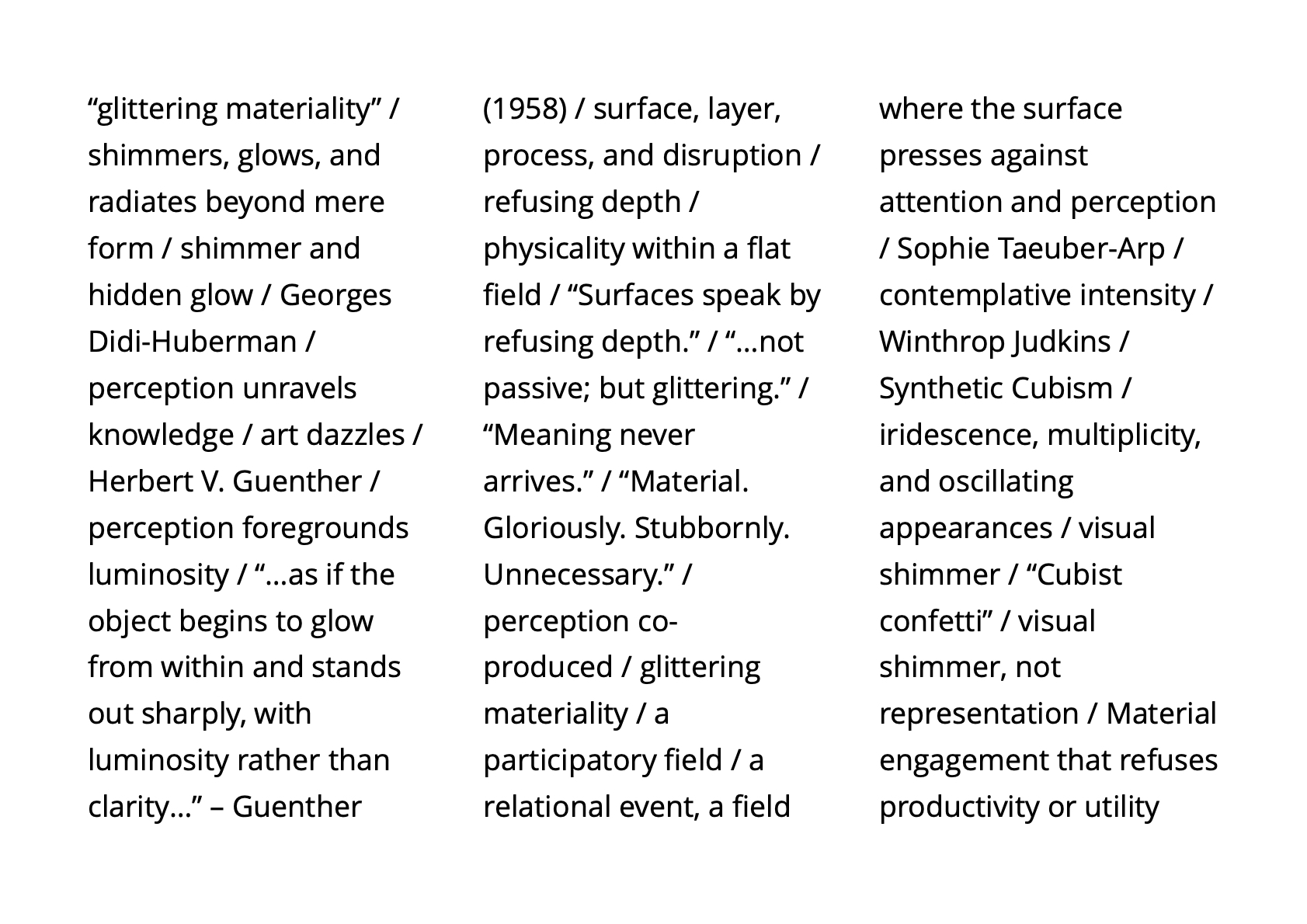
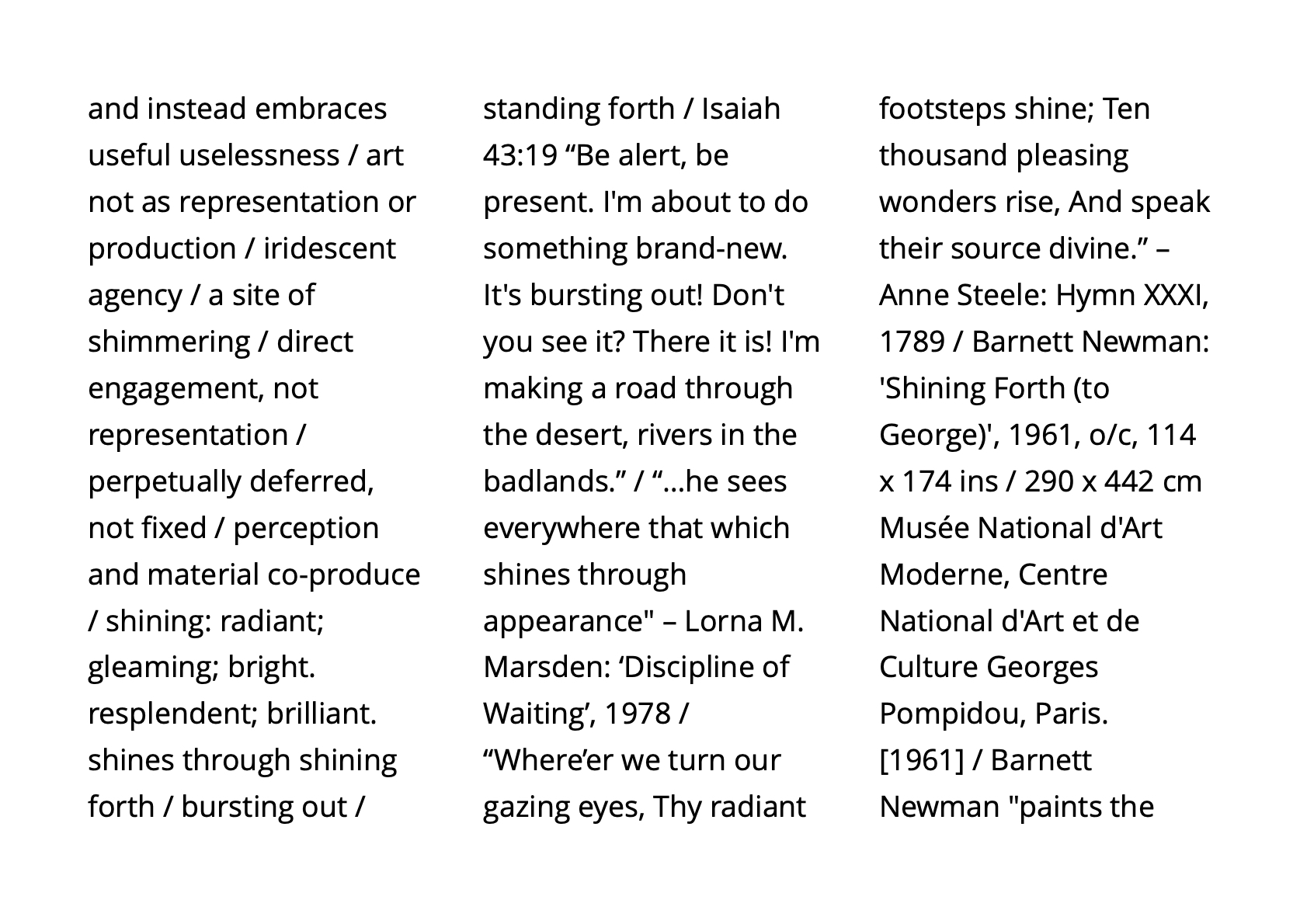
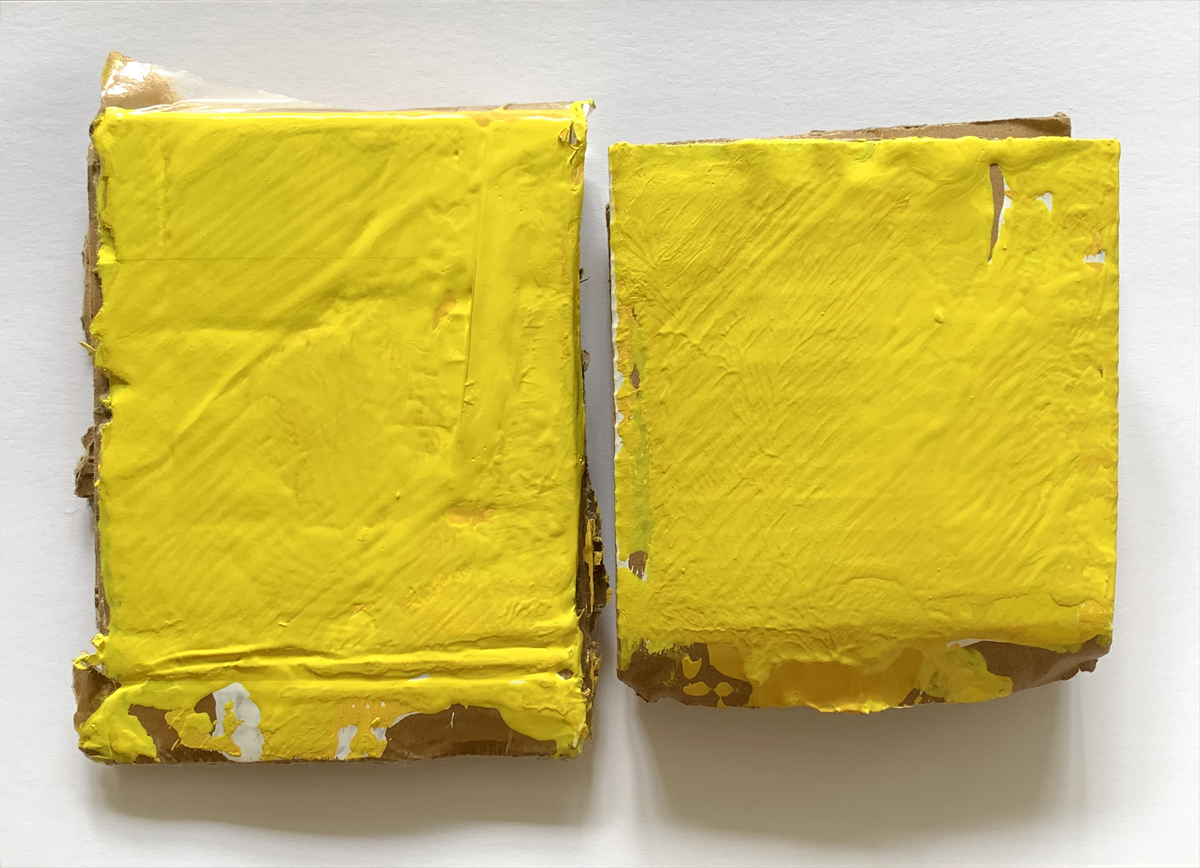
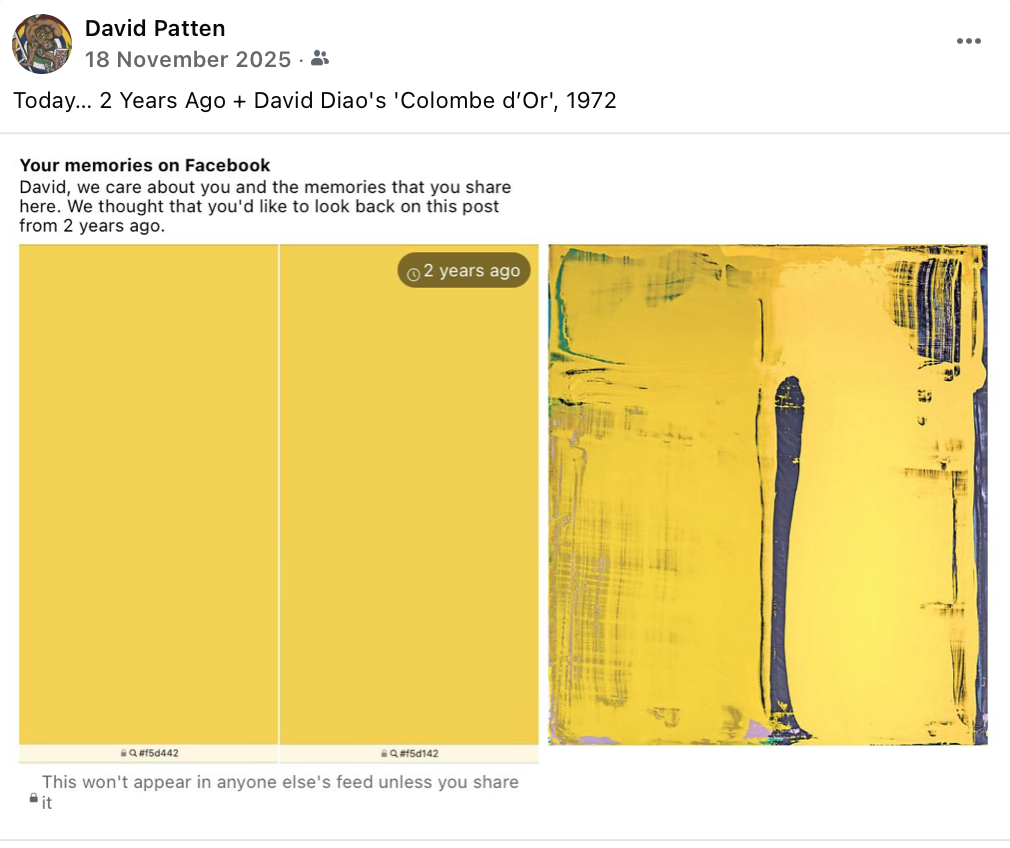
‘Two Yellows’ (after ‘Colombe d’Or’, 1972), acrylic on support, March 2026.
 David Patten