[Note 01.06.2025 | ‘No Script’ texts 1975 to 2025: This complex and multidisciplinary text explores themes of creativity, improvisation, post-representational theory, the evolving role of the artist, and the integration of art with life. …a vision of art and life as intertwined, dynamic, and improvisational. It rejects fixed meanings, institutions, and boundaries in favour of process, openness, relationality, and spontaneity. Art is framed not as representation but as creative practice, ethical action, and embodied experience—infinitely unfolding and always situated in the here and now.]
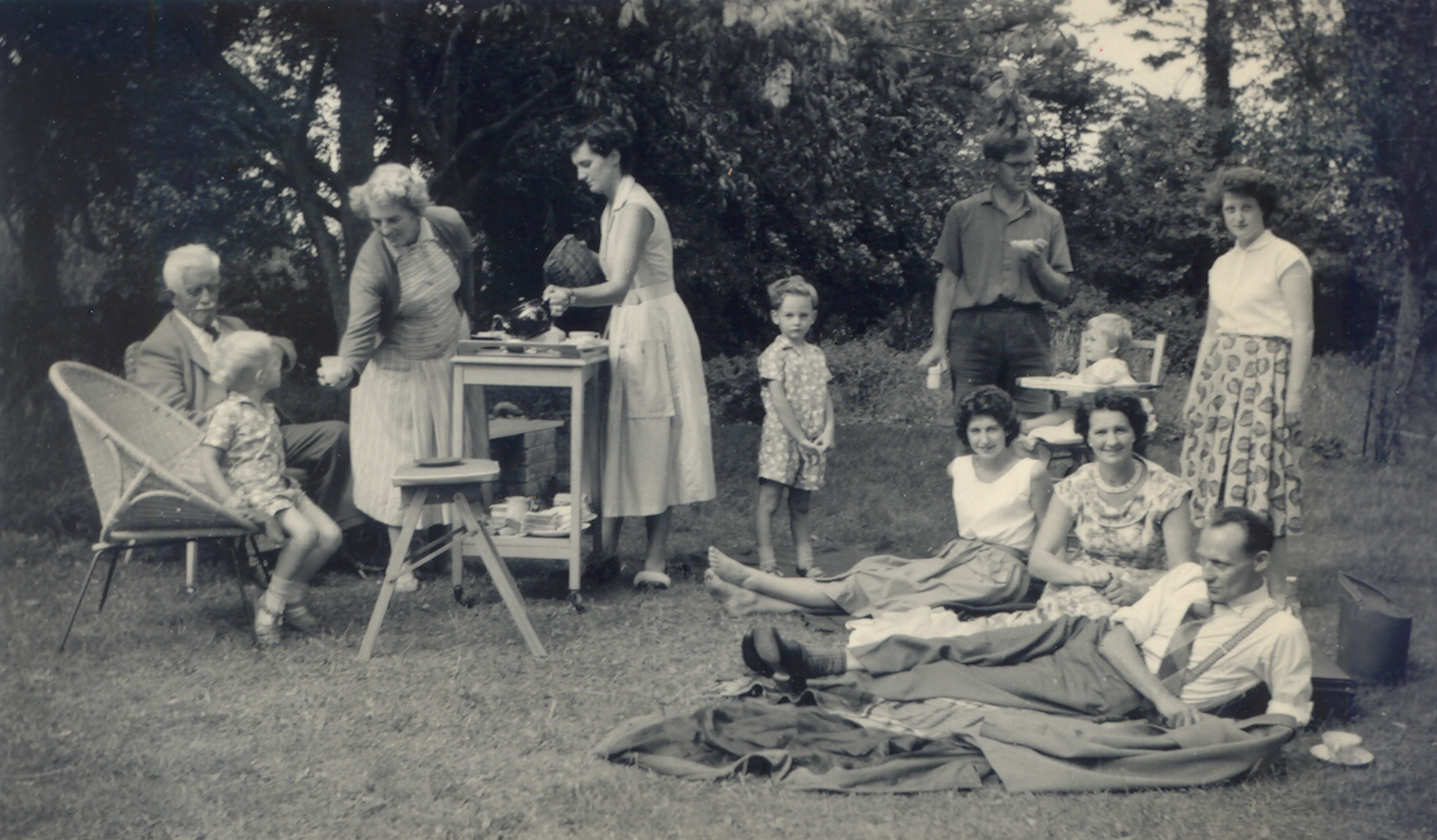

“There is no script for social and cultural life. People have to work it out as they go along. In a word, they have to improvise.”
– Tim Ingold & Elizabeth Hallam, ‘Creativity and Cultural Improvisation’, Routledge, 2007
I. “coping with the complexity and uncertainty”
[2000-2001 Advanced Diploma in Capacities for Managing Development, Open University]
The methods of planning and management associated with earlier strategies were found to be less useful in coping with the uncertainty and complexity of development problems.
– Dennis A. Rondinelli: ‘Development Projects as Policy Experiments’, Methuen, 1983
…there is no sense of ‘going anywhere’ or of ‘getting anything’. The text communicates directly, immediately – gesturing again and again to what is present, what is the fact, here, now, always and everywhere. Moreover, ‘the text’ is in actual fact nothing but a bunch of small texts that are by-and-large unrelated to one another. … / This dislocated, disassociated textual form is designed precisely with the disabling of ‘progression’, ‘movement’ and the senses of ‘being taught’, and ‘being in good hands’, in mind. For, the sense that reality is divisible…is precisely the illusion this text seeks to expose and disperse. / Nevertheless, the sense that something, a thing of form and therefore of distinction and separation, is being ‘grasped’ in one of the texts, or ‘pieced together’, ‘formed’ amongst a number of the texts, may occasionally emerge. … / There are two possibilities. In both cases these little black squiggles will be translated into sounds, images and feelings called ‘thoughts’. One possibility is that this thinking will not only appear but will linger as solid, continuous formations that are definite, definable somethings, and are therefore separate, abstract and limited…continuously threatened by doubt and death. … / The other possibility is altogether different. As these little black squiggles are being translated…the sense of something beyond thoughts, or rather in the thoughts and in everything else as well, will emerge. The thoughts will give way to this sense, this omnipresence. …so that nothing is left. …not only in the black squiggles and thoughts they conjure…[but that it] has filled and encompassed the entire landscape around [them], leaving only…oneness.
– Guy Smith: ‘This is Unimaginable & Unavoidable’, Non-Duality Press, 2005
action research / action theory – creative spaces / the artist as a creative space and/or action – field of potential working
[2005-2006 Action Research Evaluation On-Line, Southern Cross Institute of Action Research, Australia]

post-representational theory / Nigel Thrift: ‘Non-Representational Theory: Space, Politics, Affect’, 2007 (summary)
1. capture the ‘onflow’…of everyday life…desire to do more than simply squeeze meaning from the world…intentionality…performative…adaptive living, as an instrument of sensation, play, and imagination
2. anti-biographical and pre-individual
3. practice, action, and performance / joint action
4. relational materialism…co-evolve with things
5. be experimental / “poetics of the release of energy that might be thought to resemble play” / don’t explain
6. [Dewey] embodied, antidualist, aesthetically sensitive, “personal authorship” of one’s life while rejecting fixity
7. “jump to another world” [James] / the craftsmanship of everyday life and existing on the “interstices of interaction” / new forms of neighbourliness and community.
“more action, more imagination, more light, more fun, even”
and…
post-representational artist
What is obtained from architecture, at all levels, is graduated experience. I would regard this as a fundamental problem. …the attempt to fuse all forms of visual imagery with architecture and architectural concepts. It also poses the question – an immensely important one – of whether the essential act of contemplation of a work is at all possible outside that graduated experience… / What is envisaged is people working outside the context of highly structured institutions but – this is essential – possessing the identity of the one to which they belong, engaged in work involving interested specialists in other fields and thus breaking down the mutually destructive isolation and exclusivity now common to both. … This would go some way to re-define the role of experimentation.
– Peter de Francia: ‘Mandarins and Luddites’, RCA, 1973
and…
…the avant-garde attack upon the institution of art. The autonomous status and the concept of the work of art operative in the bourgeois institution of art imply separation from social life. This is essential for an art intending to interpret the world at a distance. For such an aesthetic project, a concept of the work of art as being a closed, albeit “complex” unity is appropriate. Avant-garde aesthetic praxis, though, aimed to intervene in social reality. The avant-garde saw that the organic unity of the bourgeois institution of art left art impotent to intervene in social life, and thus developed a different concept of the work of art. Its concept of art sees a chance to reintegrate art into social praxis if artists would create unclosed, individual segments of art that open themselves to supplementary responses. The aesthetic fragment functions very differently than the organic whole of romantic artwork, for it challenges its recipient to make it an integrated part of his or her reality and to relate it to sensuous-material experience.
– Jochen Schulte-Sasse: ‘Foreword: Theory of Modernism versus Theory of the Avant-Garde’ to Peter Burger’s ‘Theory of the Avant-Garde’, Theory and History of Literature, Volume 4, 1984
III. “he is in substance a fielding power”
Once upon a time a field of sky-and-earth unfolded itself and man found himself standing upright therein. Man has no choice but to play the field: he is in substance a fielding power – a power which is as much his as it is not his. … Between the fielding power that man is and the fielding powers that things are, there lies manifested a realm of double openness – what we habitually call the world. For what is manifested as the world is concurrently an openness of significance and an openness of reality. There is no reality without significance, and there is no significance without reality. We appropriate the significance of things, while we posturalize their reality. Man is a being in the world in so far as he is an appropriator of significance and a posturalizer of reality. More exactly, what is appropriated is, in the final analysis, the proper/rightness of things, while what is posturalized is always some figure in a configuration. For proper/rightness is the thread of significance, and figure/configuration the quintessence of reality. … We appropriate the significance of things, while we posturalize their reality. Man is a being in the world in so far as he is an appropriator of significance and a posturalizer of reality.
– Lik Kuen Tong: ‘The Art of Appropriation, Towards a Field-Being Conception of Philosophy’, in Bo Mou: ‘Two Roads to Wisdom?’, Chinese and Analytic Philosophical Traditions’, Open Court, 2001
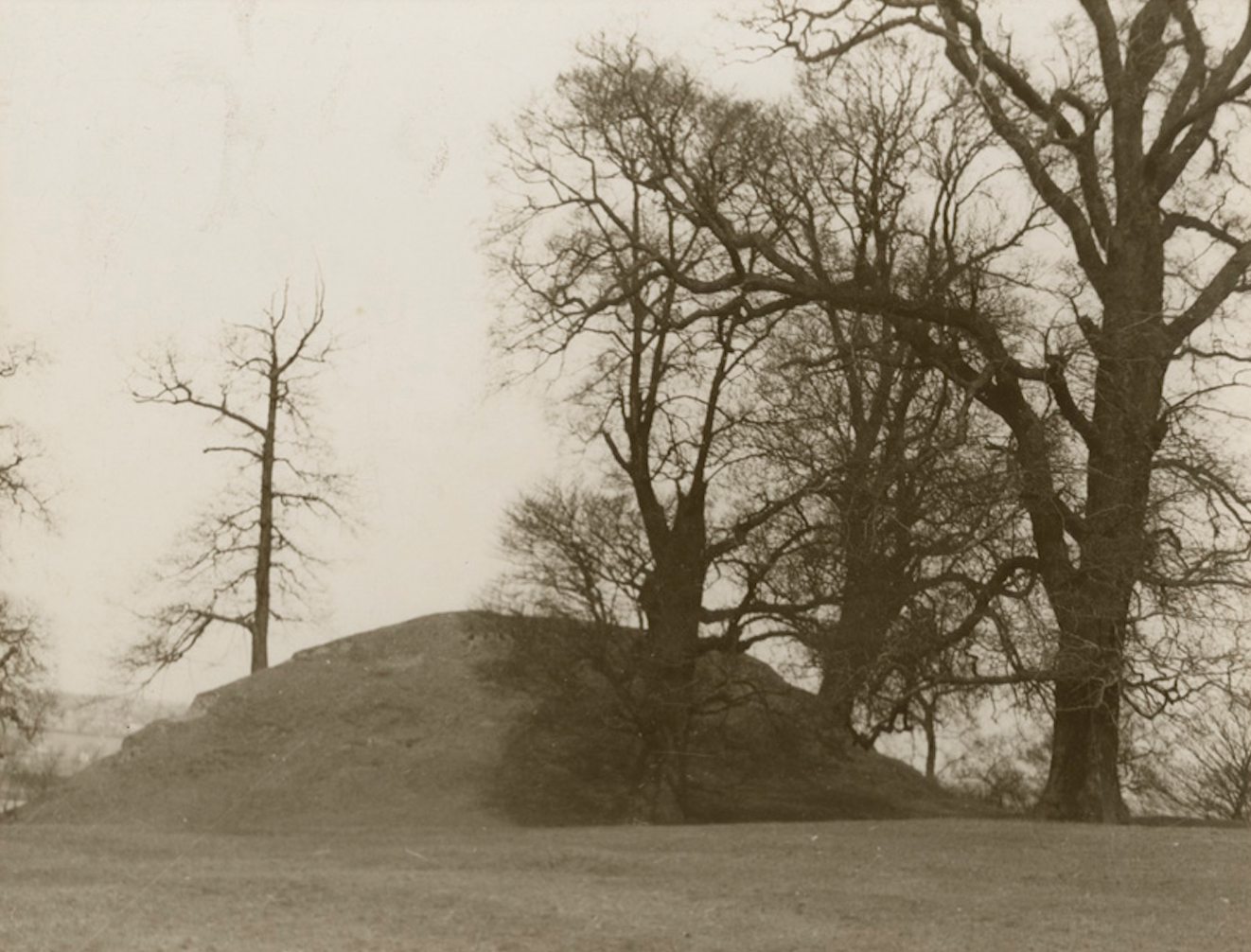
P W Robinson, ‘The Pimple’, 1934
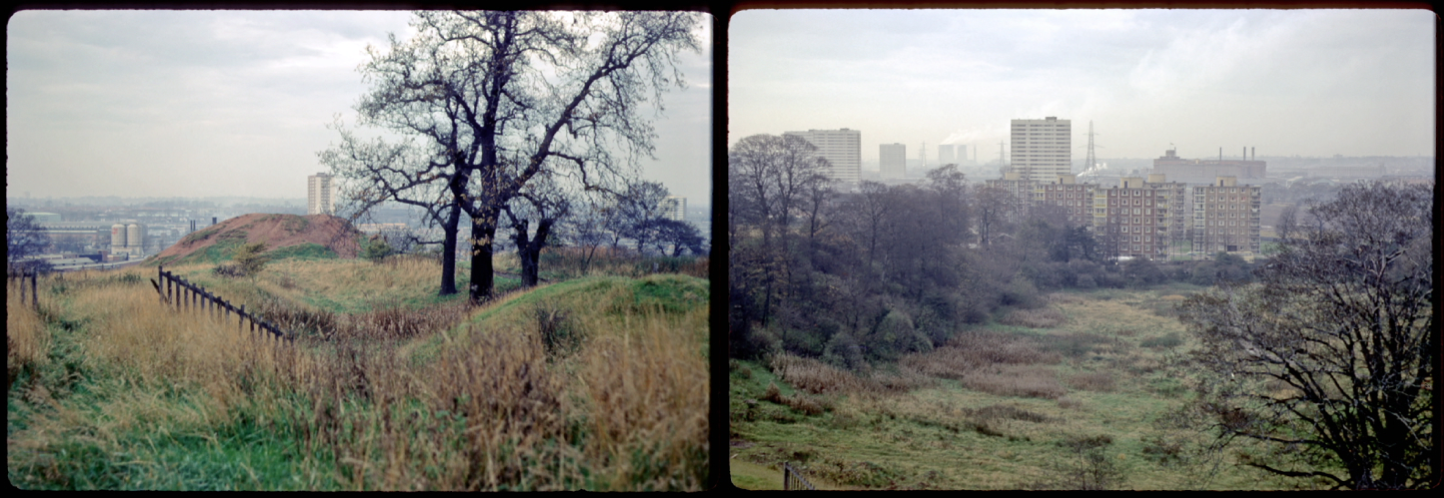
Phyllis Nicklin, ‘The Pimple’, Castle Bromwich, 13.10.1968
IV. Well-Making & Well-Doing
W R Lethaby: “Art is the well-doing of what needs doing” / “Work is a sacred thing and I have wished above all to stir the instinct for making and doing.“ / “Making things opens out minds.” [‘Home and Country Arts’, 1923]
and…
Ananda Coomaraswamy: “…just as ethics is the “right way of doing things,” so art is the “making well of whatever needs making,” or simply “the right way of making things”; and still addressing ourselves to those for whom the arts of personality are superfluous, ask whether art is not after all a necessity.” [‘What Is the Use of Art Anyway?’, The American Review, January 1937]
and…
[1979-1980 ‘Post-War Public Art in Coventry’, Research Assistant, Herbert M&AG]

V. fragile architecture / [Juhani Pallasmaa] | fragile thought [Gianni Vattimo]
“…the architecture of weak image is contextual and responsive. It is concerned with real sensory interaction instead of idealized and conceptual manifestations. This architecture grows and opens up, instead of the reverse process of closing down from the concept to the detail.”
“Strong strategies are reinforced by the eye, the sense of distant control, whereas weak principles give rise to the haptic townscape of intimacy and participation.”
– Juhani Pallasmaa in Helskini (1996) and later in ‘The Embodied Image: Imagination and Imagery in Architecture’, Wiley, 2011

VI. “not disembodied spatially, socially, temporally”
The installation of my work…is contemporary with its creation. The work is not disembodied spatially, socially, temporally, as in most museums. The space surrounding my work is crucial to it: as much thought has gone into the installation as into a piece itself.
– Donald Judd: ‘In Defense of My Work’, December 1977
VII. Prefiguration & Spontaneity
prefiguration / prefigurative approach [Atelier Van Lieshout]
as
[Longchenpa] spontaneity = a transcendence of pre-existing structures and social networks found in organized situations –> prefiguration (act of representing, suggesting, or imagining in advance) as ethics [Benjamin Franks]
as
transgression / dispersion of the self as artist through constant transgression…beyond ‘this and that’
as
“I speak…an absolute opening through which language endlessly spreads forth, while the subject—the ‘I’ who speaks— fragments, disperses, scatters, disappearing in that naked space.”
– Michel Foucault: ‘Aesthetics, Method, and Epistemology – Essential Works of Foucault 1954-1984’, Penguin Books, 2019
as
“…a convergence of lines of interest rather than a bounded field of study”
– Tim Ingold: ‘Resisting Culture, Embracing Life’, 2010
as
not sown / not strewn / not explained / not taught / not made known / not established / not unveiled / not explained in detail / and not made manifest / nor shown
– Niddesa II 350
as
Det var ingen observation. Det var en stigande totalbild, en uppmärksamhet som berusade inte bara ögonen som såg utan hela …som levde, såg, visste – utan form eller gränser. / It was not observation. It was a rising in total view, an attention that intoxicated not only the eyes that saw but the whole …that lived, saw, knew – without form or boundaries.
– Emilia Fogelklou: ‘Form och stralning’ (Form and Radiance), 1958
as
“…the absolute communicated solely by means which are proper to pictorial art”
– Tim Hilton: UK commentary: notes on threes exhibitions | John Walker at the Ikon Gallery, Birmingham, Studio International, December 1972, pp 238-240
VIII. Art is thus…
“Art is thus to become more than mere ornamentation or representation of power. Art is to become a way of living which defies legal and political distinctions, investigating and producing other modes of expression and understanding. Art is henceforth to be understood as a liberating practice which posits its own limits and thus the limits of experience as localizable and immanent expression. Space and time are to be freed from the autocratic and bureaucratic mechanisms of production and reproduction through the singular affirmation of the coming world.”
– David Quigley: ‘Carl Einstein A Defense of the Real’, Akademie der bildenden Künste Wien, 2007
“What matters is the ability to simultaneously idealize and realize things immediately, to complete them and carry them out partly within oneself. Since the word ‘transcendental’ refers precisely to the connection and separation of the ideal and the real, one could easily say that the sense for fragments and projects is the transcendental part of the historical spirit.”
– Friedrich Schlegel: ‘Athenaeum Fragment 22’, 1798
Event-ness
“… a situation may be either a state, or an event, or a process. … states are static, i.e. continue as before unless changed, whereas events and processes are dynamic, i.e. require a continual input of energy if they are not to come to an end; events are dynamic situations viewed as a complete whole (perfectively), whereas processes are dynamic situations viewed in progress, from within (imperfectively).”
– Bernard Comrie: ‘Aspect: An Introduction to the Study of Verbal Aspect and Related Problems’ 1976
“The first stage in this undertaking will be to carry over the principle of montage into history. That is, to assemble large-scale constructions out of the smallest and most precisely cut components.”
– Walter Benjamin
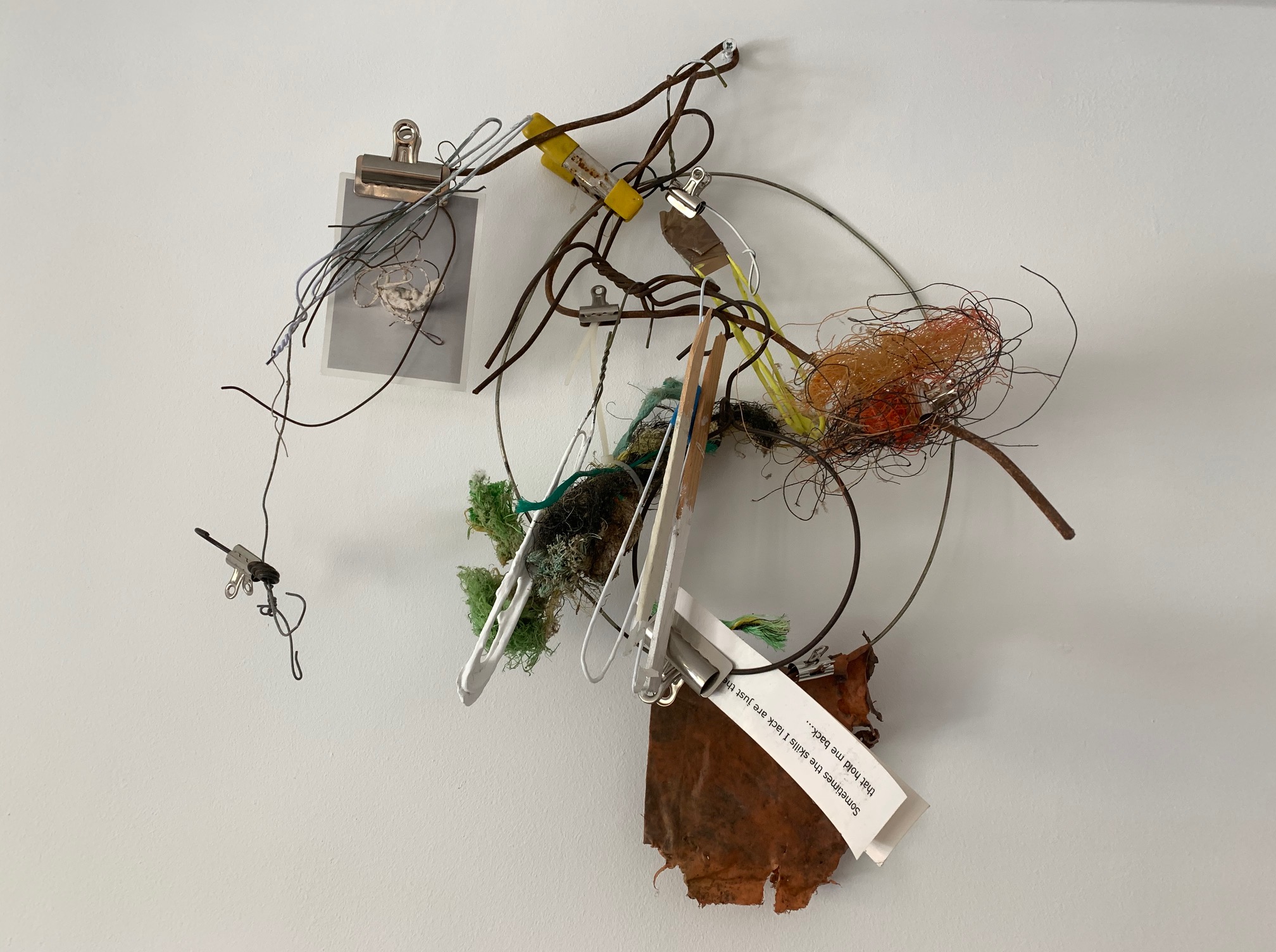
 David Patten